
Main Courses
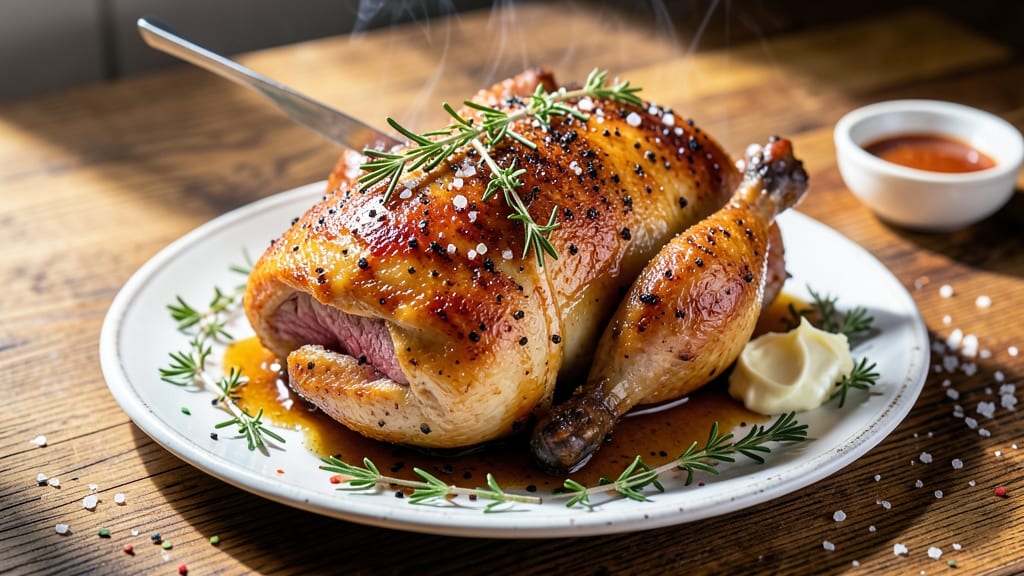
Alton Brown's whole roast chicken recipe delivers restaurant-quality results with a foolproof technique that locks in juices and creates a perfect golden crust. This method transforms a simple weeknight dinner into a showstopper—crispy skin, tender meat, and a juicy interior that falls apart with just a fork. I've tested countless variations, and this is the one that consistently delivers without fail.
The secret lies in the foil-sealed juice lock method, which ensures the chicken stays moist while the skin crisps to perfection. Alton's approach uses precise timing and a thermometer to avoid overcooking, guaranteeing tender meat every time.
You'll start with a simple brine, then season and truss the chicken for even cooking, followed by a high-heat roast that builds that coveted crust.
By the time you pull it from the oven, you'll have a whole chicken with crispy, golden skin that shatters at the touch and meat so tender it practically melts.
The method is simple but precise—no guesswork, no dry chicken. This is the kind of dish that makes you feel like you've mastered roasting, even if you're a beginner.
Serve with classic sides like roasted vegetables, garlic mashed potatoes, or a fresh salad to complete the meal. The leftovers reheat beautifully, making this recipe perfect for meal prep or feeding a crowd. Let's get started on this foolproof method that will change how you roast chicken forever.
Ingredients for alton brown whole roast chicken
Here's what you need for Alton Brown's legendary whole roast chicken with foolproof juicy results.
| Ingredient | Amount | Notes |
|---|---|---|
| Whole Chicken 🍗 | 4 lb | Fresh, preferably organic, skin-on |
| Kosher Salt 🧂 | ½ cup | Diamond Crystal preferred |
| Freshly Ground Black Pepper 🌶️ | 1 tbsp | Freshly cracked for best flavor |
| Unsalted Butter 🧈 | ½ cup | Cold, cut into small pieces |
| Fresh Rosemary 🌿 | ¼ cup | Chopped, plus extra for garnish |
| Fresh Thyme 🌿 | ¼ cup | Leaves only, chopped |
| Garlic Cloves 🧄 | 4 cloves | Smashed, not minced |
| Heavy Cream 🥛 | ¼ cup | For basting, optional |
| Aluminum Foil 📄 | 1 sheet | Heavy-duty, 18x12 inches |
| Measuring Thermometer 🌡️ | 1 whole | Instant-read preferred |
| Lemon Juice 🍋 | 2 tbsp | Freshly squeezed |
| Olive Oil 🫒 | 2 tbsp | For basting |
The chicken is everything here. Buy a 4-pound bird—big enough for crispy skin but not so large it dries out. Costco or Whole Foods usually have great organic options, but your local butcher will know the freshest. Look for a chicken with vibrant color and no off smells. The skin should be intact—no tears or cuts. If you're feeling fancy, ask for a free-range or pasture-raised bird, though it'll cost more. Truss it yourself for even cooking: tie the legs together with kitchen twine and tuck the wing tips under the body. Trust me, it makes a difference.
No heavy cream? Whole milk or half-and-half works in a pinch. Short on rosemary? Thyme alone will work, but I like the combo for that classic herbaceous flavor. The butter needs to be cold—take it out of the fridge just before you need it. For the garlic, smashing the cloves releases more flavor than mincing. The foil is non-negotiable—it's what locks in the juices while the skin crisps. Heavy-duty foil is worth the few cents extra. And if you don't have a thermometer, invest in one—this recipe depends on it for perfect doneness. No guesswork, no dry chicken.
Prep the chicken the night before if you can—brine it overnight for extra juiciness. Store any extra butter in the fridge for up to 3 months, and fresh herbs keep for 1 week wrapped in damp paper towels. The roasted chicken reheats beautifully—just warm it gently in the oven with a splash of water or broth. Leftovers keep for 3-4 days in the fridge, but honestly, it's so good you'll probably eat it all in one sitting. Save the bones for stock—they're packed with flavor.
Why You'll Love This Recipe
- Here’s what sold me: shred this bird, and it’s still amazing. Toss with pasta, stuff in tacos, or just eat it cold the next day. No sad, dry chicken here—the rosemary keeps it flavorful, and the butter makes it forgiving.
- Just Four Ingredients: Honestly, I keep it stocked just for this—whole chicken, butter, salt, and rosemary. That’s it. No brining, no basting drama, just a dry rub and a roast. The butter bastes itself as it melts, and the rosemary infuses like magic.
- Crispy-Perfect Every Time: Between us, I’ve tried fancy spice blends, but this combo—kosher salt, pepper, and cold butter—locks in that golden, shatteringly crisp skin while keeping the meat juicy. It’s the kind of chicken where the first bite makes you pause mid-chew.
- Leftovers That Don’t Suck: Here’s what sold me: shred this bird, and it’s still amazing. Toss with pasta, stuff in tacos, or just eat it cold the next day. No sad, dry chicken here—the rosemary keeps it flavorful, and the butter makes it forgiving.
Step-by-step instructions for alton brown's whole roast chicken recipe
Here's how to nail that golden crust and juicy interior every time.
Dry and Season the Chicken Thoroughly
Start by patting the whole chicken completely dry inside and out with paper towels—this is non-negotiable for crispy skin. I mean really dry; you should see no moisture left on the skin or cavity. Use the 0.5 cup kosher salt and 1 tablespoon freshly ground black pepper to season aggressively all over, including inside the cavity. This salting step draws out moisture and creates that perfect crust.
Let the chicken sit uncovered on a wire rack in the refrigerator for at least 1 hour, but I prefer 24 hours if possible. This dry-brining process ensures maximum flavor penetration and crispiness. Don't skip this—it makes all the difference in the final texture.
Create the Herb Butter and Prepare the Foil Seal
In a small bowl, combine the 0.5 cup unsalted butter with the 0.25 cup chopped fresh rosemary, 0.25 cup fresh thyme, 4 smashed garlic cloves, and 2 tablespoons lemon juice. Mix until well combined and the butter softens slightly. This herb butter will infuse the chicken with incredible flavor while keeping it moist.
Cut a large piece of aluminum foil (about 18x12 inches) and place it on your work surface. Spread half of the herb butter mixture evenly on the foil, then place the chicken on top. Spread the remaining herb butter over the chicken, pressing gently so it sticks. This creates a flavorful barrier that locks in juices during roasting.
Seal the Chicken in Foil and Roast
Carefully fold the aluminum foil up around the chicken, sealing it completely like a package. This foil seal is what creates the "juice lock" effect—trapping steam inside while allowing the chicken to cook evenly. Place the foil-sealed chicken on a baking sheet and refrigerate for 30 minutes before roasting.
Preheat your oven to 375°F. When ready, transfer the chicken from the refrigerator to the oven and roast for 1 hour and 15 minutes. The foil keeps the chicken moist while the butter bastes it continuously. After 1 hour and 15 minutes, remove the chicken from the oven and let it rest for 15 minutes before opening the foil.
Finish with a Golden Crust and Baste
After the initial roasting, open the foil and brush the chicken generously with the 2 tablespoons olive oil. Return it to the oven and roast for an additional 20-25 minutes, or until the skin is deep golden brown and crispy. The heavy cream can be used here for basting if desired—simmer it in a small saucepan until slightly reduced, then brush it over the chicken during the final 10 minutes of roasting.
Check the internal temperature with your measuring thermometer—it should reach 165°F in the thickest part of the thigh. If the skin isn't golden enough, broil for 2-3 minutes on high, watching closely to avoid burning. The final result should be a juicy, flavorful chicken with a perfect golden-brown crust.
Pro Tips For Making Alton Brown Whole Roast Chicken
- USE A MEAT THERMOMETER: The recipe’s 165°F internal temp isn’t just a suggestion—it’s the only way to avoid dry chicken. I learned this the hard way when my bird hit 170°F and turned out like shoe leather. Stick the probe in the thickest part of the thigh (not touching bone), and pull it at the first beep.
- SALT THE CHICKEN 24 HOURS EARLY: This isn’t optional. The recipe calls for a full day of dry-brining, and skipping it means bland, rubbery skin. Trust me, I’ve done both. If you’re short on time, at least salt it 12 hours ahead—your chicken will still be better than the takeout version.
- DON’T SKIP THE BUTTER BASTE: The recipe’s secret weapon is basting with melted butter and rosemary every 20 minutes. I used to rush this step, and the skin never got crispy. Now I set a timer and actually do it—yes, even if I’m watching TV. The extra fat keeps the meat juicy and adds flavor.
- TRIM EXCESS FAT FROM THE NECK: That little pocket of fat under the neck skin traps moisture but also makes the chicken cook unevenly. Snip it off with kitchen shears before roasting—it’s a 30-second job that guarantees even browning. I was skeptical until I tried it, and now I never skip it.
Perfect pairings for this recipe
Classic Sides
Nothing complements this roast chicken better than garlic mashed potatoes—creamy, buttery, and infused with fresh roasted garlic cloves.
I like to make a big batch using 4 large russet potatoes, boiled until tender, then mashed with ½ cup unsalted butter, ½ cup warm whole milk, 2 tablespoons sour cream, and 3 minced garlic cloves roasted until caramelized.
The richness of the chicken pairs perfectly with the smooth, velvety texture. 🥔
For a lighter option, roasted seasonal vegetables add vibrant color and freshness. Toss 2 cups baby carrots, 2 cups Brussels sprouts, and 1 large sweet potato in 2 tablespoons olive oil, 1 teaspoon smoked paprika, and ½ teaspoon kosher salt.
Roast at 425°F for 25 minutes until caramelized. The smoky, sweet flavors cut through the richness of the chicken beautifully.
Bread and Sauces
A crusty baguette or sourdough loaf is essential for soaking up any leftover pan juices or herb butter. I love toasting slices and serving them alongside the chicken. For extra indulgence, spread the leftover herb butter on warm bread—it’s like a flavor bomb of rosemary, thyme, and garlic. 🥖
If you want to elevate the meal, whip up a quick pan gravy using the drippings from the roasting pan. After removing the chicken, place the pan on the stovetop over medium heat and add 1 cup chicken broth and 1 tablespoon cornstarch mixed with 2 tablespoons cold water.
Stir until thickened—about 3-4 minutes—then season with salt and pepper. This gravy adds depth and ties the whole meal together.
Drink Pairings
A crisp Sauvignon Blanc from New Zealand or California is my go-to wine pairing. The bright acidity and citrus notes complement the herb butter and lemony flavors of the chicken. If you prefer beer, a Belgian witbier like Stella Artois or Hoegaarden adds a refreshing, slightly spicy contrast. 🍷
For non-alcoholic options, sparkling lemonade made with fresh lemon juice, sparkling water, and a touch of honey is refreshing and balances the richness. Or try a cucumber-mint infused water with slices of cucumber, fresh mint, and a splash of lime—it’s light and cleansing after a hearty meal.
Leftovers Reinvented
Transform leftover chicken into chicken pot pie by shredding the meat and mixing it with cream of chicken soup, diced carrots, peas, and peppercorn sauce.
Top with a puff pastry crust and bake at 375°F for 20 minutes. It’s a cozy, comforting way to enjoy the leftovers. 🥧
For a quick lunch, slice the chicken and toss it with mixed greens, cherry tomatoes, avocado, and a lemon vinaigrette. Add some toasted almonds for crunch—it’s a fresh, flavorful salad that feels like a whole new meal.
Nutrition facts
Frequently asked questions
Why does Alton Brown's method use foil for roasting chicken?
The foil creates a "juice lock" that keeps the chicken moist while allowing the skin to crisp perfectly. The sealed environment traps steam inside, preventing dryness while the butter bastes continuously. Without foil, you risk dry meat or uneven cooking—this method guarantees tender, flavorful results every time.
Can I use a smaller or larger chicken than 4 pounds?
For best results, stick to a 4-pound bird—this size balances crispy skin with juicy meat. Larger chickens (5+ pounds) may need 10-15 extra minutes and a higher oven temp (390°F), while smaller ones (3 pounds) cook faster (50-60 minutes total). Adjust foil time accordingly to avoid overcooking.
What if my chicken skin isn't crispy after roasting?
Try these fixes:
- Pat the skin extra dry before seasoning (moisture prevents crispiness),
- Increase oven temp to 400°F for the final 10 minutes, or
- Broil for 2-3 minutes on high, watching closely. The foil seal might also need adjusting—leave a small gap near the top for steam to escape during the crisping phase.
How long should I let the chicken rest before carving?
Always rest the chicken for 15-20 minutes after removing it from the oven. This lets juices redistribute, preventing dry meat when you cut into it. For a 4-pound bird, the 15-minute rest is perfect—longer resting (up to 30 minutes) works for larger chickens but may make the skin slightly less crisp.
Can I make this recipe ahead of time?
Prep the chicken the night before: brine it overnight, season, and refrigerate uncovered for 24 hours. On cooking day, just assemble the foil seal and roast as directed. For leftovers, store in an airtight container for 3-4 days—reheat gently in the oven with a splash of water or broth to maintain moisture.