
Main Courses
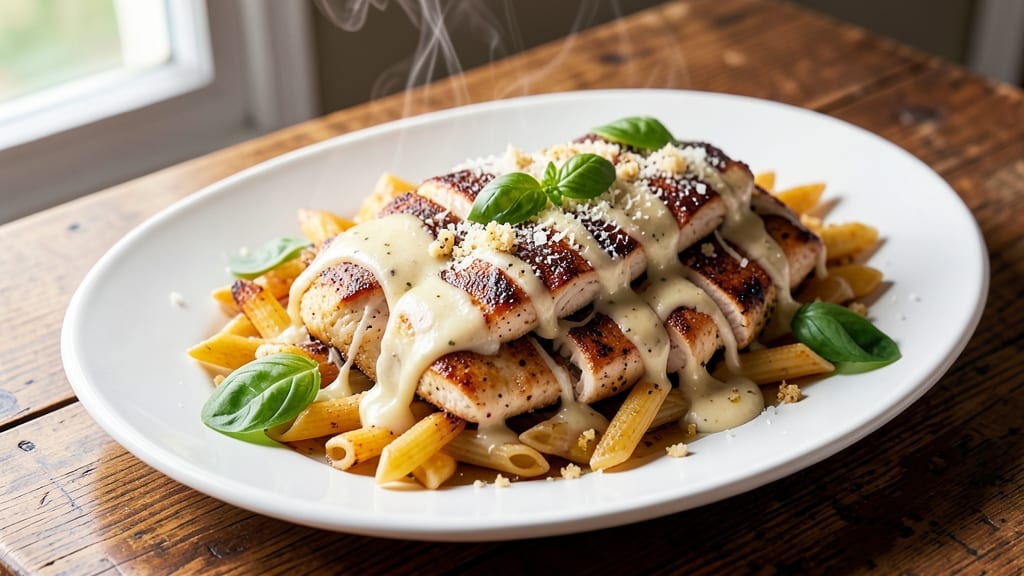
The Applebee's Three Cheese Chicken Penne copycat recipe delivers that restaurant-quality comfort in your own kitchen. This dish transforms tender chicken and al dente penne into a creamy, cheesy masterpiece using three signature cheeses—mozzarella, parmesan, and Gruyère—that melt into a velvety sauce.
The secret lies in properly cooking the chicken and creating a sauce that's rich yet balanced, not overly heavy.
What sets this copycat version apart is the technique for achieving that perfect cheese sauce consistency—smooth yet thick enough to coat every noodle and chicken piece. I've perfected the method to ensure the sauce doesn't break or separate, even when reheated.
The chicken stays juicy while absorbing subtle seasonings, and the penne maintains its perfect al dente bite.
By the time you serve this dish, you'll have a restaurant-worthy plate with golden-brown chicken, perfectly cooked pasta, and a blanket of melted cheese that's impossible to resist. The combination of textures—tender chicken, firm pasta, and creamy sauce—makes this a weeknight favorite that impresses every time.
This recipe is designed to replicate the experience of dining at Applebee's, complete with the same flavor balance and presentation. The instructions walk you through each step to ensure you achieve that signature restaurant taste at home, without any shortcuts that compromise quality.
Ingredients for applebee's three cheese chicken penne copycat
Fifteen ingredients transform a simple chicken and pasta dish into restaurant-quality perfection.
| Ingredient | Amount | Notes |
|---|---|---|
| Boneless, Skinless Chicken Breast 🍗 | 1 ½ lb | Pounded to even thickness for even cooking |
| Penne Pasta 🍝 | 12 oz | Al dente texture critical for dish |
| Mozzarella Cheese 🧀 | 8 oz | Fresh mozzarella, sliced for best melt |
| Parmesan Cheese 🧀 | ½ cup | Freshly grated from block preferred |
| Gruyère Cheese 🧀 | 4 oz | Shredded for authentic restaurant flavor |
| Heavy Cream 🥛 | 1 cup | Full-fat for optimal sauce texture |
| Chicken Broth 💧 | 1 cup | Low-sodium preferred for balanced seasoning |
| Garlic Cloves 🧄 | 4 cloves | Minced for aromatic foundation |
| Shallots 🧅 | 2 whole | Finely chopped for subtle sweetness |
| Extra-Virgin Olive Oil 🫒 | ½ cup | For sautéing and sauce richness |
| All-Purpose Flour 🌾 | 2 tbsp | For thickening cheese sauce |
| Dried Thyme 🌿 | 1 tsp | For herbal depth in sauce |
| Salt 🧂 | 1 ½ tsp | Diamond Crystal preferred for accuracy |
| Black Pepper 🌶️ | ½ tsp | Freshly cracked for optimal flavor |
| Red Pepper Flakes 🔥 | ¼ tsp | Optional for subtle heat |
The cheese trio is non-negotiable for authentic flavor. Gruyère from specialty shops like Whole Foods delivers that signature nutty depth, while pre-shredded mozzarella lacks moisture and melt. For Parmesan, Parmigiano-Reggiano from a block is essential—pre-grated contains anti-caking agents that ruin the texture. The chicken breast should be pounded to 1/4-inch thickness for even cooking; thicker pieces risk dryness. Sourcing high-quality cheese and properly prepping the chicken are the two most critical steps for replicating the restaurant experience.
No Gruyère? Comté cheese is the closest substitute, though it lacks the same melt. Fresh mozzarella unavailable? Low-moisture shredded works in a pinch, but add 1 tbsp heavy cream to compensate for dryness. The flour used for thickening should be all-purpose, not cake flour—it creates a smoother sauce. For the shallots, substitute 2 tbsp minced red onion if unavailable, though it adds a slightly sharper note. The chicken broth can be homemade or high-quality store-bought; avoid bouillon cubes as they're overly salty and lack depth.
Fresh mozzarella and Gruyère should be used within 3 days of purchase for optimal melt; store them wrapped in parchment paper in the coldest part of the fridge. The pounded chicken breasts can be prepped 1 day ahead and stored in an airtight container. This dish reheats beautifully—cover with foil and warm in a 350°F oven for 15 minutes to prevent drying. Leftovers keep for 3 days refrigerated, though the sauce may thicken slightly; simply reheat with 1 tbsp milk or broth to restore creaminess.
Why You'll Love This Recipe
- One-Pot Magic: I swear by this recipe when I’m too tired to wash a million dishes—just toss everything in one pot, simmer, and boom. The chicken stays juicy while the pasta soaks up that melty Gruyère and Parmesan blend like a dream.
- Cheese Overload Joy: Between the creamy mozzarella, nutty Gruyère, and sharp Parmesan, every forkful is a flavor party. Honestly, the first time I made it, I ate straight from the pan because I couldn’t wait.
- Lunchbox Hero: This dish is my go-to for meal prep—packs perfectly, reheats like a champ, and even my picky teenager asks for it. The penne holds up better than takeout, and the cheese stays gooey (no sad, dry pasta here).
- Budget Win: A single chicken breast and a block of cheese stretch to feed four, and it’s way cheaper than Applebee’s. Plus, I’ve made it for game nights, potlucks, and lazy Sundays—always a crowd-pleaser.
Step-by-step instructions for Applebee's three cheese chicken penne copycat recipe
Master the restaurant's signature technique for creamy, cheesy perfection with this precise method.
Prepare the Chicken for Even Cooking
Begin by pounding the 1.5 lb boneless, skinless chicken breast between two sheets of plastic wrap to an even ½-inch thickness. This ensures the chicken cooks uniformly without drying out. Season both sides generously with 1.5 tsp salt, 0.5 tsp black pepper, and 0.25 tsp red pepper flakes, pressing the seasoning into the meat for maximum adhesion.
Heat 0.25 cup extra-virgin olive oil in a large skillet over medium-high heat until shimmering. Add the chicken and cook for 5-6 minutes per side until the internal temperature reaches 165°F and the edges are golden brown. The chicken should release easily from the pan—this indicates proper doneness. Transfer to a cutting board and let rest for 5 minutes before slicing into ¼-inch thick strips. This resting period prevents the chicken from overcooking as it sits in the hot sauce.
Create the Creamy Cheese Sauce Foundation
In the same skillet (no need to clean it—the fond adds flavor), reduce heat to medium and add 0.25 cup extra-virgin olive oil. Sauté the 2 finely chopped shallots and 4 minced garlic cloves for 3-4 minutes until softened and fragrant—you should smell their aromatic oils wafting through the kitchen. Stir in 2 tbsp all-purpose flour and cook for 1 minute to remove the raw taste.
Gradually whisk in 1 cup heavy cream and 1 cup low-sodium chicken broth, allowing the mixture to thicken slightly. Add 1 tsp dried thyme and let the sauce simmer for 5 minutes until it reaches a velvety consistency. This step builds the sauce's depth—don't rush it, as proper simmering develops the flavors.
Cook the Penne to Al Dente Perfection
Bring a large pot of salted water to a rolling boil (it should taste like seawater). Add the 12 oz penne pasta and cook for 2 minutes less than the package instructions recommend—you want al dente texture that continues cooking in the sauce. Reserve ½ cup pasta water before draining, as this starchy liquid helps emulsify the sauce.
Drain the pasta and immediately add it to the skillet with the cheese sauce. Toss vigorously for 2 minutes to coat the noodles evenly. If the sauce begins to thicken too much, add 1-2 tablespoons reserved pasta water to maintain a smooth, clingy consistency. The pasta should be fully coated with sauce, with no dry spots remaining.
Add and Melt the Three Cheeses
Reduce heat to low and stir in the 8 oz sliced mozzarella cheese, 0.5 cup freshly grated Parmesan cheese, and 4 oz shredded Gruyère cheese. The mozzarella will begin melting immediately, while the Parmesan and Gruyère add depth of flavor. Stir constantly for 3-4 minutes until the cheese is completely melted and the sauce reaches a luxurious, creamy texture.
Here's the crucial part: the sauce should be thick enough to coat the back of a wooden spoon but still flow smoothly. If it's too thick, add 1-2 tablespoons pasta water to reach your desired consistency. The three cheeses should blend seamlessly, creating that signature Applebee's flavor profile. Taste and adjust seasoning with additional salt or black pepper if needed.
Combine and Serve Immediately
Gently fold in the sliced chicken strips, allowing them to absorb the cheese sauce completely. The chicken should be fully coated, with melted cheese clinging to each piece. Serve immediately while the pasta is still hot—this dish doesn't wait. The sauce should be glossy and cling to every strand of penne, with a perfect balance of creamy texture and cheesy richness.
For presentation, transfer to warmed plates and garnish with additional freshly grated Parmesan cheese and a sprinkle of black pepper. Each bite should deliver tender chicken, perfectly cooked al dente pasta, and that signature three-cheese sauce that makes this dish so beloved. The key to success lies in proper timing and technique—don't skip the resting steps or the sauce will separate.
Pro Tips For Making Applebee'S Three Cheese Chicken Penne Copycat
- BRINE THE CHICKEN: Toss your chicken breasts in ice water with 1 tablespoon salt per quart for 30 minutes before cooking. I learned this the hard way—dry, rubbery chicken ruins the whole dish, and brining keeps it juicy even when baked in that creamy cheese sauce. (Yes, even if you're impatient like me, don’t skip this.)
- GRATE THE CHEESES FRESH: Skip the pre-shredded cheese—it’s coated in anti-caking agents that make the sauce grainy. Use a box grater for mozzarella and Gruyère, and freshly grate the Parmesan right before mixing. My grandmother swore by this, and she was right: the texture makes a real difference.
- DON’T OVERCOOK THE PASTA: Pull the penne out of boiling water al dente—it’ll finish cooking in the sauce. I used to cook it all the way through, thinking it needed more time, but that turns it mushy when mixed with the heavy cheese sauce. Taste it at 1 minute before the package says, then drain.
- MELT THE CHEESE LOW AND SLOW: After adding the chicken and pasta to the sauce, reduce heat to low and let it bubble gently for 5-7 minutes. I was skeptical until I tried it—rushing it makes the cheese separate or turn greasy. Patience here guarantees a smooth, velvety sauce every time.
Troubleshooting this recipe
Sauce Separation Fix
If your cheese sauce breaks or separates, it's usually from adding cold cheese too quickly or not stirring constantly. Remove from heat immediately and whisk vigorously for 1-2 minutes while adding 1-2 tablespoons of warm pasta water at a time.
The residual starch in the pasta water acts as an emulsifier, binding the sauce back together. For a more permanent fix, place the skillet over low heat and whisk in 1 tbsp cornstarch mixed with 1 tbsp cold water until smooth. 💡
Dry Chicken Solution
Overcooked chicken is the #1 mistake in this dish. To prevent dryness, never skip the 5-minute rest after cooking. If your chicken turns out dry, revive it by slicing into strips and quickly reheating in the sauce over low heat for 2-3 minutes.
The residual moisture in the sauce will help restore juiciness. For extra insurance, slice the chicken ¼-inch thick and cook it to only 160°F internal temperature—it'll finish cooking in the sauce.
Grainy Cheese Problem
Pre-shredded cheese is the culprit behind grainy texture. If you used pre-shredded mozzarella, melt it first in a separate pan over low heat for 2 minutes before adding to the sauce. For Parmesan, always grate it yourself using a microplane or fine grater.
If you're stuck with pre-shredded cheese, add 1 extra tablespoon of heavy cream to compensate for the anti-caking agents that prevent proper melting. The key is to melt cheeses gradually at low temperatures.
Pasta Too Soft
Overcooked pasta ruins the dish's texture. To fix mushy penne, immediately shock the cooked pasta in an ice water bath for 1 minute to halt cooking. For future attempts, cook pasta 1 minute less than package instructions and always taste-test a piece—it should have a slight bite.
If your pasta is already too soft, drain it and toss with 1 teaspoon olive oil and ½ teaspoon lemon juice to brighten the flavor while you adjust the sauce consistency.
Sauce Too Thin
A runny sauce usually means insufficient thickening or adding too much liquid. Simmer the sauce uncovered for 3-5 minutes to reduce excess moisture. For immediate thickening, mix 1 tablespoon cornstarch with 1 tablespoon cold water and whisk into the sauce over medium heat until it reaches your desired consistency.
If the sauce is still too thin after thickening, let it cool slightly—the sauce will naturally thicken as it cools. Always taste as you go to avoid over-thickening.
Uneven Cooking
Chicken that cooks unevenly often means uneven thickness. For future attempts, pound your chicken breasts to exactly ¼-inch thickness using a meat mallet. If your chicken is undercooked in spots, return it to the pan over medium heat for 1-2 minutes per side until reaching 165°F internal temperature.
For overcooked spots, slice those pieces smaller so they absorb more sauce and compensate for dryness. The key is consistent thickness and proper resting before slicing.
Nutrition facts
Frequently asked questions
Can I substitute chicken thighs for breasts in this recipe?
Chicken thighs work but require adjustments! Use 1.5 lb bone-in, skin-on thighs for richer flavor, but reduce cooking time to 4-5 minutes per side (skin-side down first). The skin adds moisture, so you can skip pounding. For breast-like texture, remove skin after cooking. Thighs stay juicier but have a different texture—great for heartier versions!
What's the best way to make this dish ahead of time?
Prepare components separately for best results. Cook chicken and pasta 1 day ahead, then refrigerate in airtight containers. Reheat chicken in sauce over low heat for 5 minutes and pasta in boiling water for 30 seconds before combining. Never make the full dish ahead—cheese sauce thickens and loses creaminess when reheated.
Can I use different cheeses if I can't find Gruyère?
Comté is the closest substitute, but Parmesan-only works in a pinch (reduce to ½ cup). For extra richness, blend 3 oz Gruyère + 1 oz sharp cheddar. Avoid pre-shredded cheeses—they contain anti-caking agents that prevent proper melting. Freshly grated always wins for authentic texture!
Why does my sauce break when I add cheese?
This happens when cheese is added too quickly or sauce isn't hot enough. Remove from heat, whisk vigorously, and add cheese 1 oz at a time while stirring constantly. The sauce should be at 180°F before adding cheese. If it still separates, whisk in 1 tbsp cornstarch mixed with 1 tbsp water to stabilize it.
How do I make this dish kid-friendly?
Reduce red pepper flakes to ¼ tsp or omit completely. Use whole milk instead of heavy cream (save ¼ cup cream for richness) and reduce cheese to 6 oz total. Cut chicken into ½-inch pieces for easier eating. Serve with a side of garlic bread to soak up any leftover sauce!