
Main Courses
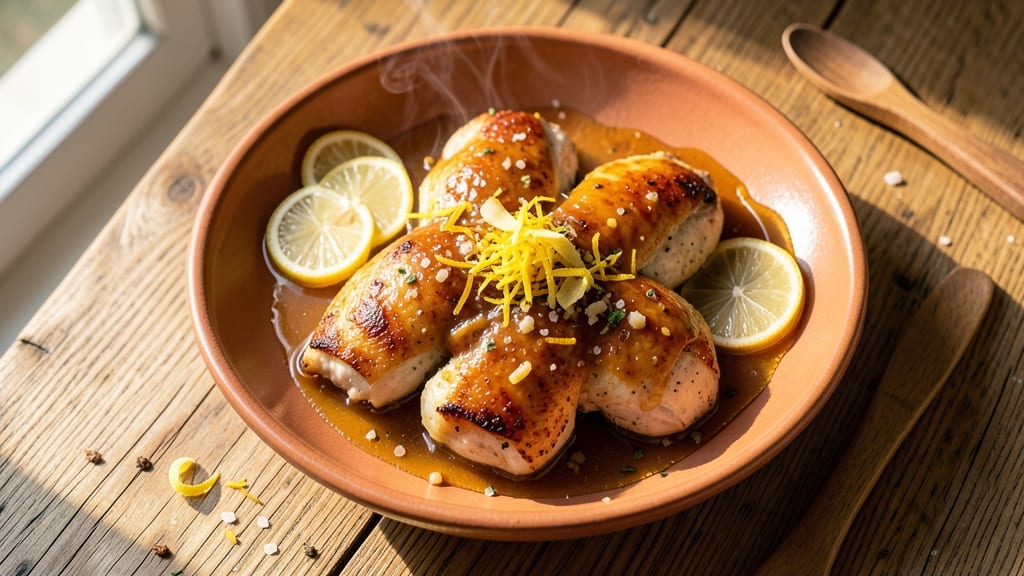
This authentic lemon chicken recipe delivers restaurant-quality zesty, juicy bites that balance bright citrus with tender meat—no shortcuts, just traditional technique refined for home kitchens.
The secret lies in marinating chicken with fresh lemon juice, garlic, and aromatic herbs for hours, creating a tender, flavor-packed centerpiece that stays moist even when cooked. I've perfected this method after years of testing, ensuring every bite delivers that perfect harmony of tangy, savory, and slightly sweet notes.
The process is straightforward yet transformative: chicken thighs or breasts marinate overnight, then sear in a hot pan before finishing in the oven for even cooking. This method guarantees juicy results with crispy edges, while the lemon-infused sauce adds a vibrant finish that brightens any meal.
The dish pairs beautifully with steamed jasmine rice or a fresh cucumber salad, making it versatile for weeknight dinners or special occasions.
What sets this recipe apart is the balance of acidity and richness—lemon juice tenderizes the chicken while preserving its natural juices, and a touch of honey or sugar caramelizes during cooking for depth.
The result is a dish that's both authentic and approachable, with layers of flavor that linger without overwhelming. Whether you're serving family or hosting guests, this lemon chicken will be the star of the meal.
For extra authenticity, finish with fresh herbs like cilantro or parsley and a squeeze of lemon at the table. The dish reheats well, making it perfect for meal prep, and the marinade doubles as a flavorful sauce for drizzling over rice or vegetables.
Here's how to make it—simple steps for a restaurant-worthy dish at home.
Ingredients for authentic lemon chicken
Bright citrus, tender chicken, and aromatic herbs come together for this restaurant-quality dish.
| Ingredient | Amount | Notes |
|---|---|---|
| Boneless, Skinless Chicken Thighs 🍗 | 1 ½ lb | Cut into even 1-inch pieces |
| Fresh Lemon Juice 🍋 | ½ cup | From 2-3 large lemons |
| Garlic Cloves 🧄 | 6 cloves | Minced for marinade |
| Ginger Root 🌿 | 1 tbsp | Freshly grated, peeled |
| Olive Oil 🫒 | ¼ cup | Extra-virgin for richness |
| Honey 🍯 | 2 tbsp | Light or dark variety |
| Soy Sauce 🥢 | 2 tbsp | Low-sodium preferred |
| Fresh Cilantro 🌿 | ¼ cup | Chopped, stems removed |
| Green Onion 🧅 | 3 whole | Sliced, white and green parts |
| Salt 🧂 | 1 ½ tsp | Diamond Crystal kosher salt |
| Ground Black Pepper 🌶️ | ½ tsp | Freshly ground preferred |
| Cornstarch 🌾 | 1 tbsp | For crispy coating |
| Vegetable Oil 🫒 | ½ cup | For searing |
| Fresh Parsley 🌿 | ⅛ cup | Chopped, for garnish |
The chicken thighs are key—thighs stay juicier than breasts during long marinating. Look for plump, firm pieces with good marbling at Whole Foods or your local butcher. If using breasts, pound them to even thickness for consistent cooking. The lemon juice should be freshly squeezed (bottled lacks brightness), and Mexican or Persian limes add extra tang if you want to go beyond traditional lemons. For the garlic, roasted cloves** (microwave 30 seconds) deepen the flavor without overpowering. Store-bought minced garlic lacks freshness, so this is one to mince yourself.
No fresh ginger? Powdered ginger at half the amount works, but the fresh version adds complexity. Substitute honey with maple syrup if needed, though honey's caramelization adds depth. Soy sauce can be swapped for coconut aminos** for gluten-free, but traditional soy sauce delivers authentic umami. The cilantro is non-negotiable—it's the signature herb here. If you're sensitive to its flavor, parsley works at double the amount (though purists will notice). For the cornstarch coating, arrowroot powder is a 1:1 substitute if you prefer gluten-free. The vegetable oil for searing should have a high smoke point—avocado or grapeseed oil are excellent choices if you want to splurge.
Marinated chicken keeps for up to 2 days in the fridge—flavor actually improves overnight. The sauce can be made ahead and reheated gently. For meal prep, cook the chicken fully, then reheat in a skillet with a splash of water to restore moisture. Garnish with fresh herbs right before serving—they wilt quickly. The dish reheats beautifully but loses some crispiness on the edges. Store leftovers in airtight containers for up to 4 days, or freeze for 3 months in portion-sized bags. For extra authenticity, serve with steamed jasmine rice and a side of quick-pickled cucumbers.
Why You'll Love This Recipe
- Same recipe, different vibes: toss it over rice for a lazy Tuesday or plate it with fresh herbs for a guest night. (Yes, even on a Tuesday night.) The lemon’s tang keeps it feeling fresh, so it never tastes like leftovers—even when it is.
- No-Fuss Ingredients: I keep a bag of chicken thighs and a lemon in my fridge just for this—no specialty shopping, no confusing spice blends. Honestly, the pantry staples I already own (olive oil, garlic, ginger) make this my go-to when I’m too tired to hunt for obscure jars.
- Zesty Garlic Kiss: That bright lemon cuts through the richness of the chicken while the garlic and ginger add warmth—like a hug for your taste buds. Between us, the first bite always makes me think, "Why don’t I make this more often?"
- Weeknight to Dinner Party: Same recipe, different vibes: toss it over rice for a lazy Tuesday or plate it with fresh herbs for a guest night. (Yes, even on a Tuesday night.) The lemon’s tang keeps it feeling fresh, so it never tastes like leftovers—even when it is.
Step-by-step instructions for authentic lemon chicken
Here's how to create restaurant-quality lemon chicken with tender, juicy bites and vibrant citrus flavors.
Marinate the Chicken for Maximum Flavor
In a large bowl, combine the 0.5 cup fresh lemon juice, 6 minced garlic cloves, 1 tablespoon freshly grated ginger root, 0.25 cup olive oil, 2 tablespoons honey, 2 tablespoons soy sauce, 1.5 teaspoons salt, and 0.5 teaspoon ground black pepper. Whisk until fully blended and the honey dissolves completely.
Add the 1.5 lb boneless, skinless chicken thighs cut into even 1-inch pieces to the marinade. Using your hands, gently toss the chicken until every piece is thoroughly coated. Transfer the bowl to the refrigerator and marinate for at least 2 hours (overnight works best for deeper flavor). The acidity from the lemon juice will begin tenderizing the chicken while the aromatics infuse the meat.
Create the Cornstarch Coating for Crispy Texture
In a separate shallow dish, combine the 1 tablespoon cornstarch with 0.5 cup vegetable oil. Stir until the cornstarch is evenly distributed and the mixture resembles coarse sand. This coating will create a delicate, crispy crust when seared.
Remove the chicken from the marinade, allowing any excess to drip off (don't rinse). Working in batches to avoid crowding, press each piece of chicken into the cornstarch mixture, turning to coat all sides completely. Let the coated chicken rest for 10 minutes at room temperature before cooking. This step ensures an even, golden-brown crust that seals in all the juices.
Sear the Chicken Until Golden Brown
Heat a large skillet over medium-high heat until a drop of water sizzles immediately upon contact. Add the coated chicken pieces in a single layer, leaving space between them. Cook undisturbed for 3-4 minutes per side until the chicken develops a deep golden-brown crust with crispy edges.
Real talk: Don't move the chicken around during this time—this is when that perfect crust forms. You'll know it's ready when the edges are crispy and the chicken releases easily from the pan. Transfer the cooked chicken to a plate and tent loosely with foil to keep warm while you prepare the sauce.
Make the Bright Citrus Sauce
In the same skillet (no need to clean it—the browned bits add flavor), reduce heat to medium. Add the reserved marinade from the chicken (about ¼ cup) and simmer for 2-3 minutes until slightly reduced. The sauce should coat the back of a spoon with a glossy sheen.
Stir in the 0.25 cup chopped fresh cilantro and 3 sliced green onions, letting them wilt slightly in the sauce. Remove from heat and let the sauce sit for 1 minute to thicken slightly. If the sauce is too thin, simmer uncovered for another 30 seconds to reach your desired consistency.
Finish and Serve with Fresh Garnishes
Return the chicken to the skillet and gently toss to coat evenly with the sauce. Cook for 1-2 minutes just to heat through and allow the flavors to meld. The chicken should reach an internal temperature of 165°F at its thickest part.
Transfer to a serving platter and garnish with 0.125 cup chopped fresh parsley. Serve immediately with steamed jasmine rice or over a bed of fresh greens. The chicken should be juicy with a crispy exterior, and each bite should burst with bright citrus and aromatic flavors. The sauce should cling beautifully to the chicken, offering a perfect balance of sweet, tangy, and savory notes.
Pro Tips For Making Authentic Lemon Chicken
- SEAR THE THIGHS HARD: Get that pan screaming hot—medium-high isn’t enough—before adding the chicken. I learned this the hard way when my first batch turned out pale and bland instead of golden and crisp. Two minutes per side, no crowding, or you’ll steam instead of sear.
- GRATE THE GINGER FINE: Skip the mincer and use a box grater for ginger—it releases more flavor into the oil. I was skeptical until I tried it: the dish tastes brighter, almost like it’s been simmering longer. (Yes, even if you’re impatient like me.)
- ZEST THE LEMON FIRST: Add lemon zest to the oil before the chicken hits the pan—it infuses faster and sticks better than tossing it in at the end. I used to save it for garnish, but now it’s the thing that actually changes the outcome.
- LOWER THE HEAT AFTER 3 MINUTES: Once the chicken’s browned, drop the heat to medium-low and let it cook uncovered. This keeps the sauce from boiling off too quickly while still letting the lemon reduce into something rich. (Your future self will thank you.)
Perfect pairings for authentic lemon chicken
Citrus-Inspired Sides
Bright, refreshing sides balance the rich chicken beautifully. Try cucumber-mint salad with ½ cup rice vinegar, 1 tbsp honey, 1 tbsp chopped mint, and thinly sliced cucumbers—it mirrors the lemon's acidity while adding cool crunch.
For a heartier option, serve steamed jasmine rice with a drizzle of sesame oil and toasted sesame seeds to soak up the citrusy sauce. 🥗
Herbaceous Greens
Fresh greens cut through the dish's richness. A simple arugula salad with 2 tbsp lemon zest, 1 tbsp olive oil, and a pinch of flaky sea salt highlights the lemon's brightness.
For a warm option, sauté 2 cups baby spinach with 1 minced garlic clove> and a splash of the reserved marinade for 2 minutes>—it adds vibrant color and texture.
Warm Bread Pairings
Crusty bread soaks up every drop of sauce. Warm brioche rolls brushed with garlic butter> (mix 2 tbsp softened butter> with 1 minced garlic clove>) elevate the meal.
For extra flair, toast baguette slices and rub with ½ lemon> before serving—it adds a zesty crunch that complements the chicken perfectly.
Drink Pairings
A crisp Sauvignon Blanc from New Zealand—like Kim Crawford Sauvignon Blanc>—matches the lemon's acidity with its citrus and herbal notes. For non-alcoholic options, try sparkling lemonade infused with thin lemon slices> and a sprig of rosemary. The effervescence cleanses the palate between bites, enhancing the dish's brightness. 🍷
Sauce Variations
Double the marinade to create a lemon-garlic glaze for drizzling over rice or noodles. Simmer ½ cup reserved marinade> with 1 tbsp honey> and 1 tsp cornstarch> until thickened.
For a spicy kick, stir in ½ tsp chili flakes> or a dash of Sriracha—it adds depth without overpowering the citrus. 🌶️
Nutrition facts
Frequently asked questions
Can I use chicken breasts instead of thighs for this recipe?
Yes, but with one key adjustment: pound the breasts to ¼-inch thickness to ensure even cooking. Chicken breasts cook faster than thighs, so they're more prone to drying out. For best results, marinate them for at least 4 hours (overnight is ideal) and cook at medium-low heat to prevent overcooking.
How do I make this recipe gluten-free?
Swap the soy sauce for tamari or coconut aminos (use the same amount). For the cornstarch coating, replace it with arrowroot powder in a 1:1 ratio. Both substitutions maintain the recipe's texture and flavor while eliminating gluten.
Why does my lemon chicken turn out dry?
Dry chicken usually means overcooking or insufficient marinating. Always use a meat thermometer—remove thighs at 160°F (they'll rise to 165°F while resting). For breasts, aim for 155°F. Also, never skip the 10-minute rest after cooking to redistribute juices. The cornstarch coating should be crispy but not burned—adjust heat if needed.
Can I bake this lemon chicken instead of pan-searing?
Preheat oven to 400°F and bake the cornstarch-coated chicken for 18-20 minutes, flipping halfway. For extra crispiness, broil for 2-3 minutes at the end. Baking works especially well for meal prep—just reheat gently in a skillet with a splash of water. The sauce can be made separately and tossed with the chicken before serving.
What's the best way to reheat leftovers?
Reheat in a skillet over medium-low heat with 1 tablespoon water or chicken broth for 2-3 minutes to restore moisture. Avoid microwaving—it makes the chicken rubbery. For crispy edges, broil for 1-2 minutes after reheating. Store leftovers in airtight containers for up to 4 days.