
Main Courses
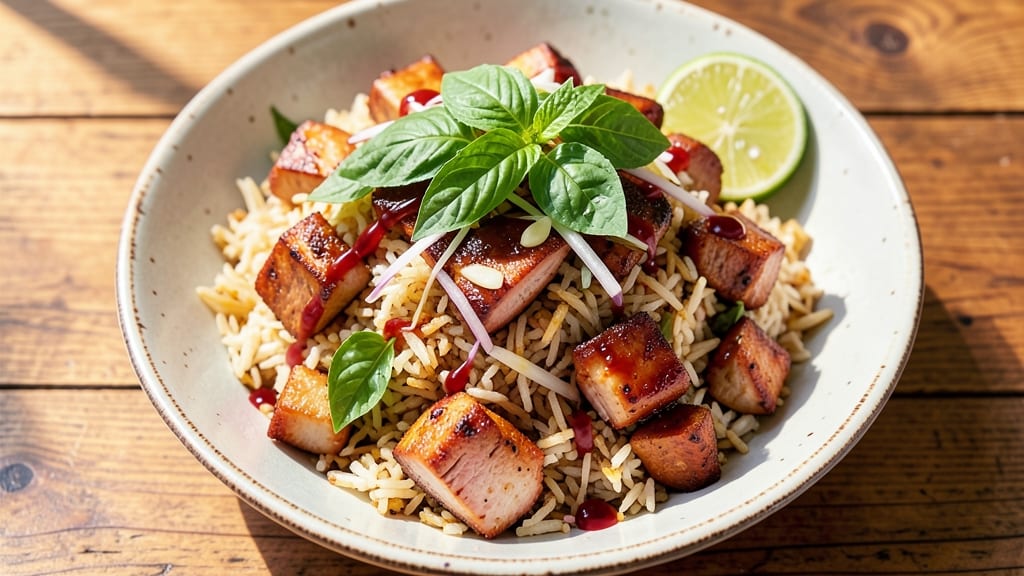
This authentic Thai chicken fried rice delivers restaurant-quality wok-heated fragrance in just 20 minutes, using traditional techniques to balance bold flavors and perfect textures.
The secret lies in properly cooked jasmine rice, tender chicken, and a fragrant blend of Thai basil, fish sauce, and lime—elements that transform simple ingredients into a dish bursting with character.
I've refined this recipe over years of testing, ensuring every bite captures the essence of street-side Thai cuisine without requiring specialized equipment.
What sets this recipe apart is the attention to detail that makes it authentically Thai: the chicken is stir-fried until just tender, the rice is cooled and slightly dried to prevent mushiness, and the final assembly incorporates fresh Thai basil, fish sauce, and a bright lime dressing for that signature tang.
The wok-heated aroma alone will transport you to Bangkok, while the balance of savory, sweet, and spicy flavors keeps every bite exciting. This isn't just fried rice—it's a flavor-packed experience that respects tradition while being adaptable for home cooks.
The result is a dish with perfectly textured rice—slightly sticky but not soggy—tender chicken pieces, and a sauce that coats every grain without overwhelming the natural flavors. Garnishes like fried garlic, crushed peanuts, and fresh cilantro add layers of texture and aroma, completing the restaurant-quality presentation.
Whether you're feeding a family or treating yourself to a weeknight meal, this recipe delivers the kind of satisfaction that comes from authentic, well-executed cooking.
Best of all, this method works with ingredients you can find at any grocery store, making it accessible without sacrificing authenticity. The key is in the technique: high heat, quick cooking, and proper seasoning. Let's bring the flavors of Thailand to your kitchen—one perfectly seasoned bite at a time.
Ingredients for authentic thai chicken fried rice
Jasmine rice, tender chicken, and Thai basil create restaurant-quality fried rice in 20 minutes.
| Ingredient | Amount | Notes |
|---|---|---|
| Day-Old Jasmine Rice 🍚 | 4 cups | Cooled and slightly dried |
| Boneless Chicken Breast 🍗 | 1 ½ lb | Cut into 1-inch cubes |
| Thai Basil Leaves 🌿 | ½ cup | Fresh, stems removed |
| Fish Sauce 🍶 | 2 tbsp | Red Boat preferred |
| Lime Juice 🍋 | 2 tbsp | Freshly squeezed |
| Soy Sauce 🥢 | 2 tbsp | Light or all-purpose |
| Garlic Cloves 🧄 | 6 cloves | Minced, for stir-frying |
| Fresh Ginger 🌿 | 1 tbsp | Grated finely |
| Vegetable Oil 🫒 | 3 tbsp | High smoke point |
| Brown Sugar 🍚 | 1 tbsp | Packed lightly |
| Crushed Peanuts 🥜 | ¼ cup | For garnish |
| Fresh Cilantro 🌿 | ¼ cup | Chopped, for garnish |
| Salt 🧂 | ½ tsp | Kosher or sea salt |
| White Pepper 🌶️ | ¼ tsp | Freshly ground |
The jasmine rice is the foundation—day-old rice prevents mushiness and absorbs flavors beautifully. Thai Kitchen or Lotus Foods are reliable for authentic jasmine rice, but any long-grain rice works in a pinch. For the chicken, boneless breast ensures tender bites, though thighs add richness if you prefer. The Red Boat fish sauce is non-negotiable for authentic umami—substitutes like soy sauce lack depth. Fresh Thai basil, often found in Asian markets, has a distinct anise-like flavor; regular basil won't cut it here. If you can't find it, cilantro with a pinch of anise mimics the profile.
No fish sauce? Soy sauce with a splash of Worcestershire (ensure vegetarian) works, though the flavor won't be identical. Substitute Thai basil with cilantro plus 1/4 tsp anise seeds, toasted briefly for aroma. For the garlic and ginger, fresh is essential—jarred versions lack the bright punch. Brown sugar adds subtle sweetness; white sugar works if unavailable, but the molasses notes enhance complexity. The crushed peanuts should be lightly toasted before adding to prevent sogginess, and store-bought versions often contain oils—raw peanuts toasted in the same pan are ideal.
Prep ahead by cooking the rice a day in advance—it reheats beautifully. Store components separately: rice in an airtight container for 3-4 days, chicken in the fridge for 2 days, and basil wrapped in damp paper towels for 3 days. Freeze the sauce base (fish sauce, lime, soy, sugar) for 3 months if pre-mixed. Reheat rice and chicken separately before stir-frying to maintain texture. Garnishes like peanuts and cilantro add crunch—keep them separate until serving to preserve freshness.
Why You'll Love This Recipe
- One-Pan Magic: I swear by this—no chopping boards, no extra pans. Just heat your wok, toss in the day-old rice (that texture is everything), and let the chicken and aromatics sizzle together. The fish sauce and lime work their magic while you stir, and suddenly, dinner’s ready.
- Umami Bomb: That first bite? The crispy chicken, the funky depth of fish sauce, the bright pop of lime—it’s a flavor trifecta. The Thai basil at the end isn’t just garnish; it’s the cherry on top, turning a simple rice dish into something you’ll crave again in a week.
- Lunchbox Hero: Make a big batch on Sunday, and you’ve got lunch for days. Cold or reheated, it’s still solid—just toss in a fried egg for extra protein if you’re feeling fancy. My kids grab it for school, and honestly? They fight over who gets the leftovers.
- Budget Win: Chicken breast is affordable, rice lasts forever, and a little fish sauce goes a long way. No fancy ingredients here—just smart, no-waste cooking. I’ve fed four people for under $10 with this, and no one complains about the price tag.
Step-by-step instructions for authentic Thai chicken fried rice
Here's the professional method to achieve restaurant-quality Thai fried rice with perfect texture and balanced flavors.
Prepare the Chicken and Aromatics
Cut the 1.5 lb boneless chicken breast into 1-inch cubes for even cooking. In a mixing bowl, combine the chicken with 2 tbsp soy sauce, 1 tbsp brown sugar, 0.5 tsp salt, and 0.25 tsp white pepper. Let this marinate for 15 minutes while you prep the aromatics.
Finely mince the 6 cloves garlic and grate the 1 tbsp fresh ginger using a microplane. Remove the stems from the 0.5 cup Thai basil leaves and roughly chop the 0.25 cup fresh cilantro. These fresh herbs will add vibrant flavor and aroma to the dish.
Stir-Fry the Chicken
Heat a wok or large skillet over high heat until smoking slightly. Add 2 tbsp vegetable oil and swirl to coat. Once the oil shimmers, add the marinated chicken in a single layer, leaving space between pieces. Cook undisturbed for 2-3 minutes until the bottoms develop a golden crust.
Stir the chicken occasionally for another 2-3 minutes until fully cooked through and no longer pink in the center. Remove the chicken from the wok and set aside on a plate. You'll notice the chicken will continue cooking from residual heat—this is perfect for maintaining moisture.
Cook the Aromatics and Rice
In the same wok, add the remaining 1 tbsp vegetable oil and swirl to coat. Add the minced garlic and grated ginger, stirring constantly for 30 seconds until fragrant—this should take less than a minute before they begin to color.
Add the 4 cups day-old jasmine rice, breaking up any clumps with a spatula. Stir-fry for 2-3 minutes until the rice is heated through and begins to sizzle. The rice should be well-coated with oil and slightly crispy in spots—this texture is essential for authentic Thai fried rice.
Combine and Season
Return the chicken to the wok and add 2 tbsp fish sauce and 2 tbsp lime juice. Stir everything together vigorously for 1-2 minutes until the rice absorbs the flavors and becomes evenly coated. The lime juice will brighten the dish, while the fish sauce adds depth.
Taste the mixture and adjust seasoning if needed. You want a balance of salty, sweet, and umami flavors. If the rice seems dry, add 1-2 tablespoons of water and stir until incorporated. The rice should be moist but not soggy, with a slight crispness to each grain.
Finish and Garnish
Remove the wok from heat and stir in the 0.5 cup Thai basil leaves and 0.25 cup crushed peanuts. The basil will wilt slightly, releasing its aromatic oils, while the peanuts add a satisfying crunch. Garnish each serving with additional chopped cilantro for freshness and visual appeal.
Serve immediately while hot. The dish should have a fragrant aroma with layers of garlic, ginger, lime, and basil. Each bite should deliver perfectly cooked chicken, flavorful rice, and a balance of textures from the peanuts and herbs. This authentic Thai chicken fried rice captures the essence of street food with restaurant-quality results.
Pro Tips For Making Authentic Thai Chicken Fried Rice
- STIR-FRY CHICKEN IN BATCHES: Don’t throw all the chicken in at once—cut it into 1-inch cubes and cook in two rounds. The first batch gets crispy edges while the second stays juicy, and your wok won’t steam like a sad sauna. I learned this the hard way after serving rubbery chicken to a skeptical friend who now demands it.
- USE COLD RICE: Break up clumps in day-old rice with your hands before frying—it’s drier, toasts faster, and won’t turn mushy. Skip the microwave; cold rice from the fridge works better than reheated. (Yes, even if you’re impatient like me.)
- SALT THE RICE WELL: Toss the rice with 1 tsp salt before frying—it crisps the grains and balances the fish sauce. I used to skip this, and the dish always tasted flat until I finally added it. Trust me, the texture changes everything.
- TOSS BASIL AT THE END: Add Thai basil leaves whole in the last 30 seconds—heat wilts them perfectly without turning them to sludge. If you fry them too long, they’ll turn bitter. (Your future self will thank you for this tiny detail.)
Troubleshooting great authentic thai chicken fried rice
Rice Too Soggy
Day-old rice is crucial, but even that can get soggy if overcooked. I’ve found that using 4 cups of day-old rice (not freshly cooked) prevents mushiness.
If your rice still feels damp, spread it on a baking sheet and dry it in the oven at 300°F for 5-10 minutes before stir-frying. This step is non-negotiable for authentic texture—Thai fried rice should have a slight crispness to each grain. 🌡️
Chicken Overcooked
Chicken breast can easily dry out if cooked too long. I recommend cutting it into 1-inch cubes and cooking only until it reaches 165°F internal temperature—about 4-5 minutes total in a hot wok.
Remove it from the wok as soon as it’s done and let it rest for 2 minutes before adding back to the rice. Overcooking kills the tender texture that makes this dish special.
Flavor Too Salty
Fish sauce is potent, so taste as you go! Start with 1 tbsp fish sauce and add more gradually. If your dish tastes too salty, balance it with 1 tsp brown sugar or a splash of lime juice.
The acidity helps cut through the saltiness while adding brightness. I’ve also had success adding a pinch of white pepper to enhance depth without overpowering.
Herbs Too Bitter
Thai basil and cilantro can taste bitter if overcooked. Add them only in the final 30 seconds of cooking—just before serving. If your herbs taste bitter, they might be old.
Buy fresh Thai basil from an Asian market (it’s worth it!) and store it properly: wrap stems in a damp paper towel and refrigerate for up to 3 days. Regular basil won’t work—the anise-like flavor is essential. 🌿
Oil Too Hot
A smoking-hot wok is key, but too much oil can make your dish greasy. Use 3 tbsp total (2 tbsp for chicken, 1 tbsp for rice) and swirl it evenly. If your wok isn’t hot enough, the oil will pool instead of coating the food.
Test the heat by flicking a drop of water—it should sizzle and evaporate instantly. If it bubbles slowly, your wok needs more time to heat up.
Peanuts Too Dry
Store-bought crushed peanuts often contain oils that make them soggy. Toast ¼ cup raw peanuts in the same wok you used for the rice (after removing the dish) for 1-2 minutes until fragrant.
Crush them lightly with a rolling pin or mortar and pestle. This adds freshness and prevents the peanuts from turning into a paste. Add them just before serving to keep them crisp. 🥜
Nutrition facts
Frequently asked questions
Why does the recipe call for day-old rice?
Day-old rice is essential for authentic Thai fried rice because it's dry enough to absorb flavors without turning mushy. Freshly cooked rice releases too much moisture when stir-fried, resulting in a soggy texture. The slight dryness also creates that signature crispness on each grain that makes the dish so satisfying.
Can I use chicken thighs instead of breast?
Chicken thighs add richer flavor and stay juicier during cooking. Use 1.5 lb bone-in thighs (trimmed) and cut into 1-inch pieces. They'll take about 5-6 minutes to cook through at high heat—just remove them when they reach 165°F internally. The extra fat actually enhances the dish's depth.
What if I can't find Thai basil?
Thai basil is crucial for authentic flavor, but you can substitute with cilantro plus ¼ tsp anise seeds toasted briefly in the wok. For a closer match, blend ½ cup regular basil with 1 tsp fish sauce and ½ tsp sugar to mimic the anise-like profile. Add the mixture just before serving to preserve freshness.
How do I make this vegetarian?
Replace the chicken with 1.5 lb firm tofu (pressed and cubed) or 1 cup mushrooms (shiitake or oyster work best). Marinate the tofu in 2 tbsp soy sauce, 1 tbsp brown sugar, and ½ tsp white pepper for 15 minutes. Stir-fry until golden brown before adding to the rice. For extra protein, add ½ cup cooked edamame or ¼ cup crispy fried tofu at the end.
Can I make this ahead of time?
Yes, but with some adjustments. Cook the rice and chicken separately, then store them in airtight containers for up to 3 days. Reheat the chicken and rice separately before stir-frying together—this prevents sogginess. Keep the sauce components (fish sauce, lime, soy) separate until ready to combine. The fresh basil and peanuts should always be added just before serving for maximum freshness.