
Main Courses
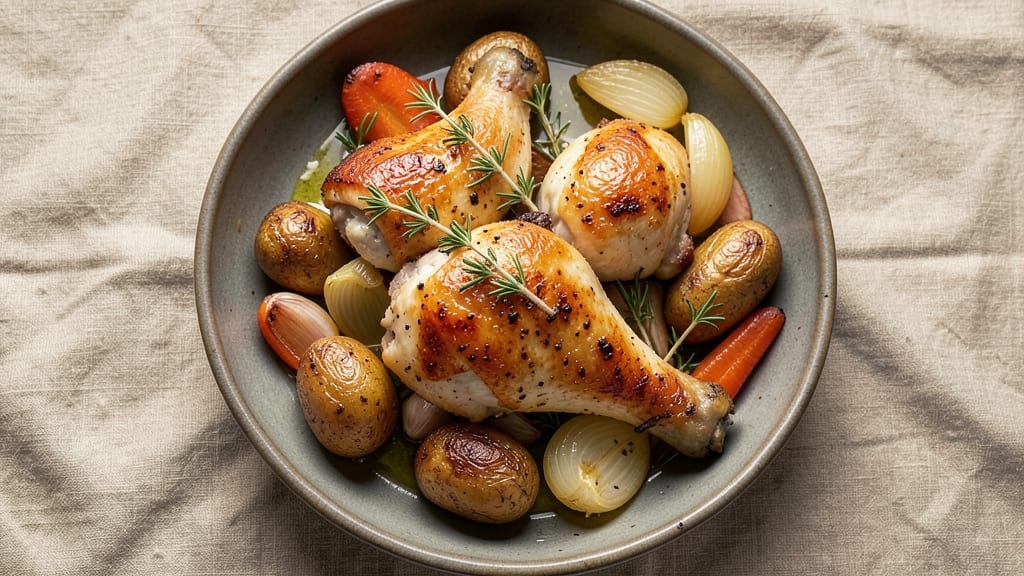
This baked chicken legs with vegetables recipe delivers golden, crispy skin and juicy meat that practically falls off the bone—all while vegetables roast to tender perfection in the same pan.
The secret lies in a herb-crusted coating that locks in moisture while creating an irresistible crunch, paired with foil-sealed vegetables that caramelize without drying out.
I perfected this method after years of experimenting with different baking techniques, and it’s now my go-to for effortless weeknight dinners that taste like a restaurant meal.
The beauty of this recipe is its simplicity: one tray, minimal prep, and hands-off cooking. Chicken thighs stay juicy thanks to a foil-sealed bake, while potatoes, carrots, and onions develop deep, caramelized flavors from the oven’s dry heat.
The herb crust—made with just a few pantry staples—adds layers of flavor without overpowering the natural taste of the chicken. It’s the kind of dish that feels indulgent but requires no special skills or ingredients.
By the time you pull this tray from the oven, you’ll have crispy, flavorful chicken legs with tender, caramelized vegetables that cling to the bone. The aromas alone—herbs, roasted garlic, and caramelizing onions—will have everyone at the table asking for seconds.
This recipe is perfect for feeding a crowd, meal prepping, or treating yourself to a satisfying, restaurant-quality dinner without the fuss.
Serve it with a drizzle of pan juices or a fresh herb sauce for extra brightness. The best part? Leftovers reheat beautifully, making this a foolproof, weeknight-approved meal that always delivers. Let’s get started on creating this balanced, flavorful dish that’s as easy as it is impressive.
Ingredients for baked chicken legs with vegetables
Herb-crusted chicken thighs and foil-sealed vegetables transform into restaurant-quality dinner with minimal effort.
| Ingredient | Amount | Notes |
|---|---|---|
| Chicken Legs (Drumsticks and Thighs) 🍗 | 1 ½ lb | Bone-in, skin-on preferred |
| Baby Potatoes 🥔 | 1 ½ lb | Halved, unpeeled |
| Carrots 🥕 | 1 lb | Whole, unpeeled |
| Yellow Onions 🧅 | 2 whole | Quartered, peeled |
| Garlic Cloves 🧄 | 6 cloves | Minced, fresh preferred |
| Extra-Virgin Olive Oil 🫒 | ¼ cup | For crust and vegetables |
| Dried Thyme 🌿 | 1 tbsp | Or 1 tbsp fresh thyme |
| Dried Rosemary 🌿 | 1 tbsp | Finely chopped |
| Diamond Crystal Kosher Salt 🧂 | 1 ½ tsp | For seasoning |
| Freshly Ground Black Pepper 🌶️ | 1 tsp | Coarse grind preferred |
| Aluminum Foil 📄 | 1 sheet | Heavy-duty, 18x12 inches |
| Cornstarch 🌾 | 1 tbsp | For crispy coating |
| Fresh Parsley 🌿 | ¼ cup | Chopped, for garnish |
The chicken legs should be bone-in and skin-on for maximum flavor and crispiness—look for plump, firm thighs with good marbling at the grocery store. Costco or local butchers often carry high-quality cuts, but the regular supermarket selection works fine if you choose legs with intact skin. For the vegetables, organic baby potatoes and carrots add natural sweetness, but conventional works too. The foil-sealing technique is what locks in moisture while allowing the vegetables to caramelize beautifully—heavy-duty foil is a must for even heat distribution. Fresh herbs make all the difference here, so if you're using dried, measure carefully—they're more potent than fresh.
No fresh thyme or rosemary? Dried works at half the amount, but toast it first in a dry pan for 30 seconds to deepen the flavor. Swap carrots for parsnips or sweet potatoes if you prefer, but they'll need an extra 10 minutes in the oven. The cornstarch coating creates that irresistible crunch—substitute all-purpose flour if needed, but cornstarch gives a lighter texture. For extra brightness, add 1 tsp lemon zest to the herb crust. The garlic can be roasted whole with the vegetables for a milder flavor, then squeezed out before serving—game-changer for garlic-sensitive eaters. If you're meal prepping, double the recipe and store components separately to reheat perfectly.
This dish reheats beautifully—4-5 days in the fridge or 3 months frozen. For freezing, cool completely before wrapping tightly in foil. The chicken skin stays crispy when reheated in a 350°F oven for 15 minutes with a splash of water in the pan. Store foil-sealed vegetables separately—they'll stay tender but can get soggy if reheated with the chicken. Garnish with fresh parsley just before serving to keep it vibrant. The pan juices make an excellent sauce—simply reduce them by half on the stovetop for a quick pan sauce that elevates the whole dish.
Why You'll Love This Recipe
- One-Pan Magic: I swear by this recipe when I’m too tired to wash a million dishes. Toss everything—chicken, potatoes, carrots, onions—on one sheet pan, drizzle with oil and herbs, and let the oven do the work. No pots, no pans, just golden, crispy perfection with zero cleanup.
- Crispy-Creamy Gold: That crispy skin on the chicken thighs? Chef’s kiss. The potatoes turn fluffy inside while caramelizing on the edges, and the garlic-infused onions add a sweet, savory punch. It’s the kind of dish that makes you forget takeout exists.
- Weeknight Workhorse: Between us, this is my go-to when I need something hearty but hands-off. Double the batch on Sunday, and you’ve got lunch for the next two days—no sad leftovers here. (Yes, even on a Tuesday night.)
- Budget-Friendly Feast: Chicken legs stretch farther than breasts, and the veggies? They’re the kind you can buy in bulk without breaking the bank. Honestly, it’s the most satisfying way to feed a crowd—or just me, when I’m craving something filling without the guilt.
Step-by-step instructions for herb-crusted baked chicken legs
This method delivers perfectly crispy skin and tender meat while locking in juices through foil sealing.
Prepare the Chicken and Vegetables
Preheat your oven to 425°F with a rack positioned in the lower third. Pat the 1.5 lb chicken legs completely dry with paper towels—this is non-negotiable for crispy skin. In a small bowl, combine 1 tbsp cornstarch, 1.5 tsp kosher salt, 1 tsp black pepper, 1 tbsp dried thyme, and 1 tbsp dried rosemary. The cornstarch creates a crispy crust while the herbs infuse deep flavor.
Toss the chicken legs in the herb mixture until evenly coated, pressing the seasoning into the skin. For the vegetables, combine 1.5 lb baby potatoes (halved), 1 lb carrots (whole), 2 whole yellow onions (quartered), and 6 cloves minced garlic in a large bowl. Drizzle with 0.25 cup extra-virgin olive oil and toss until everything is evenly moistened. Spread the vegetables on a parchment-lined baking sheet and roast for 15 minutes while you prepare the chicken.
Create the Herb-Crusted Chicken
After the vegetables have roasted for 15 minutes, remove them from the oven and set aside. Return the oven temperature to 425°F. Place the seasoned chicken legs on a separate parchment-lined baking sheet, skin-side up. Bake for 20 minutes until the skin begins to crisp and the edges turn golden brown. This initial baking establishes the crust before sealing.
Here's the thing—don't overcrowd the pan. The chicken needs space to develop that crispy skin. If your sheet isn't large enough, work in batches. You'll know it's ready when the skin releases easily from the bone when gently lifted with tongs.
Foil-Seal for Juicy Perfection
Remove the chicken from the oven and transfer each piece to a sheet of heavy-duty aluminum foil. Add 1 tbsp minced garlic and 2 tbsp chopped fresh parsley to each foil packet along with the roasted vegetables. The foil creates a steam chamber that locks in moisture while allowing the vegetables to absorb the chicken's flavors.
Seal the foil packets tightly by folding the edges and crimping them shut. Return the packets to the oven and bake for an additional 30-35 minutes at 375°F until the chicken reaches an internal temperature of 165°F when measured at the thickest part of the thigh. The vegetables should be tender with caramelized edges.
Rest and Serve
Remove the foil packets from the oven and let them rest for 5-10 minutes before opening. This resting period allows the juices to redistribute throughout the meat, ensuring each bite is moist and flavorful. Open the foil carefully to release the fragrant steam, then transfer the chicken and vegetables to serving plates.
Garnish each serving with an additional 1 tbsp chopped fresh parsley for a pop of color and freshness. The chicken should have crispy, golden-brown skin that gives way to tender, juicy meat. The vegetables should be perfectly tender with caramelized edges, absorbing all the herb-infused flavors from the chicken. Serve immediately while everything is hot.
Pro Tips For Making Baked Chicken Legs With Vegetables
- Par-Cook the Potatoes: Boil baby potatoes for 8-10 minutes before baking—half the time, double the flavor. They’ll crisp up perfectly instead of turning to mush, and the chicken won’t steal all the oven heat while they play catch-up.
- Salt the Chicken Twice: Dry the legs thoroughly, then season them before any marinade or oil. After tossing with everything else, hit them with another round of salt right before baking—this guarantees crispy skin even if your oven runs hot.
- Cut Carrots in Chunks: Skip the thin slices—they’ll burn before the chicken’s done. Cut carrots into 1-inch pieces so they soften evenly without turning into oven ash, and don’t forget to pierce them if using larger ones.
- Rotate the Tray: After 45 minutes, swap the baking sheet from top to bottom rack—this evens out browning and keeps the onions from sticking to the pan like glue. (Yes, even if you’re lazy, do this.)
Perfect pairings for baked chicken legs with vegetables
Herb Sauce Pairing
Brighten the dish with a lemon-herb sauce made by blending ½ cup Greek yogurt, 1 tbsp fresh lemon juice, 1 tbsp chopped fresh dill, 1 minced garlic clove, and ½ tsp salt.
Drizzle over the chicken and vegetables just before serving for a cooling contrast to the crispy skin. 🌿
Garlic Aioli Dip
For a rich dip, mix ½ cup mayonnaise, 1 tbsp minced garlic, 1 tsp lemon zest, and ½ tsp smoked paprika. Serve warm with the chicken and vegetables for dipping or drizzling. This adds a creamy, garlicky depth that complements the herb crust beautifully.
Crusty Bread Sides
Pair with a garlic bread or focaccia to soak up the pan juices. Toast a baguette with 2 tbsp softened butter, 1 minced garlic clove, and 1 tbsp chopped parsley, then bake at 375°F for 10 minutes.
The crispy bread contrasts perfectly with the tender chicken and vegetables.
White Wine Pairing
A crisp Sauvignon Blanc or Pinot Grigio enhances the dish’s herbaceous notes. The acidity cuts through the richness of the chicken, while the citrus undertones brighten the caramelized vegetables. Chill the wine to 45-50°F for optimal flavor. 🍷
Beer Pairing
For beer lovers, a Belgian Witbier like Hoegaarden or a honey wheat ale balances the dish’s savory and sweet elements. The coriander and citrus notes in these beers complement the thyme and rosemary in the chicken crust. Serve slightly chilled for the best experience.
Seasonal Vegetable Swaps
Adjust the vegetables based on seasonality: swap carrots for roasted Brussels sprouts in winter or zucchini and bell peppers in summer. Each variation keeps the foil-sealing technique intact while introducing new flavors. The key is to choose vegetables that caramelize well with the chicken’s juices. 🌱
Nutrition facts
Frequently asked questions
Why do you use cornstarch instead of flour for the chicken crust?
Cornstarch creates a lighter, crispier crust that stays crunchy even after baking. It absorbs moisture differently than flour, preventing the skin from becoming soggy while locking in juices. For extra crunch, mix 1 tbsp cornstarch with 1 tbsp flour—this gives you the best of both textures.
Can I bake chicken legs and vegetables together without foil?
You can try, but the foil-sealing method is key for juicy chicken and caramelized veggies. Without foil, the vegetables may dry out while the chicken risks overcooking. If you prefer one-pan cooking, roast the veggies first for 20 minutes, then add the chicken for the last 30 minutes—just monitor closely for doneness.
What if my chicken skin isn't crispy after baking?
Under-crispy skin usually means the chicken wasn't dry enough before seasoning or the oven wasn't hot enough. Pat the chicken very dry with paper towels and increase your oven temp to 450°F for the first 15 minutes of baking. For extra crispiness, broil for 2-3 minutes at the end (watch closely!).
How do I adjust this recipe for a larger group?
Double the recipe and use two baking sheets. For 8 servings, use 3 lb chicken legs and 3 lb vegetables total. Bake in batches if needed—start with the chicken, then add vegetables to the same pans after 20 minutes of chicken baking. The foil-sealing method works perfectly for larger batches too!
Can I use frozen vegetables instead of fresh?
Fresh vegetables work best for caramelization, but frozen will work in a pinch. Thaw and drain them well, then pat completely dry before tossing with oil. Add them to the foil packets 10 minutes earlier than fresh veggies since they'll need more time to heat through. The texture won't be quite as crispy, but they'll still be flavorful.