
Main Courses
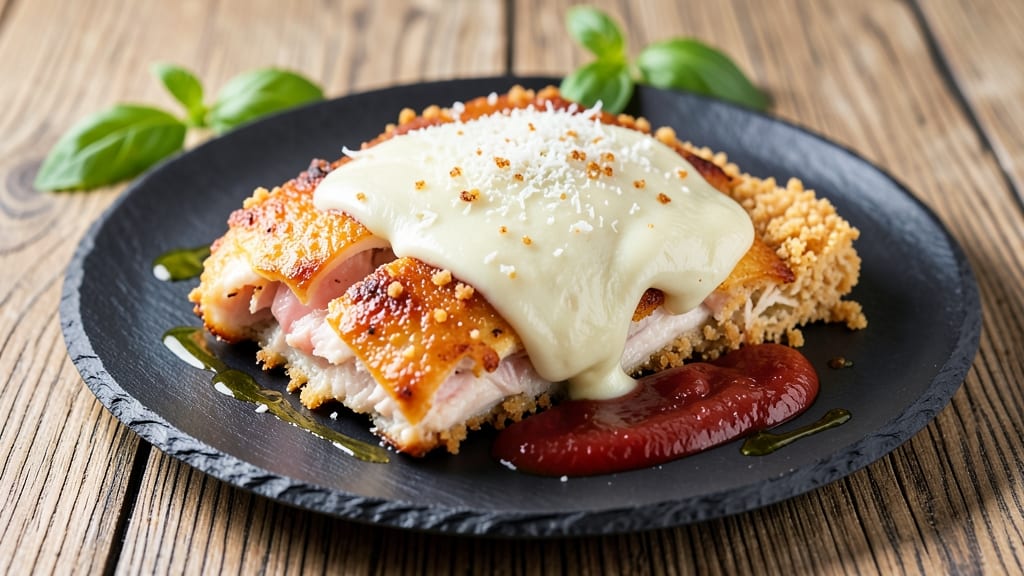
This baked chicken parmesan recipe delivers crispy, golden crusts without a single egg—just simple pantry staples and a foolproof technique. The secret lies in a foil-sealed baking method that locks in juices while creating that signature parmesan crunch.
I developed this version after years of testing egg-free alternatives, and it never fails to impress even the most skeptical dinner guests.
What sets this recipe apart is the no-egg breading system that uses crushed crackers and melted butter for adhesion, creating a crust that's just as crispy as traditional versions. The foil-sealing technique ensures your chicken stays juicy inside while achieving that perfect golden-brown exterior.
This method works equally well for weeknight dinners or meal prep, making it a versatile addition to any cook's repertoire.
By the time you pull this dish from the oven, you'll have perfectly crispy chicken cutlets with melted cheese bubbling at the edges and tender, flavorful meat inside. The parmesan crust adds a savory depth that pairs beautifully with classic sides like garlic bread or a fresh garden salad.
Every bite delivers that satisfying combination of textures and flavors that makes this dish a restaurant favorite.
Whether you're accommodating dietary restrictions or simply looking for a reliable, egg-free version, this recipe delivers professional-quality results with minimal effort. The technique is straightforward, and the ingredients are simple—just a few pantry staples and fresh components. Let's get started on creating your perfect baked chicken parmesan.
Ingredients for baked chicken parmesan recipe no egg
Simple ingredients transform into restaurant-quality baked chicken parmesan without eggs.
| Ingredient | Amount | Notes |
|---|---|---|
| Boneless, Skinless Chicken Breast 🍗 | 1 ½ lb | Pounded to even 1/4-inch thickness |
| All-Purpose Flour 🌾 | ½ cup | For breading adhesion |
| Crushed Saltine Crackers 🍞 | 1 ½ cups | Fine texture for crispiness |
| Unsalted Butter 🧈 | ½ cup | Melted for adhesion |
| Parmesan Cheese 🧀 | 1 cup | Freshly grated from block |
| Low-Moisture Mozzarella Cheese 🧀 | 1 cup | Shredded by hand |
| Marinara Sauce 🍅 | 2 cups | High-quality jarred or homemade |
| Garlic Cloves 🧄 | 4 cloves | Minced for flavor base |
| Extra-Virgin Olive Oil 🫒 | 2 tbsp | For pan searing |
| Diamond Crystal Kosher Salt 🧂 | 1 tsp | For seasoning |
| Freshly Ground Black Pepper 🌶️ | ½ tsp | For seasoning |
| Aluminum Foil 📄 | 1 sheet | Heavy-duty for sealing |
| Fresh Basil Leaves 🌿 | ¼ cup | Chopped for garnish |
The chicken breast thickness is critical—pounding to 1/4-inch ensures even cooking and crispiness. Whole Foods or local butchers often carry high-quality chicken breast with good marbling for extra flavor. For the crackers, Trader Joe's sells affordable saltines in bulk, or grab any sturdy saltine brand. The Parmesan should be freshly grated from a block—pre-grated lacks the proper texture and flavor. Mozzarella needs to be low-moisture to prevent sogginess in the crust, and shredding it yourself makes all the difference. If you're making a large batch, consider buying a whole block of Parmigiano-Reggiano for superior flavor.
No saltine crackers? Crushed Ritz crackers or panko breadcrumbs work well as substitutes, though texture will differ slightly. Short on mozzarella? Provolone or fontina cheese add excellent flavor, though they melt differently. The marinara sauce can be store-bought—Rao's or Victoria are reliable brands—but homemade is ideal for that authentic restaurant taste. For the olive oil, California avocado oil has a higher smoke point, making it perfect for searing. The garlic should be freshly minced rather than using pre-minced jars, which can turn bitter over time. If you're watching calories, reduce the butter by half and use a light spray of olive oil instead.
Chicken breasts should be refrigerated until ready to use and cooked within 2 days of purchase. The grated cheeses can be pre-shredded and stored in airtight containers for up to 5 days, though freshly grated is always preferred. Leftover baked chicken parmesan reheats beautifully—cover with foil and bake at 350°F for 10-15 minutes until heated through. For meal prep, portion into individual containers with a thin layer of marinara to keep the cheese from drying out. The dish freezes well for up to 3 months, though the crust may lose some crispiness upon thawing.
Why You'll Love This Recipe
- No Egg Hassle: I swear by this trick—just butter, flour, and crushed crackers for that golden crust. No messy egg wash, no waiting for it to set, and still that satisfying crunch.
- Cheesy Crisp Magic: That saltine cracker crust? It’s the secret weapon—light, crispy, and packed with Parmesan flavor. The butter melts into a rich, buttery finish that makes every bite worth it.
- Meal Prep Hero: Double the batch, bake once, and you’ve got lunches for days. Reheat in the oven or microwave, and it stays just as good—no sad, dry chicken here.
- Budget-Friendly Feast: Chicken breasts stretch further with this method, and crushed crackers are cheaper than breadcrumbs. Plus, Parmesan adds luxury without breaking the bank.
Step-by-step instructions for crispy baked chicken parmesan
Here's how to achieve a perfectly crispy crust without eggs, using simple techniques and precise timing.
Prepare the Chicken and Breading Station
Begin by pounding the 1.5 lb boneless, skinless chicken breast to an even ¼-inch thickness between two sheets of plastic wrap. This ensures even cooking and prevents dryness in the center. Season both sides generously with 1 tsp Diamond Crystal kosher salt and ½ tsp freshly ground black pepper, pressing the seasoning into the meat.
In a shallow dish, combine the ½ cup all-purpose flour with 1 cup freshly grated Parmesan cheese and 1 cup low-moisture mozzarella cheese. This dry mixture will create the crispy crust. In another dish, mix the 1.5 cups crushed saltine crackers—this adds texture and absorbs excess moisture. Set both stations nearby for efficient breading.
Create the Butter and Sauce Mixtures
Melt the ½ cup unsalted butter in a small saucepan over low heat, then stir in the 4 minced garlic cloves until fragrant—about 1 minute. Remove from heat and set aside. In a separate bowl, combine 2 cups marinara sauce with the remaining ½ tsp black pepper and 1 tsp kosher salt for balanced seasoning.
This butter mixture will act as a glue between the breading and cheese, ensuring adhesion and extra richness. The pre-seasoned marinara sauce will infuse flavor throughout the baking process, so taste it now and adjust if needed—this is your flavor foundation.
Bread and Assemble the Chicken
Dip each chicken breast into the melted butter mixture, letting excess drip off. Press firmly into the flour-Parmesan-mozzarella blend, coating all sides completely. Then dip into the crushed saltine crackers, pressing gently to adhere. Place the breaded chicken on a parchment-lined baking sheet, spacing pieces 1 inch apart for even browning.
For each piece, spoon ¼ cup marinara sauce over the top, spreading evenly. The sauce will bubble and create steam during baking, keeping the chicken moist. Cover the baking sheet loosely with aluminum foil and bake at 375°F for 20 minutes. This initial bake ensures the breading sets without burning.
Foil-Seal for Juicy Perfection
After 20 minutes, remove the foil and flip each chicken breast. Spoon another ¼ cup marinara sauce over each piece, then return to the oven uncovered for 5 minutes to achieve a golden brown crust. The high heat at this stage caramelizes the breading for maximum crispiness.
Transfer the chicken to a cutting board and tent with aluminum foil for 5 minutes to rest. This step is critical—it allows the juices to redistribute, preventing dryness. Meanwhile, preheat the broiler to high for the final crisping step.
Broil for Extra Crispiness and Garnish
Return the chicken to the baking sheet and broil for 2-3 minutes until the breading is deep golden brown and the cheese is bubbly. Watch closely—broilers can vary in intensity, and you want crispy, not burnt, results. The cheese should be melted but not stringy.
Garnish immediately with ¼ cup chopped fresh basil leaves for brightness. Serve with extra marinara sauce on the side for dipping. The foil-sealing technique locks in moisture while the broiler delivers that coveted crispy texture—no eggs required.
Pro Tips For Making Baked Chicken Parmesan Recipe No Egg
- USE A MIXED BREADING: Mix 2 tablespoons of crushed saltine crackers with 1/4 cup grated Parmesan before dredging—this keeps the crumb coating from turning into a sad, greasy paste halfway through baking. I used to do them separately, and the crackers always fell off like a bad tuxedo.
- BRINE THE CHICKEN FIRST: Toss the chicken breasts in a bowl with 1/4 cup salt and 1/4 cup sugar (or honey) dissolved in 2 cups cold water for 20 minutes before breading—this locks in moisture and prevents dryness when baking. After burning three batches of dry, rubbery chicken, I finally tried this and never looked back.
- BAKE IN BATCHES: Crowd the pan, and you’ll steam the chicken instead of crisp the coating. Start with a single layer, spaced 1/2 inch apart, and bake the first batch until golden (about 15-18 minutes). The oven gets hot, and patience here is the thing that matters most.
- UPGRADE THE BUTTER: Swap the plain butter for a mix of 2 tablespoons unsalted butter and 1 tablespoon olive oil—this keeps the crust crisp without making it greasy. The oil adds a subtle depth, and the butter keeps the cracker crunch intact. (Yes, even if you’re impatient like me, don’t skip this.)
Regional styles of this dish
Italian-American Classic
This dish traces its roots to Italian immigrants in the early 20th century, who adapted their traditional breaded cutlets to American tastes by adding tomato sauce and melted cheese.
The original version from Naples used a simple flour and egg wash, but American chefs later incorporated mozzarella and marinara for that signature gooey texture we love today.
My grandmother's version used a breadcrumb crust, but this egg-free adaptation keeps the same hearty, comforting flavors that make it a staple in Italian-American restaurants nationwide. 🍝
Southern U.S. Twist
In Southern states like Texas and Louisiana, this dish often gets a Cajun or Creole upgrade. Swap the marinara for a spicy roux-based tomato sauce with 1 tsp smoked paprika and ½ tsp cayenne pepper, then top with green onions instead of basil.
The heat cuts through the richness beautifully, and the extra moisture from the roux keeps the breading extra crispy. I first tried this version at a roadside diner in New Orleans, and it completely changed how I think about chicken parmesan. 🌶️
Midwest Homestyle
The Midwest takes a more rustic approach, often using panko breadcrumbs instead of crackers for a lighter, airier crust. Add 1 tbsp dried oregano to the breading mix and serve with a side of creamy mashed potatoes instead of pasta.
The buttery potatoes soak up any extra marinara, creating a satisfying one-pan meal. This version is perfect for family dinners and potlucks, where hearty portions are always appreciated. The foil-sealing technique works especially well here to keep everything warm during serving. 🥔
California Fusion
West Coast chefs love to put their own spin on classics, and this dish is no exception. Try using goat cheese instead of mozzarella for a tangy twist, or add sun-dried tomatoes and spinach to the marinara sauce.
Pair with a side of quinoa salad or roasted Brussels sprouts for a lighter, health-conscious meal. The crispy crust still shines, but the flavors feel fresh and modern. This version is perfect for health-conscious diners who still want that indulgent parmesan experience. 🌿
Mexican-Inspired
For a bold flavor kick, transform this dish into a Mexican-style version by adding 1 tbsp chili powder and ½ tsp cumin to the breading. Use Monterey Jack cheese instead of mozzarella and top with pickled jalapeños and cilantro for a zesty finish.
Serve with black beans and corn tortillas for a full fiesta-style meal. The foil-sealing method still works perfectly, ensuring juicy chicken even with the extra spices. This version is a crowd-pleaser at summer BBQs and taco nights. 🌮
Nutrition facts
Frequently asked questions
Why does this recipe use crushed crackers instead of breadcrumbs?
The crushed saltine crackers create a thicker, crispier crust than breadcrumbs because they absorb moisture differently. The saltines also add a subtle sweetness that balances the savory cheese, while their sturdy texture holds up better during baking. For extra crunch, crush them finely but not into a powder.
Can I make this ahead of time for meal prep?
Yes! Assemble the breaded chicken (without baking) and refrigerate for up to 24 hours. When ready to cook, bake as directed. For best results, reheat from frozen by baking at 375°F for 35-40 minutes, covered with foil. The crust may lose some crispness but stays flavorful.
What if my breading falls off during baking?
This usually happens when the butter mixture isn't applied evenly or the breading isn't pressed firmly. For next time, ensure each piece is fully coated and press the crackers gently but firmly. Chill the breaded chicken for 15 minutes before baking to help the coating adhere better.
Can I use chicken thighs instead of breasts?
Thighs will be more flavorful and stay juicier, but reduce baking time by 5-7 minutes since they cook faster. For best results, pound them to ½-inch thickness and increase the marinara sauce by ½ cup to prevent dryness.
How do I keep the cheese from getting rubbery?
Use low-moisture mozzarella (shredded by hand) and avoid overbaking. The foil-sealing method prevents excess moisture from escaping, which helps maintain a creamy texture. If you notice rubberiness, add a splash of heavy cream to the marinara sauce before serving.