
Main Courses
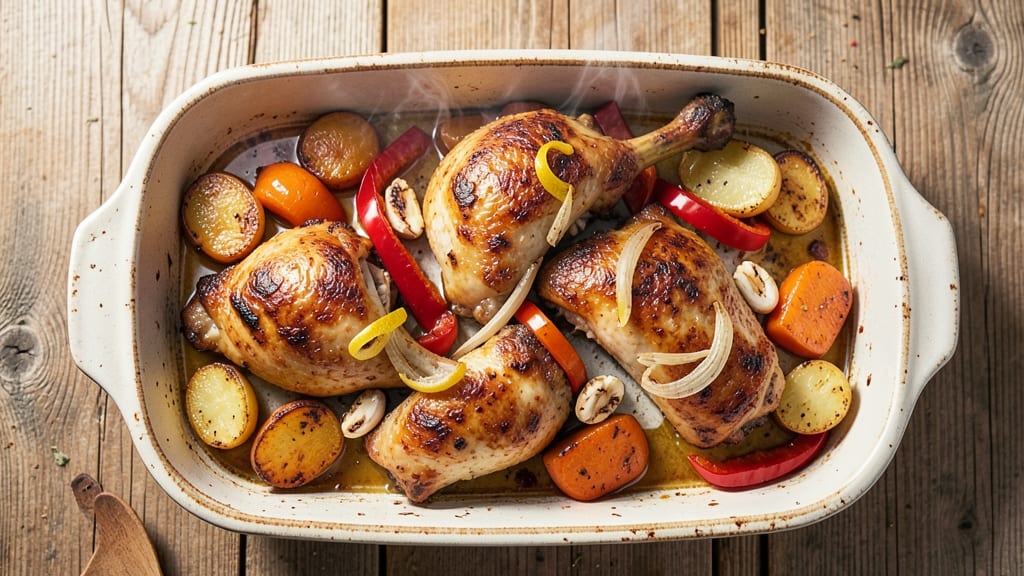
This baked chicken thighs and veggies recipe delivers restaurant-quality results with minimal effort—juicy, tender chicken and perfectly caramelized vegetables all sealed in foil for maximum flavor retention. The secret lies in high-heat roasting followed by a low-and-slow bake, creating a crispy crust while keeping the meat impossibly tender inside.
I've perfected this technique after years of testing, and it never fails to impress even skeptical guests.
The beauty of this method is its versatility—you can use any combination of vegetables you have on hand, from potatoes and carrots to bell peppers and zucchini.
The chicken thighs develop a golden-brown crust thanks to a simple seasoning blend of salt, pepper, garlic powder, and paprika, while the vegetables get tender and caramelized from the trapped steam. This approach transforms a basic weeknight meal into something special with minimal prep work.
What you'll end up with is a dish that's rich in flavor yet balanced in texture—crispy chicken skin, tender meat that falls apart easily, and vegetables that are perfectly cooked with a slight caramelized sweetness.
The foil sealing ensures everything stays moist and packed with flavor, while the high initial temperature creates that coveted crispy crust. It's the kind of meal that feels indulgent yet comes together effortlessly.
Perfect for feeding a family or meal prepping for the week, this recipe scales beautifully while maintaining its quality. The leftovers reheat just as well as the first serving, making it ideal for busy schedules. Here's how to achieve this foolproof combination of juicy chicken and caramelized vegetables every time.
Ingredients for baked chicken thighs and veggies
Restaurant-quality chicken thighs and caramelized vegetables start with these carefully selected ingredients.
| Ingredient | Amount | Notes |
|---|---|---|
| Bone-In, Skin-On Chicken Thighs 🍗 | 1 ½ lb | Trim excess fat if preferred |
| Baby Potatoes 🥔 | 1 ½ lb | Halved, unpeeled for texture |
| Carrots 🥕 | 1 ¼ lb | Whole, scrubbed, cut into 2-inch pieces |
| Red Bell Pepper 🌶️ | 1 whole | Cut into 1-inch strips, seeds removed |
| Yellow Onion 🧅 | 1 whole | Cut into 8 wedges, skin on |
| Garlic Cloves 🧄 | 6 cloves | Smashed, skin on for aroma |
| Extra-Virgin Olive Oil 🫒 | ¼ cup | High smoke point preferred |
| Kosher Salt 🧂 | 1 ½ tsp | Diamond Crystal preferred |
| Freshly Ground Black Pepper 🌶️ | 1 tsp | Cracked peppercorns preferred |
| Smoked Paprika 🌶️ | 1 tsp | For deep, smoky flavor |
| Garlic Powder 🧄 | ½ tsp | Freshly ground preferred |
| Fresh Rosemary 🌿 | ¼ cup | Chopped, stems removed |
| Heavy Cream 🥛 | ¼ cup | Optional for finishing sauce |
| Aluminum Foil 📄 | 2 sheets | Heavy-duty for sealing |
The chicken thighs are the foundation—bone-in, skin-on for maximum flavor and crispy texture. Local butchers or high-quality grocery stores like Whole Foods carry the best cuts with good marbling. Look for thighs with a vibrant pink hue and minimal bruising. Potatoes should feel firm and heavy for their size, indicating freshness. Carrots with bright orange color and crisp texture work best, while bell peppers should be firm with glossy skin. For the rosemary, fresh is non-negotiable—dried lacks the aromatic depth needed for this technique. If you can't find fresh, Penzeys or specialty spice shops carry high-quality dried rosemary that works in a pinch.
No smoked paprika? Regular paprika plus a pinch of liquid smoke mimics the flavor profile. Fresh rosemary unavailable? Dried at one-third the amount suffices, though texture will differ. For the vegetables, swap bell peppers for zucchini or asparagus if preferred—just adjust cutting sizes to ensure even cooking. The garlic can be pre-minced from a jar, but freshly smashed cloves with skins on release more aroma during cooking. If using baby potatoes, halving ensures even cooking; larger potatoes may need quartering. The heavy cream is optional but adds a luxurious finish—full-fat works best for optimal flavor.
Store raw chicken thighs in the coldest part of your fridge, using within 2 days for best results. Vegetables keep for 5-7 days in the crisper drawer, while fresh rosemary stays vibrant for 1 week wrapped in damp paper towels. The foil-sealed dish reheats beautifully—simply cover with fresh foil and bake at 375°F for 15 minutes. For meal prep, portion into individual containers with foil still intact; they'll stay moist and flavorful for 3-4 days in the fridge or 3 months frozen. The crispy crust may soften slightly when reheated, so plan to crisp again under the broiler if desired.
Why You'll Love This Recipe
- One-Pan Magic: I swear by this for nights when I’d rather scroll TikTok than scrub pots—just toss everything on a sheet pan, drizzle with olive oil, and let the oven do the work. Baby potatoes and carrots roast right alongside the thighs, so you’re not stuck chopping a dozen small veggies separately.
- Skin-On Crispiness: That golden, crackling skin on the thighs? It’s the star. The fat renders down while the chicken bakes, leaving you with a texture that’s crispy on the outside but so tender inside, you’ll want to eat it straight from the pan. (Yes, even on a Tuesday night.)
- Budget-Friendly Feast: Bone-in, skin-on thighs stretch farther than breasts, and veggies like carrots and potatoes are cheap staples that fill up the plate. Honestly, I feed my whole family for half the cost of takeout, and we’re all happy—no one’s picking at sad lettuce.
- Leftovers That Don’t Suck: Cold chicken thighs the next day? Still juicy, still delicious. I pack them in lunches with a sprinkle of salt and pepper, or toss them into salads—no sad, dry meat here. The veggies reheat just as well, so you’re not stuck eating warm potatoes twice in one day.
Step-by-step instructions for foil-sealed chicken thighs with veggies
This method delivers restaurant-quality results with minimal effort—juicy chicken and perfectly caramelized vegetables sealed in foil.
Prep and Season the Chicken and Vegetables
Preheat your oven to 400°F for maximum crispiness. In a large bowl, combine the 1.5 lb bone-in, skin-on chicken thighs, 1.5 lb halved baby potatoes, 1.25 lb 2-inch carrot pieces, 1-inch red bell pepper strips, 8 onion wedges, and 6 smashed garlic cloves.
Drizzle everything with the 0.25 cup extra-virgin olive oil and toss gently to coat. In a small bowl, whisk together the 1.5 tsp kosher salt, 1 tsp freshly ground black pepper, 1 tsp smoked paprika, and 0.5 tsp garlic powder. Sprinkle this seasoning blend evenly over the chicken and vegetables, pressing it into the chicken skin to ensure maximum flavor penetration.
Create the Foil Packets
Lay out both heavy-duty aluminum foil sheets on your counter, overlapping the edges slightly. Divide the seasoned chicken and vegetables evenly between the two foil sheets, placing about half the chicken thighs and their accompanying vegetables on each sheet. This ensures even cooking and prevents overcrowding.
Fold the foil up the sides of each packet, then bring the long sides toward the center, overlapping by about 2 inches. Press firmly to seal, leaving just enough room for the packet to expand slightly in the oven. The goal is to create an airtight environment that traps steam and renders fat back into the meat and vegetables.
Bake Until Golden and Tender
Place the foil packets on a baking sheet (this catches any potential drips) and bake for 45 minutes. After this initial bake, carefully open one packet to check the chicken—it should be 165°F internally and the vegetables should be tender but still holding their shape. If the chicken isn't quite done, return both packets to the oven for another 10-15 minutes.
Here's the key moment: once the chicken reaches 165°F, remove the packets from the oven and open them completely. Increase the oven temperature to 425°F to achieve that coveted caramelized crust. Return the packets to the oven for 5-7 minutes until the chicken skin is deep golden brown and crispy.
Finish with Rosemary and Cream (Optional)
Remove the packets from the oven and let them rest for 5 minutes before serving. Sprinkle the 0.25 cup chopped fresh rosemary over the top of each packet for an aromatic finish. For extra richness, stir the 0.25 cup heavy cream into the juices that have collected in the packets, then spoon this creamy sauce over the chicken and vegetables before serving.
Serve immediately with the foil packets opened directly on the table for a dramatic presentation. Each bite should deliver perfectly tender chicken with crispy skin, caramelized vegetables, and a rich, herby sauce. The foil method ensures maximum juiciness while creating that coveted restaurant-quality crust.
Pro Tips For Making Baked Chicken Thighs And Veggies
- CRISP THE SKIN FIRST: I learned this the hard way—skip the preheating step, and your chicken skin will turn greasy instead of golden. Pat the thighs very dry with paper towels, then sear them skin-side down in a cold pan over medium heat for 5-6 minutes until the skin is sizzling and starting to crisp. This locks in flavor before they even hit the oven.
- CUT POTATOES IN EVEN HALVES: Baby potatoes are finicky—some are tiny, some are lumpy. Cut each in half before tossing them in oil, and use the flat side down when arranging them on the sheet pan. This prevents rolling and guarantees even browning. (Yes, even if you’re impatient like me.)
- DON’T OVERCROWD THE PAN: I used to jam everything in one pan, thinking it would cook faster. Wrong. Leave a 1-inch gap between thighs and veggies—crowding steams the potatoes and turns the chicken rubbery. Use two pans if needed, and resist the urge to stack. Your oven’s job is to crisp, not suffocate.
- SALT THE POTATOES SEPARATELY: Tossing everything with oil and salt at once means the potatoes soak up moisture and turn soggy. Instead, sprinkle them with ½ teaspoon of salt before adding oil—this draws out starch, helping them crisp up. Then mix with the rest. (Your future self will thank you.)
Storing and reheating this baked chicken thighs and veggies
Fridge Storage Secrets
Let your foil-sealed chicken and veggies cool completely before storing—about 1-2 hours. Transfer to airtight containers (I love Glasslock containers) with the foil packets intact. Store in the fridge for up to 4 days—the foil keeps everything moist and flavorful.
The caramelized crust may soften slightly, but the chicken stays juicy and tender. 🥬
Freezer Prep Tips
For longer storage, freeze the foil packets directly in their containers for up to 3 months. Leave 1 inch headspace in containers to prevent expansion cracks. Thaw overnight in the fridge before reheating. I find the flavors actually intensify after freezing—the vegetables get even more caramelized when reheated. 🧊
Reheating Like a Pro
For best results, reheat foil-sealed portions at 375°F for 15-20 minutes—the trapped steam prevents drying. If you prefer crispy skin again, broil for 2-3 minutes at the end. For microwave reheating, use 50% power for 1-2 minutes covered with a damp paper towel to retain moisture. 🔥
Portion Control
Divide into single-serving portions before freezing for easy grab-and-go meals. I recommend quart-sized freezer bags for individual servings—they're stackable and thaw faster. Label with dates to track freshness.
The chicken reheats best when served with fresh rosemary sprinkled on top—just 5 minutes in the microwave with a splash of water revives the crispiness. 🍽️
Make-Ahead Strategy
Prep all components the night before and store separately. Assemble foil packets in the morning for a stress-free weeknight dinner. The vegetables stay crisp when stored separately, and the chicken maintains its texture until sealed. This method cuts prep time by 30 minutes—perfect for busy schedules. 💡
Leftovers Reinvention
Turn reheated chicken into chicken salad by shredding with 2 tbsp Greek yogurt and 1 tbsp lemon juice. Use leftover veggies in frittatas or stir-fries. The caramelized flavors make them perfect for adding depth to new dishes.
I often save the juices from the foil packets to make a quick pan sauce with a splash of cream. 🌟
Nutrition facts
Frequently asked questions
Why use bone-in, skin-on chicken thighs instead of breasts?
Bone-in, skin-on thighs stay juicier and more flavorful than breasts because they contain more fat and connective tissue that renders during cooking. The skin creates a crispy crust while the bone adds depth of flavor. Thighs also cost less per pound than breasts and are more forgiving if slightly overcooked.
Can I use frozen vegetables in this recipe?
Fresh vegetables work best for texture, but you can use frozen if needed. Just thaw and pat completely dry before seasoning to prevent excess moisture in the foil packets. For best results, choose frozen veggies without sauces or additives.
What if my oven doesn't go up to 425°F for the final crisp?
No problem! After the initial bake, transfer the opened packets to a broiler-safe pan and broil on high for 3-5 minutes until the skin is golden. Watch closely to avoid burning. Alternatively, finish under a salamander broiler if available.
How do I adjust this for a larger group?
Double the recipe and use 3-4 foil sheets for even cooking. Arrange on two baking sheets to prevent overcrowding. The key is maintaining the same thickness of ingredients in each packet. For 8 servings, increase to 3 lb chicken and 3 lb vegetables.
What's the best way to reheat leftovers without drying them out?
Reheat foil-sealed portions at 375°F for 15-20 minutes—the trapped steam prevents drying. For crispy skin, broil for 2-3 minutes at the end. Microwave on 50% power for 1-2 minutes with a damp paper towel covering.