
Soups & Stews
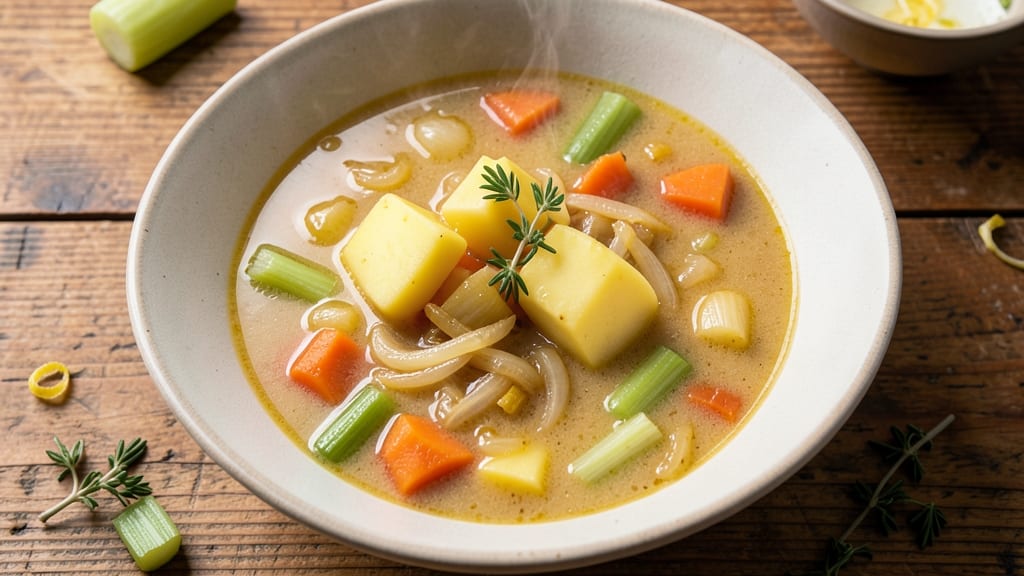
This basic potato soup recipe with chicken broth delivers comforting, velvety texture without relying on heavy cream—just simple ingredients and smart technique. The secret lies in simmering potatoes until tender, then blending with warm broth for a naturally rich consistency.
I developed this version after realizing most recipes either call for cream or turn out watery, and this one solves both problems.
What makes this soup special is its balance of simplicity and depth. You'll start with sautéed onions and garlic for flavor foundation, then build the broth with potatoes, carrots, and celery until everything melts into a smooth, satisfying soup.
The chicken broth adds protein and warmth while keeping it light enough for any meal.
By the time you serve it, you'll have a bowl of creamy, comforting potato soup with just the right amount of body—no lumps, no heaviness, just perfect texture. The aroma alone will have everyone gathering at the table, and each spoonful delivers that classic potato soup taste we all love.
Serve with crusty bread for dipping or a sprinkle of fresh parsley for brightness. This recipe scales easily for crowds, and leftovers reheat beautifully. Let's get started on this comforting classic!
Ingredients for basic potato soup recipe chicken broth
Simple, comforting ingredients that build rich, velvety potato soup without heavy cream.
| Ingredient | Amount | Notes |
|---|---|---|
| Yellow Onions 🧅 | 1 ½ cups | Diced, about 1 large onion |
| Garlic Cloves 🧄 | 4 cloves | Minced, fresh preferred |
| Yellow Potatoes 🥔 | 3 lbs | Russet or Yukon gold, peeled |
| Carrots 🥕 | 1 ½ lbs | Peeled, cut into chunks |
| Celery Stalks 🧅 | 3 whole | Trimmed, cut into 1-inch pieces |
| Chicken Broth 🍲 | 6 cups | Low-sodium preferred |
| Heavy Cream 🥛 | ½ cup | Optional, for extra creaminess |
| Fresh Parsley 🌿 | ¼ cup | Chopped, for garnish |
| Salt 🧂 | 1 ½ tsp | Adjust to taste |
| Black Pepper 🌶️ | ½ tsp | Freshly ground |
| Butter 🧈 | 3 tbsp | Unsalted, for sautéing |
| All-Purpose Flour 🌾 | 2 tbsp | For thickening (optional) |
Onions and garlic are your flavor foundation—Trader Joe's has great pre-diced onions if you're short on time, but fresh is always better. Potatoes are the star, so Yukon golds give the best texture, but Russets work too. Carrots and celery add sweetness and depth, and you can use baby carrots if that's what's on hand. For broth, Swanson or Pacific Foods are reliable low-sodium options that won't overpower the dish. If you're feeling fancy, homemade broth tastes even better but takes a little more time.
No heavy cream? No problem—this soup gets its richness from blending the warm potatoes with broth. Want extra creaminess? Stir in half-and-half instead of heavy cream. Short on fresh parsley? Dried parsley at one-third the amount works in a pinch. The optional flour helps thicken if you prefer a thicker consistency, but it's not necessary if you like it lighter. For a vegan version, swap the butter for olive oil and use coconut milk instead of cream. The key is letting the potatoes cook until tender before blending—don't rush this step!
Potatoes and broth reheat beautifully—just warm on the stove and stir occasionally. Keeps for 4-5 days in the fridge, and freezes well for up to 3 months. I always make a double batch so I have leftovers for lunches. Garnish with fresh parsley right before serving to keep it bright. Store the broth separately if you want to reheat it without thickening—just blend in the potatoes when ready to eat.
Why You'll Love This Recipe
- No-Chop Nightmare: I swear by the "soak-and-slice" trick for the potatoes—just peel, cut into chunks, and let them sit in cold water while I dice the onions. By the time I’m done with that, the potatoes are ready to go. Honestly, this is the only soup I make when I’ve had a long day.
- Creamy Yet Crispy Magic: That moment when the potatoes break down into velvety goodness but still hold a tiny bite? It’s all in the timing—simmering just until they’re tender, not mushy. The carrots and celery add this subtle sweetness that balances the rich chicken broth, and the garlic? Oh, it’s the secret weapon.
- Leftovers That Beg for Seconds: Between us, this soup only gets better the next day. The flavors meld into something deeper, and the texture? Even richer. I’ll make a double batch on Sundays, freeze half, and still have enough to reheat for lunch all week. My freezer is basically a potato soup vault.
- Pantry Staple Powerhouse: You’re looking at a recipe that uses ingredients you already own—no specialty items, no last-minute grocery runs. Yellow onions, garlic, and those basic veggies? They’re the backbone of half the soups I make. And because it’s so unfussy, I can tweak it—add a splash of cream, swap in leftover roasted veggies, or serve it with crusty bread. It’s my go-to for everything from lazy weeknights to game-day snacks.
Step-by-step instructions for creamy potato soup
This method delivers restaurant-quality soup with velvety texture using simple pantry staples.
Sauté the Vegetable Base
Melt the 3 tablespoons butter in a large pot over medium heat. Add the 1.5 cups diced yellow onions, 1.5 pounds carrots cut into chunks, and 3 whole celery stalks cut into 1-inch pieces. Cook for 8-10 minutes until the vegetables soften and the onions become translucent.
Here's the thing—don't rush this step. You want the vegetables to release their natural sugars and develop that sweet, caramelized flavor that forms the foundation of your soup. Stir occasionally so nothing sticks to the bottom. When the vegetables are tender and the onions are golden, add the 4 cloves minced garlic and cook for another 30 seconds until fragrant.
Add Potatoes and Seasonings
Toss in the 3 pounds peeled yellow potatoes cut into 1-inch chunks. Sprinkle over the 1.5 teaspoons salt and 0.5 teaspoon black pepper, then stir to coat the potatoes evenly with the seasoning. This ensures every bite will be perfectly seasoned throughout.
Pour in the 6 cups chicken broth, making sure to scrape up any browned bits from the bottom of the pot. These flavorful bits are called fond, and they pack serious taste into your soup. Bring everything to a gentle boil, then reduce the heat to medium-low and let it simmer uncovered for 15-20 minutes until the potatoes are fork-tender.
Create the Velvety Texture
While the soup simmers, whisk together the 2 tablespoons all-purpose flour in a small bowl. Once the potatoes are tender, remove the pot from heat and gradually whisk in the flour mixture, stirring constantly to prevent lumps from forming. This creates a smooth roux that will thicken your soup beautifully.
Return the pot to medium heat and let it cook for 3-4 minutes, stirring frequently, until the soup begins to thicken slightly. If you prefer an extra creamy texture, stir in the 0.5 cup heavy cream now and let it warm through. The soup should coat the back of a spoon but still be light and silky—not heavy or gluey.
Finish and Serve
Taste the soup and adjust the seasoning if needed. You might need a little more salt or pepper to balance the flavors perfectly. Stir in the 0.25 cup chopped fresh parsley just before serving to add a bright, fresh finish that cuts through the richness.
Ladle the soup into bowls and serve immediately. The beauty of this recipe is that it tastes even better the next day as the flavors meld together. For a hearty meal, serve with crusty bread to soak up every last drop of that creamy goodness.
Pro Tips For Making Basic Potato Soup Recipe Chicken Broth
- Sweat, Don’t Burn: Onions and celery need time—at least 8-10 minutes—until they’re soft enough to collapse under a finger. I learned this the hard way when my soup tasted raw and bitter. Medium heat is your friend; high heat just turns them into onion-flavored charcoal.
- Cut Potatoes Uniformly: Use a knife or mandoline to slice potatoes into ½-inch chunks—no smaller, or they’ll turn to mush. I used to eyeball it, and my soup always ended up either gluey or undercooked. Consistency = even cooking.
- Skip the Overcrowding: When simmering, leave room between potatoes so they don’t steam instead of cook. I once stuffed a pot too full and ended up with a watery, half-soft mess. Give them space to bubble properly.
- Use Two Broth Batches: Split the broth into two parts—start with half to build flavor, then add the rest later. This keeps the soup from diluting too fast. (Yes, it’s an extra pot, but the depth of flavor makes it worth it.)
Flavor customization for this recipe
Classic Comfort Twist
Add ½ cup cooked bacon (crispy, chopped) to the sautéed vegetables for a smoky depth that elevates the soup. I like Applewood-smoked bacon from Trader Joe's—it adds a subtle sweetness that pairs perfectly with the potatoes.
For extra richness, stir in ¼ cup grated cheddar cheese at the end. 🥓
Herb-Infused Variations
Swap the parsley for fresh thyme or rosemary (1 tbsp each) when simmering the potatoes for an earthy aroma. For a Mediterranean touch, add 1 tsp dried oregano and ½ tsp red pepper flakes to the broth.
Fresh dill brightens the flavor beautifully—just add 1 tbsp chopped dill at the end. 🌿
Spiced & Warm
Infuse warmth with ½ tsp ground cumin or ¼ tsp cinnamon when sautéing the onions. A pinch of nutmeg (about ⅛ tsp) adds a cozy depth, especially if you're serving it with cornbread.
For a kick, stir in 1 tbsp hot sauce or ½ tsp smoked paprika after blending. 🌶️
Creamy Without Dairy
For a dairy-free version, blend ½ cup coconut milk into the warm soup after simmering. Alternatively, mash ½ of the cooked potatoes before adding broth to create a naturally thick, creamy texture. A splash of lemon juice (1 tbsp) at the end adds brightness without dairy. 🥥
Global Inspirations
Transform this into a French-style soup by adding 1 cup chopped leeks and 1 bay leaf to the broth. For a German twist, stir in ½ cup sauerkraut and 1 tbsp caraway seeds at the end.
A Mexican-inspired version swaps potatoes for sweet potatoes and adds ½ cup black beans and 1 tsp cumin. 🌍
Extra Depth Boosters
Sauté 2 tbsp chopped shallots with the onions for a sweeter, more complex base. A splash of 1 tbsp white wine (like Sauvignon Blanc) deglazes the pot beautifully. For umami, add 1 tsp soy sauce or ½ tsp miso paste when blending. These small tweaks make a big difference! 💫
Nutrition facts
Frequently asked questions
Can I use instant chicken broth instead of homemade?
Yes, but choose a low-sodium brand for better flavor control. Instant broth works fine, though homemade adds deeper flavor. If using granules, dissolve them completely in 1 cup hot water first, then add to the pot. For extra richness, stir in 1 tablespoon butter after adding the broth to enhance the savory notes.
What if my soup turns out too thick?
Add ½ to 1 cup warm chicken broth and stir well, then simmer for 2-3 minutes to adjust the consistency. For a smoother texture, blend the soup again briefly. If you prefer it thicker, simmer uncovered for 5-10 minutes longer to reduce. The key is gradual adjustments—don't rush this step!
Can I make this soup ahead of time?
This soup tastes even better the next day as flavors meld. Store in an airtight container in the fridge for up to 4 days. Reheat gently on the stove, stirring occasionally to prevent sticking. For freezer storage, cool completely first, then freeze for up to 3 months. Thaw overnight in the fridge before reheating.
Why did my blended soup get lumpy?
Lumps happen when potatoes aren't fully cooked or flour isn't whisked smooth. Always simmer potatoes until fork-tender before blending, and whisk flour with cold broth first to prevent clumps. For extra smoothness, strain the soup through a fine-mesh sieve after blending. A quick fix is to blend again with 2-3 tablespoons warm broth until silky.
What's the best way to serve this soup?
Classic pairings include crusty bread for dipping, a sprinkle of grated Parmesan, or a dollop of sour cream. For extra flair, top with crispy bacon bits, fresh herbs, or a swirl of cream. Serve with a simple green salad to balance the richness. The soup reheats beautifully, making it perfect for meal prep!