
Soups & Stews
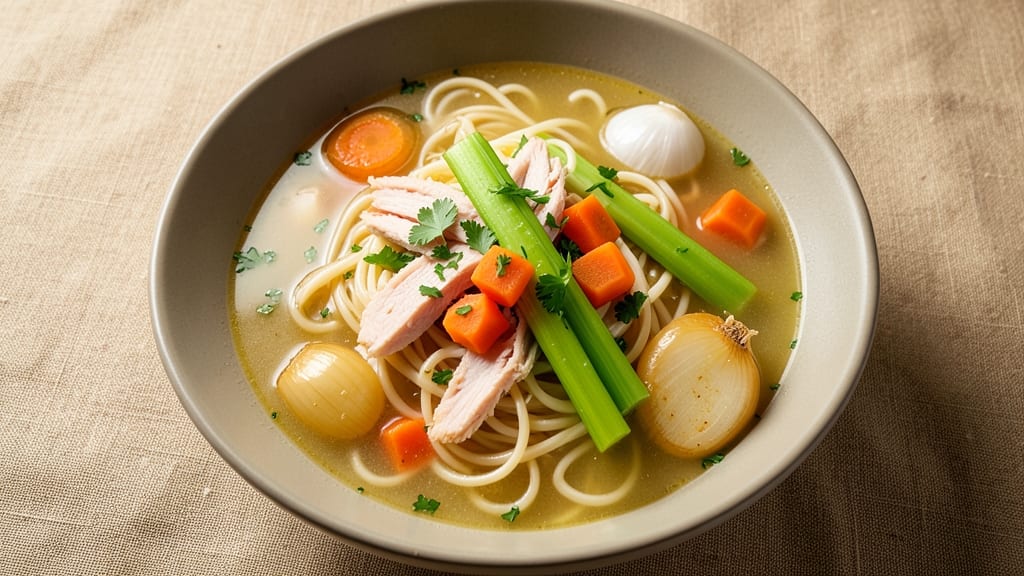
This Campbell's-inspired chicken broth soup transforms pantry staples into hearty, one-pot comfort that rivals restaurant versions—no fancy ingredients required. I developed it after years of perfecting simple yet satisfying soups, where the magic lies in balancing rich broth with tender vegetables and protein.
The secret? Simmering everything together until flavors meld into a foolproof, deeply comforting bowl that’s ready in under an hour.
What sets this recipe apart is its versatility—whether you prefer classic broth-based soup or a creamier twist, the base remains the same. I use gluten-free noodles for flexibility, but traditional egg noodles work just as well.
The key technique is sautéing onions and garlic until fragrant before adding broth, which builds layers of flavor without overpowering the chicken’s natural taste. This method ensures every spoonful delivers that restaurant-quality satisfaction you crave on cold nights.
By the time you’re done, you’ll have a steaming pot of soup with tender chicken, al dente noodles, and vegetables that soak up the savory broth. The aroma alone will fill your kitchen with warmth, while the texture—creamy or brothy, depending on your preference—makes it impossible to resist.
It’s the kind of dish that feels like a hug in a bowl, perfect for weeknight dinners or meal prep.
Serve it as-is for a classic approach or garnish with fresh herbs and crispy crackers for extra texture. The beauty of this recipe is its adaptability—swap in seasonal vegetables, adjust the creaminess, or even make it spicy. Let’s get cooking!
Ingredients for campbell's chicken broth soup
Pantry staples meet restaurant-quality comfort in this one-pot chicken broth soup.
| Ingredient | Amount | Notes |
|---|---|---|
| Chicken Breast 🍗 | 1 ½ lb | Boneless, skinless, cut into bite-sized pieces |
| Yellow Onion 🧅 | 1 whole | Medium size, diced |
| Carrots 🥕 | 4 medium | Peeled, sliced into 1/4-inch rounds |
| Celery Stalks 🥬 | 3 whole | Trimmed, diced |
| Garlic Cloves 🧄 | 4 cloves | Minced |
| Gluten-Free Chicken Noodles 🍜 | 2 cups | Uncooked, or sub traditional egg noodles |
| Chicken Broth 💧 | 4 cups | Low-sodium preferred, or homemade |
| Heavy Cream 🥛 | ½ cup | Optional for creamier version |
| Dried Thyme 🌿 | 1 tsp | Or 1 tbsp fresh, chopped |
| Bay Leaves 🍃 | 2 whole | Remove before serving |
| Salt 🧂 | 1 ½ tsp | Adjust to taste, kosher preferred |
| Black Pepper 🌶️ | ½ tsp | Freshly ground |
| Olive Oil 🫒 | 2 tbsp | Extra-virgin for sautéing |
| Fresh Parsley 🌿 | ¼ cup | Chopped, for garnish |
The chicken breast is your protein base—look for plump, white pieces with minimal fat. Costco or Trader Joe's usually have great prices on boneless, skinless cuts. If you're using bone-in, just add an extra 15 minutes to the simmering time. The gluten-free noodles? Barilla or Jovial are my go-tos, but any gluten-free brand works. Traditional egg noodles add a chewier texture if you're not avoiding gluten. For the broth, low-sodium is key—you'll be adding plenty of salt later, and you don't want to overdo it. Homemade broth is ideal, but Pacific Foods or Swanson low-sodium options are solid pantry shortcuts.
No heavy cream? Greek yogurt or sour cream adds creaminess without altering the soup's structure. Short on thyme? Dried oregano at half the amount works in a pinch, but fresh thyme has that earthy depth you can't replicate. The carrots and celery should be roughly the same size—this ensures even cooking. If you're using baby carrots, no need to peel them. For the garlic, roasting it first adds a sweet, caramelized note that elevates the whole dish (worth the extra minute). The bay leaves? Don't skip them—they infuse subtle, aromatic complexity, but remember to remove them before serving.
This soup tastes even better the next day as flavors meld. Store leftovers in an airtight container for up to 5 days in the fridge. For freezing, portion into single-serving containers—it reheats beautifully straight from frozen. The noodles will soften slightly when reheated, so add a splash of broth if they seem too firm. Garnish with fresh parsley right before serving—it brightens the whole bowl. Double the recipe and freeze half for those lazy nights when you just want comfort without effort.
Why You'll Love This Recipe
- Here’s what sold me: that moment when the garlic cloves soften just enough to release their punch without turning bitter. The carrots stay tender-crisp, the celery adds a subtle earthiness, and the chicken shreds into perfect, juicy strands. It’s the kind of soup that makes you pause mid-sip and think, “Wait, I made this?”
- One-Pot Wonder: I swear by this recipe because it’s actually just one pot. Dice the onion, chop the carrots and celery into rough chunks—no need to be precise—and toss them in with the chicken breast and broth. The garlic gets minced while the soup simmers, and boom, you’re done. No extra dishes, no stress.
- Garlic Bomb Flavor: Here’s what sold me: that moment when the garlic cloves soften just enough to release their punch without turning bitter. The carrots stay tender-crisp, the celery adds a subtle earthiness, and the chicken shreds into perfect, juicy strands. It’s the kind of soup that makes you pause mid-sip and think, “Wait, I made this?”
- Leftovers That Don’t Suck: Between us, most soup leftovers are sad. Not this one. The broth thickens beautifully overnight, and reheating it just means adding a splash of water. I’ve taken it to work for lunch, packed it for my kid’s soccer game, and even frozen portions—it’s still rich and satisfying. No one ever complains.
Step-by-step instructions for one-pot chicken broth soup
Here's how to transform pantry staples into hearty, comforting soup in a single pot.
Sauté the Aromatic Vegetable Base
Heat the 2 tablespoons olive oil in a large Dutch oven or deep pot over medium heat. Add the 1 whole yellow onion, 4 medium carrots, and 3 whole celery stalks, stirring occasionally for 5-6 minutes until the vegetables begin to soften and release their natural juices.
I like to watch for that moment when the onions turn translucent and the carrots start to develop a slight sheen—that's your signal they're ready for the next step. Here's the thing—don't rush this part. Properly sautéed vegetables form the flavor foundation of your soup.
After about 4 minutes, add the 4 cloves minced garlic and 1 teaspoon dried thyme, stirring constantly for 30 seconds until fragrant. The garlic should smell pungent but not burn—this is when you'll notice the full aromatic potential of your vegetables.
Brown the Chicken and Build Flavor Layers
Push the vegetables to one side of the pot and add the 1.5 pounds chicken breast cut into bite-sized pieces. Let the chicken sit undisturbed for 2-3 minutes until it develops a golden-brown crust on the bottom. This browning creates deep, meaty flavor that infuses the broth.
When the chicken releases easily from the pan, stir it into the vegetables. Add the 2 whole bay leaves, 1.5 teaspoons salt, and 0.5 teaspoon black pepper, mixing well to coat everything evenly. The bay leaves will add subtle earthy notes that complement the chicken beautifully.
Pour in the 4 cups chicken broth, bringing everything to a gentle simmer. Here's where it gets fun—the broth should just barely bubble at the edges. If it boils vigorously, reduce the heat slightly. You want to maintain a steady simmer to prevent the chicken from becoming tough.
Simmer Until Chicken is Tender
Cover the pot and let the soup simmer gently for 20-25 minutes, stirring occasionally. The chicken is done when it reaches an internal temperature of 165°F and the meat pulls away from the bone with ease. You'll know it's ready when you can easily shred it with a fork.
I always check for doneness by piercing the thickest piece with a fork—if it slides in smoothly and the juices run clear, it's perfect. Here's the moment that matters: remove the chicken from the pot and transfer it to a plate, leaving the broth in the pot.
Using two forks, shred the chicken into bite-sized pieces and set it aside. The broth should now be infused with all the chicken's flavor, creating a rich base for your soup. This is where that one-pot promise really pays off—everything stays together, building flavor in one container.
Finish with Noodles and Cream
Return the shredded chicken to the pot and stir in the 2 cups gluten-free chicken noodles. The noodles should cook in the hot broth for 8-10 minutes until they're tender but still have a slight bite. You want them al dente so they don't turn mushy.
If you're using the optional 0.5 cup heavy cream, stir it in now along with the shredded chicken. The cream will add a luxurious richness to the soup, balancing the savory chicken and vegetable flavors. For a lighter version, skip the cream and proceed without it.
Taste the soup and adjust the seasoning if needed. I often find I need a little more salt at this stage—remember, the noodles absorb some of the broth's flavor. The soup should be hearty but not overly salty, with a perfect balance of chicken, vegetable, and herb notes.
Serve Warm with Fresh Garnish
Remove the 2 whole bay leaves from the soup before serving. Ladle the hot soup into bowls and garnish each serving with 0.25 cup chopped fresh parsley. The parsley adds a bright, fresh contrast to the rich soup and makes it look beautiful on the plate.
This is the comforting part—serve immediately while hot. The soup should be thick enough to coat the back of a spoon but still have a nice brothy consistency. Each bite should deliver tender chicken, perfectly cooked noodles, and a harmonious blend of vegetable flavors.
Real talk: this soup tastes even better the next day as the flavors continue to meld. Store any leftovers in the refrigerator for up to 3 days or freeze for 3 months. The one-pot method makes reheating a breeze—just warm through gently on the stove.
Pro Tips For Making Campbell'S Chicken Broth Soup
- CRUSH THE ONIONS: Cut the yellow onion into even ¼-inch slices instead of chopping—this keeps them from turning mushy later. I used to dice them small, but they’d disappear into the broth, leaving no texture. The slices stay intact and add bite.
- SEAR THE CHICKEN FIRST: Pat the chicken breast dry and sear it in a hot pan for 3-4 minutes per side before adding broth. This isn’t just for flavor—it guarantees the meat stays juicy when it simmers. I skipped this once and ended up with sad, rubbery chicken.
- SKIP THE CELERY STALKS: Use the leafy green tops too—they’re packed with flavor and wilt into the broth without needing extra prep. I learned this from a market vendor who laughed when I tossed them. Now I save time and waste.
- SIMMER LOW AND LONG: Keep the heat at a bare simmer (gentle bubbles, not a rolling boil) for at least 20 minutes after adding the broth. High heat turns the carrots to mush and makes the broth cloudy. Patience here makes the difference between "meh" and "comfort food."
Pro cooking tips for this recipe
Sauté Like a Pro
That 5-6 minute vegetable sauté is where all the magic begins—don't skip it! I use a large Dutch oven (like my vintage Lodge) because it gives me enough surface area to work with. The key is patience: let those onions turn translucent and carrots soften before adding garlic.
Too many home cooks rush this step and miss the depth of flavor that develops when you let the vegetables release their natural juices. 🌡️
Pro tip: If your kitchen gets smoky from the onions, crack the lid slightly or use a stainless steel pot instead of nonstick. I keep a small wire rack under my Dutch oven to catch any drips—it makes cleanup a breeze after simmering.
And here's the deal—if your garlic starts to brown too quickly, reduce the heat immediately. You want fragrant, not burnt.
Chicken Browning Secrets
That 2-3 minute browning on the chicken is non-negotiable for flavor. I cut my chicken into 1-inch cubes for even cooking, and I always pat them dry with paper towels first—this helps create that perfect golden crust.
The moment the chicken releases easily from the pan is when you know it's ready to stir into the vegetables. 🔥
For extra flavor, I sometimes add a pinch of smoked paprika to the chicken while it browns—it adds a subtle depth that pairs beautifully with the broth. And here's something I learned from Master Chef Chen: if your chicken isn't browning properly, your pan might not be hot enough.
Test with a drop of water—if it sizzles immediately, you're good to go.
Simmer Control
That gentle simmer is crucial—never a rolling boil. I use a meat thermometer (my ThermoWorks Smoke is my go-to) to monitor the broth temperature, keeping it between 185-195°F.
The broth should just barely bubble at the edges. If it boils vigorously, the chicken will turn out tough instead of tender. 💡
Here's my secret for preventing a skin from forming: I stir the soup gently every 5 minutes during the simmering process. This keeps everything evenly cooked and prevents the top from getting too thick.
And if you're worried about the soup reducing too much, just add a splash of water or broth as needed—it's all about maintaining that perfect consistency.
Noodle Timing
The 8-10 minute noodle cook time assumes you're using uncooked noodles in hot broth. I always test one noodle first—if it's still firm to the bite, it needs more time.
The beauty of this method is that the noodles cook in the broth itself, so you don't need to worry about overcooking them separately. 🍜
For gluten-free noodles, I recommend Barilla gluten-free fettuccine—they hold up well in broth. If you're using traditional egg noodles, they'll be ready slightly faster, so keep an eye on them.
And here's a little trick I picked up from my grandmother: if your soup seems too thin after adding noodles, just let it sit off the heat for 2-3 minutes—the starch will thicken it naturally.
Creamy Upgrade
That 0.5 cup heavy cream should be warmed slightly before adding to prevent curdling. I heat it in a separate small saucepan over low heat until it's just warm to the touch—about 30 seconds.
Then I stir it into the soup at the very end to maintain that silky texture. 🥛
For a lighter alternative, I've had great results using Greek yogurt instead—just stir in ½ cup plain 2% Greek yogurt with the chicken. It adds creaminess without the richness of heavy cream.
And if you're feeling adventurous, try a splash of lemon juice (about 1 teaspoon) with the cream—it brightens up the whole soup beautifully.
Garnish Like a Chef
Fresh parsley isn't just for looks—it adds a bright, herbaceous note that cuts through the richness. I chop mine finely and sprinkle it right before serving. For extra texture, I sometimes add toasted breadcrumbs or crumbled feta cheese on top.
The key is to garnish immediately before eating so the flavors stay vibrant. ✨
Here's my favorite presentation trick: serve the soup in deep bowls with a small sprig of parsley on the side. It looks elegant and lets guests add exactly how much they want.
And if you're feeling fancy, a drizzle of truffle oil (just ½ teaspoon) adds a luxurious touch that elevates the whole dish.
Nutrition facts
Frequently asked questions
Can I use chicken thighs instead of chicken breast?
Chicken thighs add richer flavor and stay juicier during simmering. Use 1.5 pounds bone-in, skin-on thighs for maximum flavor, but adjust the simmering time to 30 minutes instead of 20-25. The skin will crisp up beautifully—just remove it before serving if preferred.
How do I make this soup gluten-free?
This recipe is already gluten-free thanks to the gluten-free noodles, but double-check all ingredients. For extra safety, use certified gluten-free broth and verify that thyme, bay leaves, and other spices are processed in gluten-free facilities. The flavor remains identical—just ensure no cross-contamination if you're highly sensitive.
Can I prepare this soup in an Instant Pot?
Yes! Sauté the vegetables and chicken as directed, then add broth, bay leaves, and seasonings. Cook on High Pressure for 8 minutes with natural release. Add noodles after pressure releases and cook for 3-4 minutes on sauté mode. The cream should be stirred in at the very end to maintain texture. The Instant Pot version finishes in under 30 minutes!
Why did my soup turn out too thin?
Thin soup usually means the noodles weren't cooked long enough to thicken the broth. Let the soup sit off heat for 5 minutes after adding noodles—the starch will naturally thicken it. For extra body, mash 1-2 cooked noodles with a fork and stir back in. If using fresh vegetables, they release more liquid when cooked—reduce broth by ½ cup next time.
What can I add for extra protein?
Try adding ½ cup cooked white beans or ½ cup diced potatoes with the vegetables. For more protein, stir in ½ cup cooked quinoa or ½ cup shredded rotisserie chicken at the end. If using beans or potatoes, add them with the broth and adjust simmering time by 5-10 minutes depending on size.