
Main Courses
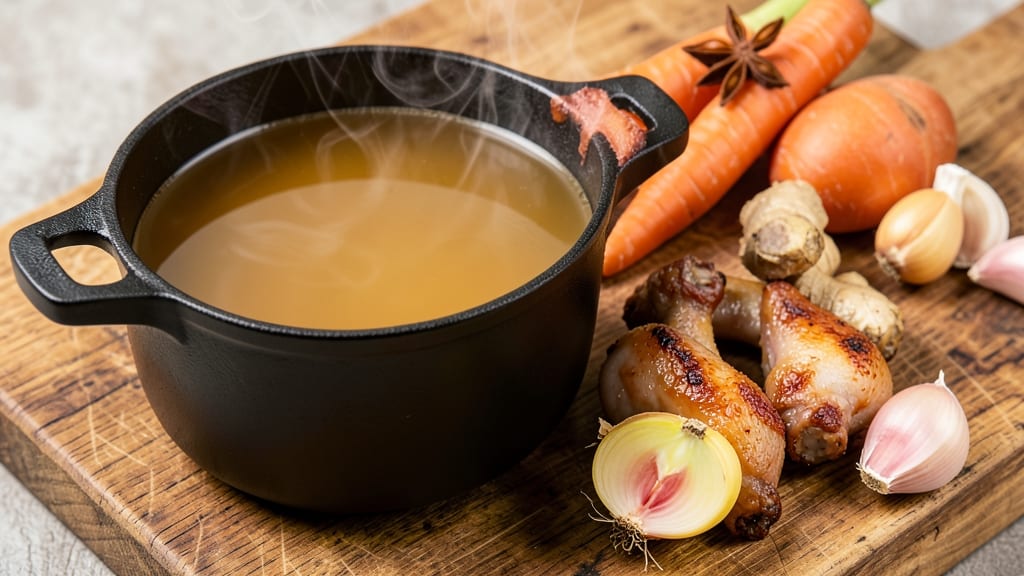
Creating a rich chicken feet stock transforms ordinary dishes into something deeply flavorful and restaurant-worthy. This traditional technique extracts collagen and umami from chicken feet, resulting in a velvety broth perfect for pho, hot pots, or braised meats.
I've refined this method over years to ensure maximum flavor extraction while keeping the process straightforward and efficient.
The process begins with thorough cleaning and blanching to remove impurities, followed by a long, slow simmer that breaks down connective tissue into gelatin. Adding aromatic ingredients like ginger, garlic, and spices enhances depth without overpowering the natural richness.
What you'll end up with is a deep, golden stock with a luxurious mouthfeel that elevates any dish it graces.
This stock serves as the backbone for complex Asian-inspired recipes where umami and collagen are essential. Whether you're making pho, braising meats, or enriching soups, this chicken feet stock delivers professional-quality results at home.
The key lies in patience—allowing enough time for the collagen to fully dissolve creates that signature velvety texture.
Once prepared, store the stock in the refrigerator for up to five days or freeze it for months. Use it as a base for soups, stews, or even as a cooking liquid for grains like rice.
The possibilities are endless, and the flavor impact is undeniable. Let's begin crafting this foundational element for your kitchen.
Ingredients for chicken feet stock
Transform humble ingredients into a luxurious umami-rich stock perfect for pho and braised dishes.
| Ingredient | Amount | Notes |
|---|---|---|
| Chicken Feet 🦶 | 2 lbs | Cleaned, trimmed, and blanched |
| Yellow Onion 🧅 | 1 whole | Quartered, skin on for color |
| Carrots 🥕 | 2 whole | Scrubbed, cut into chunks |
| Fresh Ginger 🌿 | 2 tbsp | Thinly sliced, skin on |
| Garlic Cloves 🧄 | 6 cloves | Smashed, not minced |
| Star Anise 🌟 | 2 whole | Lightly crushed |
| Cinnamon Sticks 🍃 | 2 whole | 2-inch pieces |
| Black Peppercorns 🌶️ | 1 tbsp | Crushed lightly |
| Bay Leaves 🍃 | 2 whole | Fresh preferred |
| Salt 🧂 | 1 tsp | Kosher or sea salt |
| Cold Water 💧 | 8 cups | Filtered preferred |
The chicken feet are the foundation—look for plump, clean feet with minimal odor. Asian markets often carry them fresh, but frozen works too if thawed overnight. Trim any excess fat or membrane before blanching, as this can cloud the stock. The ginger and garlic are non-negotiable for depth; freshly grated ginger releases more flavor than pre-sliced. For the aromatics, Whole Foods or Penzeys carry high-quality star anise and cinnamon sticks that make a noticeable difference in complexity. If using dried bay leaves, toast them briefly to enhance aroma, but fresh is always better.
No star anise? 1 tsp anise seeds works in a pinch, but the flavor will be subtler. Running short on ginger? 1 tbsp ginger powder at half the amount adds warmth, though it lacks the fresh brightness. The onions and carrots can be swapped for celery root or leeks if preferred, though carrots add natural sweetness that rounds out the umami. For the water, filtered or spring water is ideal—tap water with strong chlorine can mute flavors. If you're making a large batch, double the aromatics proportionally to maintain balance.
This stock keeps 5 days refrigerated in an airtight container with a layer of fat on top to preserve freshness. For longer storage, freeze in 1-cup portions—it reheats beautifully and maintains its velvety texture. The gelatin-rich stock thickens as it cools, so stir gently when reheating. Use within 3 months frozen for optimal flavor. For restaurant-quality results, simmer the stock uncovered to allow impurities to rise, skimming as needed—this is especially important for the first hour of cooking.
Why You'll Love This Recipe
- No Chopping Chaos: I swear by this recipe because the prep is ridiculously simple—just rough-chop the onions, slice the carrots into thick coins, and peel the garlic while the ginger sits whole. The chicken feet? Toss them in as-is after a quick rinse. Honestly, I’ve made it while scrolling through my phone.
- Umami Bomb: That first sip? Pure satisfaction. The chicken feet break down into a rich, jelly-like texture that coats every spoonful, while the ginger and garlic add a slow-building warmth. Between us, it’s the kind of depth you’d pay extra for in a restaurant—but here, it’s yours for pennies.
- Pantry-to-Pot Magic: This stock is my secret weapon for lazy Sundays or last-minute dinner saves. Use it to braise tough cuts of meat, stretch a simple stir-fry into a meal, or even elevate a bowl of pho. I’ll be real: my freezer is always stocked with jars of this stuff because it turns anything into something special.
- Budget Goldmine: A single batch costs me less than $5 and stretches for weeks. The chicken feet alone pack more collagen than store-bought broth, and the veggies? Whatever’s on sale or wilting in my crisper. Freeze what you don’t use—trust me, you’ll thank me when you’re pulling together a weeknight dinner in 10 minutes flat.
Step-by-step instructions for chicken feet stock
This method transforms simple ingredients into a deeply flavorful foundation for any recipe.
Prepare the Chicken Feet and Aromatics
In a large stockpot, combine the 2 lbs chicken feet with the 8 cups cold water. Bring to a rolling boil over high heat, then reduce to a gentle simmer for 10 minutes. This blanching step removes impurities and prepares the feet for maximum flavor extraction.
While the chicken feet simmer, prepare the aromatics. Peel and quarter the 1 whole yellow onion, leaving the skin on for color. Scrub the 2 whole carrots and cut them into 1-inch chunks. Thinly slice the 2 tbsp fresh ginger, keeping the skin on for extra depth. Smash the 6 cloves garlic with the side of a knife—this releases their oils without turning to paste.
Lightly crush the 2 whole star anise and break the 2 whole cinnamon sticks into 2-inch pieces. Crush the 1 tbsp black peppercorns with a mortar and pestle or rolling pin. Keep the 2 whole bay leaves whole for easy removal later.
Build the Flavor Base
Once the chicken feet have simmered for 10 minutes, carefully skim off any foam that rises to the surface with a fine-mesh skimmer. This ensures a clear, clean stock. Add the prepared aromatics—onion, carrots, ginger, garlic, star anise, cinnamon sticks, peppercorns, and bay leaves—to the pot.
Stir in the 1 tsp salt and bring the mixture back to a gentle simmer. The stock should cover the ingredients by at least 1 inch. If needed, add a splash of hot water to maintain this level. Simmer uncovered for 3 hours, stirring occasionally to prevent the aromatics from sticking to the bottom.
Here's the thing—patience is key. The longer the stock simmers, the more collagen breaks down from the chicken feet, creating that unmistakable richness. Don't rush this step; the flavor develops gradually.
Strain and Finish the Stock
After 3 hours, remove the stockpot from heat. Line a fine-mesh strainer with cheesecloth or a clean kitchen towel to create a makeshift filter. Carefully ladle the stock through the strainer into a clean bowl or pitcher, pressing gently on the solids to extract every last drop of flavor. Discard the solids.
Taste the stock and adjust the seasoning if needed. It should be rich and savory, with a deep umami quality. If it tastes slightly bland, add a pinch more salt—remember, you can always adjust later when using the stock in recipes. For a smoother texture, you can skim off any remaining fat that rises to the surface.
Let the stock cool to room temperature, then transfer it to airtight containers. It will keep in the refrigerator for up to 5 days or can be frozen for 3 months. This stock is the secret weapon in soups, stews, and braises—its depth of flavor elevates any dish.
Pro Tips For Making Chicken Feet Stock
- Blister the Feet First: Toss the chicken feet in a dry pot over medium-high heat for 5-7 minutes until the skin darkens and smells like a campfire. This step cracks open the collagen—no need to burn them, just get them deep brown. I used to skip this and ended up with stock that tasted like chicken feet, not rich umami gold.
- Peel Ginger Like a Pro: Use a spoon’s back to scrape off the ginger skin in long strips—no peeling required. Then, slice it into ½-inch chunks with the skin still on for extra flavor and easier cleanup. I learned this the hard way after peeling ginger for three batches and wondering why my stock lacked depth.
- Don’t Crowd the Pot: Simmer the stock uncovered and at a gentle boil, not a rolling one. If it’s too crowded, the feet won’t release their gelatin properly, and you’ll end up with murky liquid instead of clear, glossy stock. Trust me, the first time I ignored this, my stock looked like swamp water.
- Strain Twice for Clarity: After simmering, strain through a fine-mesh sieve first, then a cheesecloth-lined colander for a silky finish. It’s extra work, but the difference between cloudy and restaurant-quality stock is night and day. I skip this when I’m lazy, and the stock never tastes as good.
Storing and reheating your chicken feet stock
Refrigerator Storage
Transfer your finished chicken feet stock to airtight glass containers (I recommend Pyrex with snap-on lids) while still warm to prevent condensation. Let it cool to room temperature first—this helps preserve clarity and prevents bacterial growth.
Once chilled, store in the fridge at 40°F or below for up to 5 days. The stock will develop a gelatinous layer on top as it cools; stir gently before use to redistribute flavors. 💧
Freezer Preservation
For long-term storage, freeze the stock in 1-cup portions using silicone ice cube trays or quart-sized freezer bags. Leave 1-inch headspace to account for expansion, and squeeze out excess air to prevent freezer burn.
Label with the date—this stock maintains peak quality for 3 months when frozen. When ready to use, thaw overnight in the fridge or reheat directly from frozen on the stovetop. ❄️
Reheating Techniques
For stovetop reheating, transfer stock to a saucepan and warm over medium-low heat until just simmering (185°F internal temp). Never boil—this can break down the delicate gelatin and make the stock cloudy.
If the stock thickens too much, add 1-2 tbsp hot water to restore its velvety texture. Stir occasionally to prevent scorching. 🔥
Microwave Revival
For quick reheating, pour stock into a microwave-safe bowl and heat on 50% power in 1-minute intervals, stirring between each. Avoid full power—it can create hot spots and degrade the gelatin.
The stock should reach 165°F safely. This method works best for small batches and preserves more of the stock's body compared to high-heat methods. 💡
Reviving Stale Stock
If your stock has developed an off odor or cloudiness, don't toss it! Simmer it uncovered for 10 minutes to evaporate any surface impurities, then strain through a fine-mesh sieve lined with cheesecloth.
This often restores clarity and freshness. For extra insurance, add ½ tsp fresh ginger or 1 crushed garlic clove during reheating to mask any stale notes. 🌿
Using Stock Efficiently
This rich stock works best in recipes where its gelatinous texture enhances the dish. Use it as a base for pho broth, hot pot, or braised meats—add 1 cup stock per 4 cups water to maintain balance.
For soups, reduce it by 30% before adding to intensify flavors. The stock also makes an excellent rice cooking liquid—simmer 1 cup stock with 2 cups water and 1 cup rice for extra richness. 🍲
Nutrition facts
Frequently asked questions
Why do chicken feet make such a rich stock?
Chicken feet are packed with collagen and connective tissue that dissolves during long simmering, creating a naturally thick, gelatinous broth. The bones and cartilage release deep umami flavors that are impossible to replicate with just chicken carcasses or meat. This is why traditional Asian cuisines rely on them for signature dishes like pho and hot pot.
Can I use frozen chicken feet instead of fresh?
Yes! Frozen chicken feet work perfectly—just thaw them overnight in the refrigerator before starting. The blanching step will remove any ice crystals and impurities. For best results, pat them dry after thawing to help the skin crisp up during simmering. Never use partially frozen feet as they can create uneven cooking.
What if my stock smells fishy or off?
This usually happens if the chicken feet weren't blanched properly or simmered too long. Start fresh by blanching again for 10 minutes, then simmer with fresh ginger and garlic for 2 hours max. For existing stock, strain it through cheesecloth and add 1 tbsp fresh lemon juice to neutralize odors. If the smell persists, discard it—safety first!
How much stock will this recipe yield?
This recipe makes about 6-7 cups of rich stock from 2 lbs chicken feet. The yield depends on how much liquid you start with and how much gelatin forms during simmering. For larger batches, scale up the chicken feet by 50% while keeping the same water ratio to maintain balance.
Can I make this stock in an Instant Pot?
While possible, an Instant Pot won't extract as much collagen for gelatin formation. For best results, use the stovetop method with 3 hours of uncovered simmering. If you must use an Instant Pot, cook on high pressure for 60 minutes, then strain and simmer the strained liquid on the stove for 1 additional hour to develop richness. The texture won't be as velvety but will still be flavorful.