
Sauces & Condiments
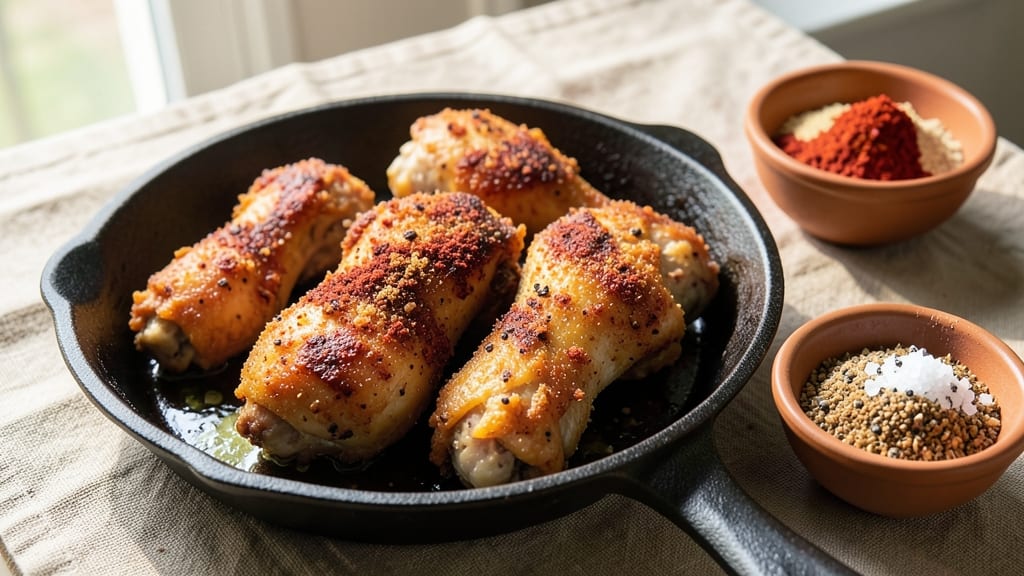
This old-fashioned Southern fried chicken seasoning recipe is the backbone of that legendary crispy, juicy crust we all crave—the kind that makes every bite worth the wait.
Growing up in small-town Georgia, I learned that true Southern fried chicken starts with a dry spice blend, not just salt and pepper. The secret lies in balancing earthy paprika, warm brown sugar, and just enough cayenne to give it that signature kick without overpowering the chicken’s natural flavor.
The blend is simple but precise: 2 tablespoons of paprika, 1 tablespoon of brown sugar, 1 teaspoon of garlic powder, 1 teaspoon of onion powder, 1 teaspoon of salt, ½ teaspoon of black pepper, ½ teaspoon of cayenne, and ½ teaspoon of dried thyme.
These ingredients work together to create a crust that’s crispy on the outside while keeping the meat juicy and tender inside. The brown sugar caramelizes during frying, adding a subtle sweetness that rounds out the heat.
What makes this seasoning special is its versatility—it works with any cut of chicken, from thighs to drumsticks, and pairs perfectly with buttermilk marinades for extra tenderness.
The blend keeps well in an airtight container for up to 6 months, so you can always have that Southern touch ready when the craving hits. Trust me, once you try this, you’ll never go back to store-bought seasoning.
For best results, apply 1 to 2 tablespoons of the blend per pound of chicken before frying, making sure to coat every inch evenly. The spices will create a golden, crackling crust that’s impossible to resist.
Whether you’re serving it at a family gathering or just craving a taste of home, this seasoning is the key to restaurant-quality fried chicken right in your own kitchen.
Ingredients for old fashioned southern fried chicken seasoning
Nine simple spices transform ordinary chicken into Southern fried perfection—crispy, juicy, and full of flavor.
| Ingredient | Amount | Notes |
|---|---|---|
| Smoked Paprika 🌶️ | 2 tbsp | High-quality smoked for depth |
| Light Brown Sugar 🍚 | 1 tbsp | Packed, not granulated |
| Garlic Powder 🧄 | 1 tsp | Freshly ground preferred |
| Onion Powder 🧅 | 1 tsp | Not onion salt |
| Diamond Crystal Kosher Salt 🧂 | 1 tsp | Clumps when wet |
| Freshly Ground Black Pepper 🌶️ | ½ tsp | Cracked peppercorns preferred |
| Cayenne Pepper 🔥 | ½ tsp | Adjust for heat preference |
| Dried Thyme Leaves 🌿 | ½ tsp | Not thyme powder |
| Ground Coriander 🌿 | ¼ tsp | For citrusy brightness |
The paprika is non-negotiable—smoked gives that authentic Southern flavor you can't get with sweet varieties. I grab mine from Penzeys or the bulk bins at Whole Foods because those pre-packaged jars at the grocery store taste flat. Brown sugar here isn't just for sweetness; it caramelizes during frying, creating that signature golden crust. Light brown sugar works better than dark—it's less molasses-heavy. For the cayenne, McCormick is my go-to because it's consistent, but any good-quality cayenne will do. The thyme should be leaf, not powder—it dissolves better and keeps its aroma. If you're feeling fancy, toast your spices in a dry pan for 30 seconds to wake up their flavors before blending.
No smoked paprika? Sweet paprika plus a pinch of liquid smoke gets you close. Running low on coriander? Extra lemon zest adds that citrus note, though it's not quite the same. The garlic and onion powders can be swapped for fresh, but roast them first to deepen their flavor—350°F for 10 minutes does the trick. If you're using pre-ground spices, sift them to remove any clumps before mixing. And trust me, don't skip the coriander—it's what makes this blend taste authentically Southern. For extra crispiness, add 1/4 tsp of baking powder to the mix, but only if you're not sensitive to sodium.
This blend keeps indefinitely in an airtight container, but it's best within 6 months for maximum flavor. I store mine in a amber glass jar with a tight-sealing lid—keeps the spices fresh and blocks light. For best results, apply 1 to 2 tbsp per pound of chicken, pressing the seasoning into the meat so it sticks. The blend doubles as a dry rub for pork or roasted vegetables, so make extra. If you're prepping for a crowd, divide the seasoning into small containers so you can grab what you need without measuring every time.
Why You'll Love This Recipe
- Pantry Magic: I swear by this blend—no fresh herbs, no last-minute shopping. Just open your spice rack, measure, and you’re golden. That smoked paprika alone turns ordinary chicken into something special without extra fuss.
- Sweet-Savory Crunch: The brown sugar caramelizes just enough to give it that addictive crisp, while the garlic and onion powders add depth. It’s the kind of seasoning that makes you want to eat it straight from the jar—don’t judge me.
- Game for Any Occasion: Slap this on fried chicken for Sunday dinner, toss it in a skillet with biscuits for brunch, or even sprinkle it on roasted veggies. Honestly, I’ve used it in everything, and it never lets me down.
- Budget-Friendly Staple: A little goes a long way, and these ingredients cost next to nothing. I make big batches, store them in jars, and still have enough left for months. (Yes, even on a Tuesday night.)
Instructions for old-fashioned Southern fried chicken seasoning
Here's the method you need to create a bold, aromatic blend that delivers that iconic Southern crispy crust.
Measure All Ingredients Precisely
Start by gathering all your ingredients and measuring them exactly as listed. The 2 tablespoons of smoked paprika forms the foundation of this blend, delivering that signature smoky depth that defines Southern fried chicken. I always use a kitchen scale for accuracy with spices—especially when you're working with such small quantities like the 0.25 teaspoon of ground coriander—because even a pinch too much can overpower the delicate balance.
For the 1 tablespoon of light brown sugar, pack it firmly into your measuring spoon to ensure you get the proper amount. This isn't just for sweetness—it helps create that beautiful caramelized crust when fried. The 1 teaspoon of garlic powder and 1 teaspoon of onion powder should be measured using the level-scoop method to avoid compaction. Place each ingredient in its own small bowl to keep your workspace organized and prevent cross-contamination between spices.
Whisk the Dry Ingredients Together
In a medium bowl, combine all the measured ingredients: the 2 tablespoons smoked paprika, 1 tablespoon light brown sugar, 1 teaspoon garlic powder, 1 teaspoon onion powder, 1 teaspoon Diamond Crystal kosher salt, 0.5 teaspoon freshly ground black pepper, 0.5 teaspoon cayenne pepper, 0.5 teaspoon dried thyme leaves, and 0.25 teaspoon ground coriander. Use a whisk to break up any clumps in the smoked paprika and sugar, ensuring an even distribution throughout the blend.
Here's the thing—don't just stir with a spoon. That can leave pockets of undissolved spices. The whisking motion ensures every particle gets incorporated, creating a uniform seasoning that will coat your chicken evenly. You'll notice the mixture darkens slightly as the spices meld together, developing that rich, complex aroma that's pure Southern fried chicken magic. This step takes about 1-2 minutes of vigorous whisking until no dry spots remain.
Test the Seasoning on Raw Chicken
To verify your seasoning blend is perfectly balanced, take 4 bone-in chicken pieces (like thighs or drumsticks) and pat them completely dry with paper towels. This is crucial—moisture prevents the seasoning from adhering properly. Then, generously coat each piece with about 1 tablespoon of your seasoning blend, pressing it into the meat so it sticks. Let the seasoned chicken rest at room temperature for 30 minutes before frying.
During this resting period, the seasoning will adhere more thoroughly to the chicken's surface, creating that coveted crispy crust when fried. You'll notice the chicken develops a slightly sticky coating—this is normal and indicates the spices are properly bonding with the meat. If you're using this seasoning for breading, you can proceed to coat the chicken in flour or cornmeal after this resting period. For direct frying, this is your final preparation step before hitting the hot oil.
Pro Tips For Making Old Fashioned Southern Fried Chicken Seasoning
- TOAST YOUR SPICES FIRST: Smoked paprika loses its depth when raw—toss it in a dry skillet over medium heat for 30 seconds until fragrant. I learned this the hard way after making a batch that tasted flat; now my seasoning has that real smoky punch without overpowering.
- MEASURE SALT BY VOLUME: Diamond Crystal kosher salt clumps like crazy when scooped—use the "rice cup" trick: fill a measuring spoon with it, then level it off with the back of a knife. Too much salt ruins the balance of sweet and savory, and you won’t taste the brown sugar’s caramel notes.
- DON’T SKIP THE GARLIC POWDER SIFT: Lightly toast your garlic powder (like the paprika) and sift it through a fine-mesh strainer before mixing—this breaks up any lumps and ensures even distribution. Uneven seasoning means some bites taste bland while others are overpowering.
- MIX DRY INGREDIENTS IN BATCHES: Combine the smoked paprika and brown sugar first—they cling together like glue, then add the powders last. This prevents the salt from turning the mix into a pasty brick that won’t stick to the chicken. (Yes, I’ve made that mistake.)
Essential equipment for this dish
Cast Iron Skillet
You absolutely need a 12-inch cast iron skillet—preferably a Lodge or Victoria brand—for that perfect Southern fried chicken crust. My Lodge Pre-Seasoned skillet has been my workhorse for years, and I’ve never had a better crust. Cast iron retains heat evenly and creates that signature crispiness.
Before frying, heat your skillet over medium-high heat until it’s smoking hot—this ensures your chicken gets that golden-brown crust. If you’re frying multiple batches, keep the skillet warm between uses by placing it on a low burner with a lid on. 🔥
Deep Fryer
A deep fryer is a game-changer for Southern fried chicken, especially when cooking larger batches. I use a Ninja Foodi 4.5-Quart because it maintains a consistent 350-375°F oil temperature—critical for that crispy-yet-juicy result. Deep fryers are safer than stovetop methods because they’re enclosed, reducing splatter.
Just make sure to use peanut or vegetable oil (avoid olive oil—it burns too easily). For extra crispiness, double-fry your chicken: fry once at 325°F for 8 minutes, then increase the heat to 375°F for 2-3 minutes to crisp up the crust. ⚡
Meat Thermometer
Never skip the meat thermometer—it’s the secret to juicy, perfectly cooked fried chicken. I swear by the Thermoworks Dot because it’s fast and accurate. The internal temperature of your chicken should reach 165°F before removing it from the oil.
For bone-in pieces like thighs or drumsticks, insert the probe into the thickest part, avoiding the bone. If you pull the chicken out too soon, it’ll be undercooked and rubbery; too late, and it’ll dry out. Trust me, a 165°F reading guarantees tender, juicy meat every time. 🌡️
Tongs and Wire Rack
Use heavy-duty tongs—like OXO Good Grips—to handle hot chicken without dropping or burning yourself. A wire cooling rack is non-negotiable for crispy results. After frying, place your chicken on the rack to drain excess oil, keeping that perfect crust intact.
If you skip this step, the chicken will steam and turn soggy. I also recommend keeping a small bowl of flour nearby to lightly dust any pieces that lose their crispiness while resting. For extra crunch, sprinkle a pinch of cornstarch over the hot chicken right after frying. 💫
Oil Thermometer
An infrared thermometer (like the Thermoworks IR) is my go-to for monitoring oil temperature—it’s faster and more accurate than a candy thermometer. Maintaining 350-375°F is key: too low, and your chicken will be greasy; too high, and it’ll burn before cooking through.
If you don’t have an infrared thermometer, a deep-fry thermometer with a long stem works well. For best results, heat your oil in small batches—overloading the pan drops the temperature, leading to uneven cooking.
I usually fry 2-3 pieces at a time in a 12-inch skillet filled with 1.5 inches of oil.
Nutrition facts
Frequently asked questions
What makes this seasoning different from store-bought blends?
This blend uses smoked paprika instead of sweet paprika for that authentic Southern depth, plus light brown sugar for caramelization—not just salt and pepper. The cayenne adds subtle heat without overpowering, while ground coriander gives it that classic citrusy brightness you won’t find in generic mixes.
Can I adjust the spice level for kids or sensitive eaters?
Reduce the cayenne pepper to ¼ teaspoon or omit it completely for milder flavor. For extra mildness, swap the cayenne with an additional ¼ teaspoon of thyme. The rest of the blend will still deliver that signature Southern taste without the heat.
How do I store this seasoning blend to keep it fresh?
Keep it in an airtight container (like a glass jar) in a cool, dark place—it’ll stay potent for up to 6 months. For longer storage, freeze it in ice cube trays (each cube = ~1 tbsp) and transfer to a freezer bag. Thaw overnight in the fridge before using.
Can I use this seasoning on other meats or vegetables?
Yes! It works perfectly on pork chops, ribs, or roasted Brussels sprouts. For vegetables, reduce the salt to ½ teaspoon to avoid over-salting. The blend also makes a great dry rub for grilled corn or sweet potatoes. Just adjust the amount—1 tbsp per pound works well for most proteins.
Why does my crust turn out greasy instead of crispy?
Greasy crusts usually mean the oil wasn’t hot enough (350-375°F) or the chicken was overcrowded in the pan. Fry in small batches (2-3 pieces at a time) and use a meat thermometer to check internal temp at 165°F. Also, pat the chicken very dry before seasoning—any moisture steams the crust instead of crisping it.