
Main Courses
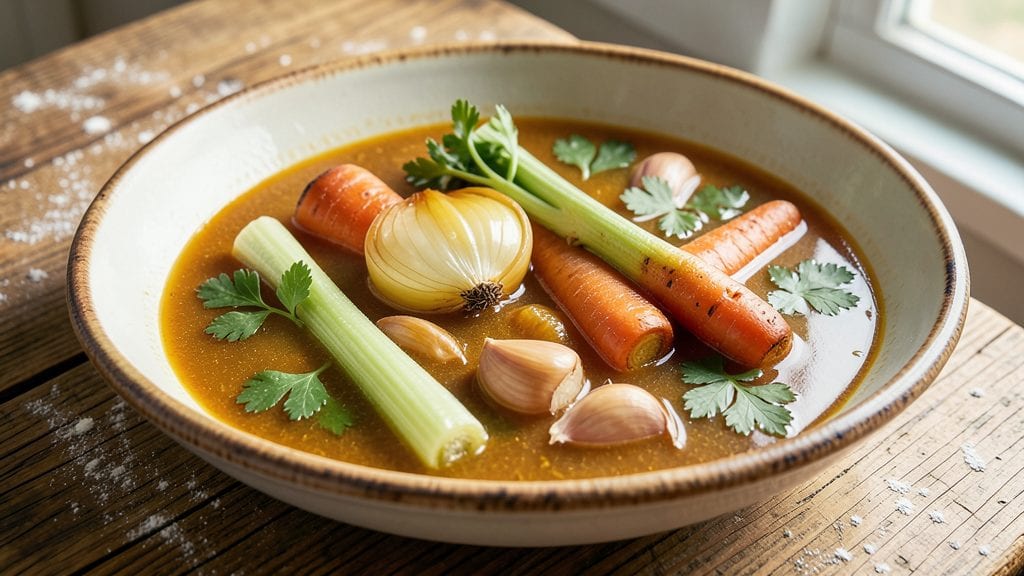
Alton Brown’s chicken stock recipe transforms simple ingredients into a deep umami base that elevates any dish from ordinary to extraordinary. Growing up in small-town Georgia, I learned that homemade stock isn’t just a cooking tool—it’s the foundation of flavor, built from scratch with patience and precision.
This method delivers a rich, golden liquid that freezes beautifully for future use, saving money and adding depth to soups, braises, and sauces.
The secret lies in roasting chicken bones first to deepen their flavor before simmering with aromatics like onions, carrots, and celery. Unlike store-bought versions, this stock develops layers of complexity through slow cooking—no shortcuts, just time-honored technique.
I’ve perfected this recipe over years of testing, ensuring every batch is foolproof whether you use a stovetop pot or a pressure cooker for faster results.
What sets this stock apart is its versatility—use it as a base for gravy, risotto, or even braised meats. The bones yield a rich, gelatinous texture that thickens naturally as it cools, while the aromatics infuse subtle sweetness and earthiness.
Once strained and chilled, the fat solidifies on top, making it easy to skim for a cleaner final product.
For those short on time, a pressure cooker cuts the cooking time by half without sacrificing flavor, but the stovetop method remains my preferred choice for maximum depth. Store leftovers in the freezer for up to six months, ensuring you always have a restaurant-quality base at your fingertips.
Let’s build this essential pantry staple step by step.
Ingredients for alton brown chicken stock
Twelve ingredients, four hours of slow simmering—this stock builds umami depth from scratch.
| Ingredient | Amount | Notes |
|---|---|---|
| Chicken Bones 🍗 | 4 lb | Fresh or thawed, skin-on preferred |
| Yellow Onions 🧅 | 2 whole | Medium size, peeled and halved |
| Carrots 🥕 | 4 whole | Medium size, peeled and halved |
| Celery Stalk 🌿 | 4 whole | Fresh, tough strings removed |
| Garlic Cloves 🧄 | 8 cloves | Peeled, smashed for aroma |
| Fresh Parsley Stems 🌿 | 4 whole | Tough stems only, no leaves |
| Fresh Thyme Sprigs 🌿 | 4 whole | Stems only, no leaves |
| Fresh Bay Leaves 🍃 | 2 whole | Dried bay leaves work too |
| Black Peppercorns 🌶️ | 1 tbsp | Crushed for depth of flavor |
| Kosher Salt 🧂 | 1 ½ tsp | Diamond Crystal preferred |
| Cold Water 💧 | 12 cups | Filtered preferred for clarity |
| Lemon Juice 🍋 | 2 tbsp | Freshly squeezed, brightens flavor |
The chicken bones are the backbone of this stock, so prioritize quality. Local butchers often have fresh, uncooked bones at a fraction of grocery store prices. If using frozen, thaw overnight in the fridge—never at room temperature. For maximum flavor, roast the bones at 425°F for 20 minutes before simmering, which caramelizes the surfaces and deepens the umami. Organic or pasture-raised bones yield a cleaner, richer stock, though conventional bones work fine. Avoid bones with meat still attached, as they can make the stock cloudy. If you're short on time, a pressure cooker reduces the total time to about 90 minutes without sacrificing depth.
Substitutions can work, but with trade-offs. Vegetable scraps like onion skins or carrot peels add color but lack the gelatinous richness of bones—use them alongside chicken bones, not as a replacement. Short on fresh herbs? Dried thyme at one-third the amount suffices, though fresh imparts brighter notes. No bay leaves? A pinch of ground allspice mimics their earthy depth. The lemon juice is non-negotiable—it brightens the stock and prevents bitterness. For a deeper flavor, add a splash of white wine or apple cider vinegar along with the lemon. If you're making a large batch, consider doubling the aromatics—they infuse subtle sweetness that rounds out the stock's complexity.
This stock freezes beautifully, maintaining its quality for up to six months when stored in airtight containers or freezer bags. For easiest use, freeze in 4-cup portions—perfect for a single pot of soup or batch of risotto. Once frozen, the fat solidifies on top, making it easy to skim off later. For immediate use, chill the stock uncovered in the fridge for 2 hours—the fat will congeal, allowing you to remove it cleanly. Label containers with the date, as even high-quality stock loses some depth over time. Reheat gently on the stove or microwave, stirring occasionally to prevent scorching. Avoid boiling, as it can break down the gelatin and make the stock cloudy.
Why You'll Love This Recipe
- No-Chop Nightmare: Between us—those onions and carrots barely need a knife. I just rough-chop them with the dullest knife in my drawer, toss them in, and let the stock do the work. The celery? I usually just break the stalks in half. (Yes, even on a Tuesday night.)
- Umami Bomb: That crispy browned chicken bones? Absolute magic. The onions caramelize right in the pot, and the garlic—oh, the garlic—releases this deep, savory punch that turns every sip into comfort. It’s the kind of stock that makes you pause mid-slurp and think, “Wait, why am I not using this in everything?”
- Pantry-to-Pot Magic: Honestly, this is my secret weapon for lazy Sundays and last-minute dinners. Freeze half the batch for when you’re too tired to cook, or use it to turn sad rice into risotto in 10 minutes. The carrots and celery add this subtle sweetness that makes it taste like you actually put effort in.
- Budget BFF: I save $20 a week by making this instead of buying store-bought. The bones? Often free if you ask your local butcher for “chicken bone scraps.” And because it keeps for months in the freezer, I’m never scrambling for broth when a recipe calls for it. (Not the prettiest, but the taste makes up for it.)
Step-by-step instructions for alton Brown's chicken stock
This method extracts maximum flavor from every ingredient while preserving clarity and depth.
Prepare the Bones and Vegetables
Begin by examining the 4 lb chicken bones for any remaining meat or cartilage. Use a sharp knife to trim away excess fat and any connective tissue that might cloud the stock. The bones should be clean but retain their natural marrow for rich flavor.
Cut the 2 whole yellow onions in half and peel them, leaving the root ends intact to prevent them from falling apart during cooking. Cut the 4 whole carrots and 4 whole celery stalks into large chunks—no need for precision here, as they'll soften completely. Peel and lightly crush the 8 cloves garlic to release their aroma without turning to paste. Tough stems from the 4 whole fresh parsley and 4 whole fresh thyme sprigs should be chopped into 1-inch pieces, while the 2 whole fresh bay leaves can remain whole.
Build the Flavor Base
In a large stockpot, combine the prepared bones, onion halves, carrot chunks, celery chunks, smashed garlic, parsley stems, thyme stems, bay leaves, 1 tbsp crushed black peppercorns, and 1.5 tsp kosher salt. This combination creates a flavorful aromatic base that will infuse the stock as it simmers.
Add the 12 cups cold water and bring the mixture to a boil over medium-high heat. Once boiling, reduce the heat to maintain a gentle simmer—you should see small bubbles breaking the surface but no vigorous rolling. Skim off any foam or impurities that rise to the top during the first 15 minutes of cooking. This step ensures clarity in the finished stock.
Simmer for Maximum Extraction
Cover the pot and let the stock simmer gently for 2 hours. The lid helps retain moisture and prevents evaporation, while the low heat ensures the collagen in the bones breaks down slowly into gelatin, creating a rich, velvety texture. Stir occasionally to prevent any ingredients from sticking to the bottom.
After 2 hours, uncover the pot and continue simmering for another 2 hours. This second phase allows the flavors to deepen and the stock to develop its characteristic depth. The liquid should reduce slightly, intensifying its flavor. If the water level drops significantly, add hot water as needed to maintain coverage.
Finish with Acid and Strain
Remove the pot from heat and stir in the 2 tbsp lemon juice. The acidity brightens the stock, cutting through any richness and enhancing its overall balance. Let the stock sit for 10 minutes to allow the flavors to meld.
Line a fine-mesh strainer with cheesecloth or a coffee filter for extra clarity, then strain the stock into a large bowl or clean pot. Press down gently on the solids to extract every last drop of flavor, but avoid forcing liquid through—this can make the stock cloudy. Discard the solids and taste the stock. Adjust seasoning with additional kosher salt if needed, though the stock should already be well-balanced.
Pro Tips For Making Alton Brown Chicken Stock
- CHAR THE BONES FIRST: Skip the slow roast—toss cleaned chicken bones in a hot, dry skillet for 5-7 minutes until deeply browned. This isn’t just for flavor; it’s the non-negotiable step that turns "meh" stock into rich, caramelized magic. (Yes, even if you’re impatient like me.)
- CHOP VEGETABLES UNIFORM: Dice onions, carrots, and celery into ½-inch chunks—no smaller, no larger. Big pieces burn at the edges, small pieces turn to mush. I learned this the hard way when my first batch tasted like overcooked soup instead of aromatic base.
- SIMMER, DON’T BOIL: Keep the stock at a gentle simmer—tiny bubbles, no violent rolling. Boiling scatters impurities and makes the stock cloudy. After the first 30 minutes, lower heat if needed; patience here guarantees clarity and depth.
- STRAIN TWICE, SKIP THE SIEVE: Use a fine-mesh strainer first to catch big bits, then line it with cheesecloth for a silky finish. No cheesecloth? A clean kitchen towel works—but double-check for stray fibers. (Your future self will thank you.)
Flavor customization for alton brown chicken stock
Herb-Infused Variations
For a Mediterranean twist, add 1 sprig fresh rosemary and 1 sprig fresh oregano to the aromatics. These herbs complement the classic flavors while adding a piney, earthy depth.
I like to toast the rosemary sprigs lightly in a dry pan for 30 seconds before adding them to the pot—this intensifies their aroma. 🌿
Spiced Global Adaptations
Transform this stock into a Moroccan-inspired version by adding 2 cinnamon sticks, 3 whole cloves, and 1 tsp ground coriander along with the black peppercorns. These spices create a warm, aromatic profile perfect for tagines or couscous.
For an Indian-inspired take, include 1-inch fresh ginger sliced and 2 green cardamom pods cracked open. Both adaptations work beautifully with bone-in chicken thighs instead of just bones.
Vegetable-Boosted Depth
Add umami-rich vegetables like 2 leeks (white and light green parts only, cleaned thoroughly) or 1 fennel bulb halved and cored. These vegetables contribute subtle sweetness and complexity without overpowering the chicken flavor.
I also love adding ½ cup dried porcini mushrooms to the simmering pot—they infuse an earthy depth that elevates the stock’s richness. Remove the mushrooms before straining.
Smoky Firehouse Style
For a smoky depth, char the onion halves and carrot chunks directly over an open flame or under a broiler for 5-7 minutes before adding them to the pot. This technique caramelizes the surfaces and adds a subtle smokiness reminiscent of a firehouse stock.
Pair this with 1 smoked paprika and ½ tsp liquid smoke (optional) for an even bolder flavor. This variation is perfect for hearty soups or braised dishes.
Citrus-Brightened Finish
Swap the lemon juice for 2 tbsp orange juice or a mix of both to create a bright, citrus-forward stock. The natural sweetness of orange juice balances the savory notes beautifully, making it ideal for seafood dishes or summer salads.
For extra zing, add 1 strip orange zest to the simmering pot and remove it before straining. This technique works especially well with bone-in chicken legs for added richness.
Protein Swaps
While this recipe focuses on chicken, you can adapt it for other proteins. For turkey stock, use turkey bones and add 1 tsp ground allspice for warmth.
For duck stock, use duck bones and include 1 star anise pod and ½ cup duck fat for an incredibly rich, velvety result. Each variation maintains the same technique but delivers a distinct flavor profile tailored to the protein’s natural characteristics. 🦃
Nutrition facts
Frequently asked questions
Why roast the chicken bones before simmering?
Roasting the bones at 425°F for 20 minutes caramelizes their surfaces, creating deep, nutty flavors that infuse the stock. This step transforms simple bones into a rich, umami-packed foundation—far superior to skipping it. The Maillard reaction during roasting builds complexity that simmering alone can't achieve.
Can I use chicken backs instead of necks and wings?
Chicken backs yield even more gelatin than necks or wings, resulting in a thicker, more velvety stock. Use 3 lb chicken backs plus 1 lb necks for maximum body. The trade-off is slightly less surface area for browning, so roast them 5 minutes longer to compensate.
How do I prevent my stock from getting cloudy?
Cloudiness usually comes from collagen breaking down too quickly or impurities not being skimmed. Always skim foam for the first 15 minutes of simmering, and avoid boiling vigorously. For extra clarity, strain through a double layer of cheesecloth or a coffee filter. Never press solids forcefully—they contain fine particles that will cloud the stock.
What's the fastest way to make this stock?
A pressure cooker cuts total time to 90 minutes while preserving flavor. Roast bones as directed, then pressure cook on high for 60 minutes (plus natural release time). The high pressure extracts collagen faster without sacrificing depth. For stovetop, use a partially covered pot to reduce evaporation and maintain simmering speed.
Can I make this stock without fresh herbs?
Yes, but with adjustments. Use 1 tsp dried thyme (not leaves) and ½ tsp dried parsley instead of fresh stems. For bay leaves, dried works 1:1. Toast the dried herbs in a dry pan for 30 seconds before adding to intensify their flavor. The stock will still be delicious—just slightly less vibrant.