
Soups & Stews
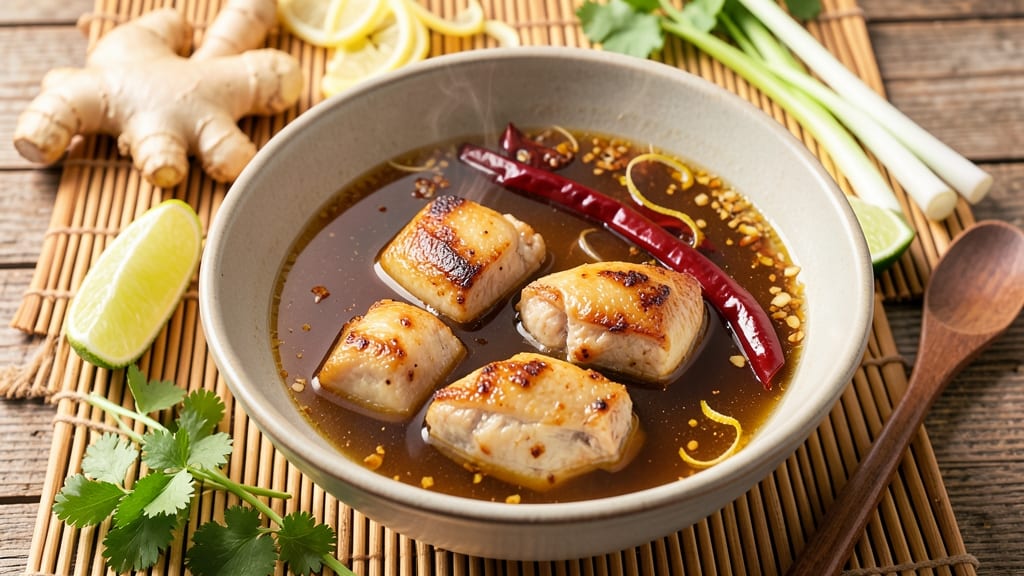
This Asian style chicken soup recipe delivers the perfect balance of fragrant broth, tender chicken, and silky rice noodles in every spoonful. The secret lies in a ginger-lemongrass base that simmers for hours, infusing the broth with aromatic depth while keeping the preparation straightforward.
Whether you're craving the comforting warmth of Japanese ramen or the tangy brightness of Thai tom kha gai, this recipe adapts beautifully while maintaining authentic flavors.
What sets this dish apart is the three-stage cooking process: first, building the aromatic broth with ginger, lemongrass, and garlic; then poaching the chicken until fork-tender; and finally, incorporating rice noodles that absorb the rich flavors without turning mushy.
The result is a harmonious blend of textures—silky noodles, tender chicken, and crisp vegetables—all bathed in a deeply flavorful broth that's both comforting and invigorating.
The beauty of this recipe is its versatility. Adjust the spice level with chili paste, add mushrooms for earthiness, or incorporate fresh herbs like cilantro or Thai basil for brightness.
It's equally at home as a light lunch or a hearty dinner, especially on chilly evenings when warmth and nourishment are most welcome. The broth can even be made ahead, allowing you to assemble the soup in minutes when needed.
With just 15 minutes of active prep and 1.5 hours of simmering, this soup delivers restaurant-quality results without the fuss. The key is patience—letting the broth develop its complex flavors while you prepare the other components.
Once assembled, each bowl is a perfect balance of savory, aromatic, and slightly tangy notes, making it a dish that feels both familiar and special.
Ingredients for asian style chicken soup
Fifteen aromatic ingredients blend to create a deeply flavorful Asian-inspired chicken soup with restaurant-quality depth.
| Ingredient | Amount | Notes |
|---|---|---|
| Boneless, Skinless Chicken Breast 🍗 | 1 ½ lb | Cut into 1-inch cubes for even cooking |
| Fresh Ginger Root 🧄 | ½ cup | Julienned, skin removed |
| Lemongrass Stalks 🌿 | 3 whole | Bruised and cut into 2-inch pieces |
| Garlic Cloves 🧄 | 6 cloves | Smashed, not minced |
| Thai Chili Paste 🌶️ | 1 tbsp | Adjust for spice preference |
| Fish Sauce 🍶 | 1 tbsp | Red Boat preferred for authenticity |
| Vegetable Oil 🫒 | 2 tbsp | High smoke point for searing |
| Chicken Broth 💧 | 6 cups | Homemade or high-quality store-bought |
| Rice Noodles 🍜 | 8 oz | Thin or medium width, fresh or dried |
| Baby Bok Choy 🥬 | 4 whole | Trimmed, quartered lengthwise |
| Shiitake Mushrooms 🍄 | 4 whole | Stems removed, sliced |
| Fresh Cilantro 🌿 | ¼ cup | Chopped, for garnish |
| Lime Juice 🍋 | 2 tbsp | Freshly squeezed |
| Soy Sauce 🍶 | 1 tbsp | Light or all-purpose |
| Sesame Oil 🫒 | 1 tsp | Toasted, for finishing |
The aromatic base transforms this soup. Fresh lemongrass and ginger should be vibrant and fragrant—avoid woody stalks or dried-up roots. For lemongrass, look for plump, pale stalks at Asian markets or the produce section. Red Boat fish sauce is the gold standard, but any reputable brand works. The chicken breast should be plump and uniform—cutting it into even cubes ensures consistent doneness. If using dried rice noodles, soak them separately according to package instructions before adding to the soup.
No lemongrass? Lime zest plus a splash of lime juice adds brightness. Substitute ginger powder at half the amount, but fresh is ideal. For extra umami, mushroom powder or soy sauce enhances depth. The Thai chili paste can be swapped for sriracha or sambal oelek, though the flavor profile will differ slightly. If you prefer less heat, reduce the amount or omit entirely. For the mushrooms, shiitake or oyster mushrooms work best—their meaty texture holds up to simmering. Baby bok choy can be replaced with spinach or napa cabbage if unavailable.
This soup tastes even better the next day as flavors meld. Store the broth separately in the fridge for up to 5 days—reheat gently before adding noodles and toppings. The chicken and vegetables can be refrigerated for 3 days or frozen for 3 months. For meal prep, assemble bowls ahead of time and store components separately. Garnish with fresh cilantro and a drizzle of toasted sesame oil just before serving to preserve freshness.
Why You'll Love This Recipe
- One-Pot Magic: I swear by this recipe—just toss everything in one pot, simmer, and forget about it. No chopping mountains of veggies or fussing with multiple pans. That lemongrass and ginger? They infuse the broth like a spa day for your taste buds while you’re busy doing actual life stuff.
- Flavor Bomb: The Thai chili paste and garlic turn this soup into a flavor explosion—bright, spicy, and just a little funky in the best way. It’s the kind of taste that makes you pause mid-sip and think, "Wait, how is this so good?" (Spoiler: It’s the ginger and lemongrass working their magic.)
- Weeknight to Dinner Party: Honestly, this soup works everywhere. Tired of the same old pasta on Tuesdays? Done. Hosting unexpected guests? Nailed it. Even my picky teenage nephew asks for seconds—though he’ll never admit it’s "fancy." The broth keeps well, and the chicken stays juicy, so it’s my secret weapon for effortless impressing.
- Budget-Friendly Leftovers: Between us, this recipe is ridiculously cost-effective. Chicken breast is affordable, and the aromatics stretch the broth into three or four meals without tasting watered down. I’ll be real: I often make double batches just to have it on hand for lazy days. Plus, the Thai chili paste adds depth without breaking the bank—unlike some of those overpriced "gourmet" soups.
Step-by-step instructions for fragrant ginger-lemongrass chicken soup
This method delivers a restaurant-quality broth with vibrant aromatics and perfectly balanced flavors.
Prepare the Aromatic Base
Heat the 2 tablespoons vegetable oil in a large pot over medium-high heat until shimmering. Add the 1.5 pounds boneless, skinless chicken breast cut into 1-inch cubes and sear for 3-4 minutes until lightly golden on all sides. Remove the chicken and set aside.
In the same pot, add the 0.5 cup julienned fresh ginger root and 3 lemongrass stalks cut into 2-inch pieces. Sauté for 2 minutes until the ginger becomes fragrant and slightly translucent. Add the 6 smashed garlic cloves and 1 tablespoon Thai chili paste, cooking for another 30 seconds until the garlic is golden and the paste is fully incorporated.
Build the Broth Foundation
Pour in the 6 cups chicken broth and bring to a gentle boil. Return the seared chicken to the pot, reduce heat to medium-low, and simmer uncovered for 20 minutes, skimming any foam that rises to the surface. This step extracts maximum flavor from the aromatics while preventing bitterness.
After 20 minutes, add the 1 tablespoon fish sauce and 1 tablespoon soy sauce. Stir gently and continue simmering for another 10 minutes until the chicken is fully cooked and the broth develops a rich, golden hue. The broth should smell deeply aromatic with notes of ginger, lemongrass, and garlic.
Cook the Vegetables and Noodles
While the broth simmers, prepare the vegetables: trim the 4 baby bok choy and quarter lengthwise, then slice the 4 shiitake mushrooms (stems removed). When the chicken is fully cooked, add the bok choy and mushrooms to the pot. Simmer for 5 minutes until the bok choy wilts slightly and the mushrooms soften but retain their texture.
Drain and rinse the 8 ounces rice noodles under cold water for 30 seconds to remove excess starch, then add them to the pot. Stir gently to distribute them evenly. The noodles will cook in the broth, absorbing its flavors without becoming mushy. Cook for 3-4 minutes until the noodles are tender and the soup reaches its ideal consistency.
Finish and Serve
Remove the pot from heat and stir in the 2 tablespoons freshly squeezed lime juice and 1 teaspoon toasted sesame oil. The lime brightens the broth while the sesame oil adds a nutty depth. Taste and adjust seasoning if needed—you may want to add a touch more fish sauce for umami or lime juice for acidity.
Ladle the soup into bowls and garnish each serving with 0.25 cup chopped fresh cilantro. Serve immediately while the broth is steaming and the noodles are silky. The aroma of ginger and lemongrass should fill the air, and each spoonful should deliver a perfect balance of savory, spicy, and tangy flavors. The chicken should be tender enough to pull apart easily, and the bok choy and mushrooms should add satisfying texture contrasts.
Pro Tips For Making Asian Style Chicken Soup
- Sear Chicken First: Chop the chicken breast into 1-inch cubes and sear them in a hot wok or pot for 2-3 minutes per side before adding liquid. This isn’t just for flavor—it keeps the meat from turning rubbery when simmering later. I used to skip this, and the soup always felt flat.
- Bruise the Ginger: Peel the ginger, then smash it with the flat side of your knife before slicing. This releases the oils and aroma without turning the soup into a chunky mess. (Yes, even if you’re impatient like me—just don’t pulverize it into paste.)
- Simmer Low and Slow: Once the broth starts, keep the heat at a gentle simmer—not a rolling boil. Chicken breast needs time to tenderize, and a fast boil will turn it dry. I learned this the hard way after serving a batch where the chicken fell apart like wet cardboard.
- Toast the Lemongrass: Split the lemongrass stalks lengthwise and char the pale inner part briefly in the pot before adding broth. It deepens the citrusy aroma and prevents the stalks from floating like sad, limp twigs. (Your future self will notice the difference.)
Perfect pairings for this asian style chicken soup
Broth-Based Sides
Serve this fragrant chicken soup alongside a small bowl of pho broth (use the same ginger-lemongrass base) for dipping extra rice noodles or fresh herbs. The shared aromatics create a cohesive dining experience.
For extra depth, offer wonton soup with crispy wontons and a splash of Red Boat fish sauce—it complements the spicy-savory profile beautifully. 🥣
Herb Garnishes
Fresh herbs elevate every bowl. Keep a small bowl of chopped Thai basil and cilantro on the table for diners to customize their servings. For a Thai-inspired twist, add mint leaves—their bright flavor cuts through the richness.
I like to include a lime wedge on each plate so guests can squeeze fresh juice directly into their soup.
Crunchy Toppings
Add texture with toasted rice crackers or crispy fried shallots—just sprinkle 1 tablespoon over each bowl before serving. For a nutty crunch, toast 1 tablespoon sesame seeds in a dry pan until golden and sprinkle on top. The contrast with silky noodles is pure magic. 🌟
Dipping Sauces
Offer a spicy chili oil (mix 1 tbsp Thai chili paste with 2 tbsp neutral oil) for heat lovers, or a sweet hoisin sauce for balance. A simple soy-vinegar dip (mix 1 tbsp soy sauce with 1 tbsp rice vinegar) works too.
Keep these in small bowls on the table for easy access.
Drink Pairings
A jasmine green tea with floral notes complements the ginger-lemongrass broth beautifully. For something refreshing, serve sparkling lychee juice—its sweetness balances the soup's spice. If you prefer alcohol, a dry Riesling (like Dr. Loosen Blue Slate) enhances the citrus and umami flavors without overpowering them. 🍷
Make-Ahead Extras
Prep pickled vegetables ahead of time for a tangy crunch. Quick-pickle ½ cup shredded carrots and ½ cup daikon radish in ½ cup rice vinegar with 1 tsp sugar and ½ tsp salt for 30 minutes.
Store in the fridge for up to 5 days—they add a bright, refreshing contrast to the rich soup. ❄️
Nutrition facts
Frequently asked questions
Can I substitute chicken thighs instead of breast?
Chicken thighs add richer flavor and stay juicier than breast meat. Use the same 1.5 pounds but increase simmering time by 5-10 minutes to ensure they're fully cooked (165°F internal temp). The skin adds extra depth—just remove it before serving if preferred.
How do I adjust the spice level for kids?
Reduce the Thai chili paste to ½ tablespoon or swap it for ½ teaspoon mild paprika. For extra mildness, omit the chili paste entirely and add a pinch of sugar (¼ teaspoon) to balance the broth's natural tanginess. Always taste before serving!
Can I use dried rice noodles instead of fresh?
Yes! Soak dried rice noodles in warm water for 10-15 minutes until pliable, then drain and rinse under cold water. Add them to the pot 2 minutes before serving to prevent mushiness. For best texture, use 1:3 ratio of noodles to broth (e.g., 1 cup noodles to 3 cups broth).
What if my broth tastes too salty?
Add ½ cup cold water to dilute the broth, then simmer for 5 minutes to rebalance flavors. For extra depth, stir in 1 teaspoon lime juice or ½ teaspoon fish sauce to enhance umami without adding salt. Avoid adding fresh water directly to hot broth—it can cause temperature shock.
How can I make this soup gluten-free?
Use a gluten-free soy sauce (like tamari) and ensure your fish sauce is certified gluten-free. Check rice noodles for gluten-free labels—brands like Rice Noodle or Lotus Foods offer safe options. For extra safety, verify all broth ingredients (some contain wheat).