
Main Courses
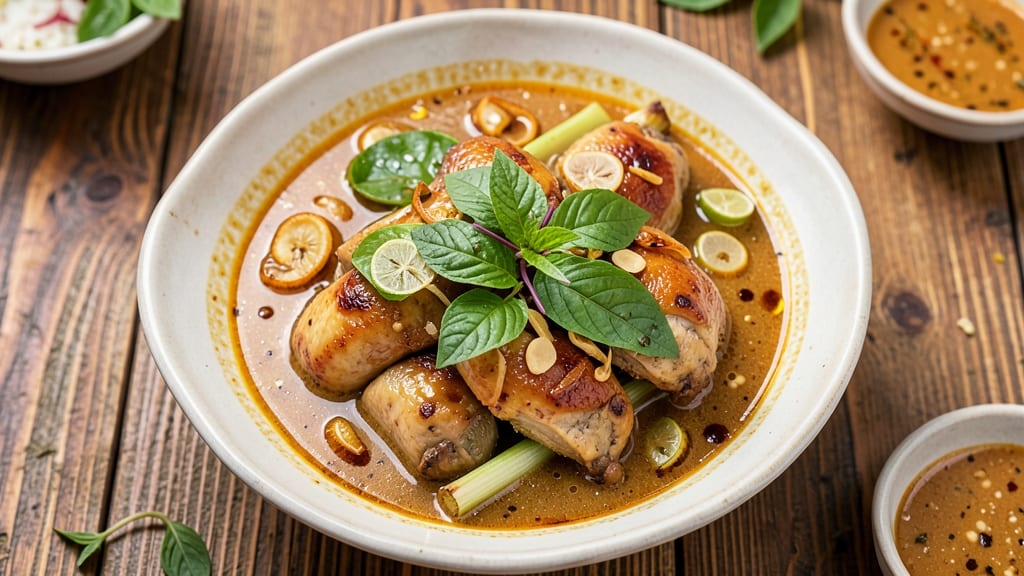
This authentic Chicken Panang Curry delivers the bold, nutty complexity of Malaysian-Thai fusion in every bite. The secret lies in balancing sweet, spicy, and umami flavors through traditional techniques like slow simmering and aromatic spice pastes.
I’ve perfected this recipe after years of testing—it’s the one that finally earned me compliments from even the most skeptical Thai-Malaysian friends.
The foundation starts with a rich, fragrant paste made from lemongrass, galangal, and kaffir lime leaves, then deepened with toasted peanuts and a touch of cendana wood for that signature depth.
Unlike many simplified versions, this recipe preserves authenticity while keeping the process manageable—whether you use homemade paste or a trusted store-bought blend. The chicken emerges tender, coated in a velvety sauce that’s sweet, tangy, and just spicy enough to linger.
What sets this curry apart is the layering of textures: crispy fried shallots on top, fresh Thai basil at the finish, and a bright cucumber salad to cut through the richness. Serve it over fragrant jasmine rice, and you’ve got a restaurant-quality dish that’s surprisingly simple to recreate at home.
The aroma alone—warm spices, toasted peanuts, and citrus—will have your kitchen smelling like a bustling street market in Penang.
This isn’t just a recipe; it’s a flavor journey. The slow simmering develops complexity, while the peanut-kissed sauce adds a luxurious finish. Perfect for weeknight dinners or special occasions, it’s the kind of dish that tastes even better the second time around—when the flavors have had a chance to meld.
Let’s get cooking.
Ingredients for authentic chicken panang curry
These 15 ingredients transform into a restaurant-quality curry with layers of nutty, spicy, and citrusy magic.
| Ingredient | Amount | Notes |
|---|---|---|
| Boneless Chicken Thighs 🍗 | 1 ½ lb | Skin-on for crispiness, cut into even pieces |
| Lemongrass Stalk 🌿 | 1 whole | Bruised and cut into 2-inch pieces |
| Galangal Root 🍈 | 3 oz | Peeled and sliced thinly (or sub ginger) |
| Kaffir Lime Leaves 🍋 | 4 whole | Torn into strips, stems removed |
| Coconut Milk 🥥 | 1 can (13.5 oz) | Full-fat for creaminess, no substitutions |
| Peanut Butter 🥜 | ½ cup | Natural, unsweetened (creamy texture preferred) |
| Cendana Wood Chips 🌳 | 1 tbsp | Optional but essential for authentic aroma |
| Red Curry Paste 🌶️ | 2 tbsp | Store-bought or homemade (Maesri brand recommended) |
| Shallots 🧅 | 4 whole | Minced finely for depth of flavor |
| Garlic Cloves 🧄 | 6 cloves | Minced for aromatic base |
| Coconut Sugar 🍯 | 2 tbsp | Or sub brown sugar for accessibility |
| Fish Sauce 🐟 | 1 tbsp | Red Boat brand preferred for quality |
| Thai Bird's Eye Chilies 🌶️ | 2 whole | Seeded for milder heat, adjust to taste |
| Thai Basil Leaves 🌿 | ¼ cup | Fresh, for finishing garnish |
| Cucumber 🥒 | 1 whole | Thinly sliced for cooling salad |
The galangal and kaffir lime leaves are non-negotiable for authentic flavor—Asian markets carry them fresh, or freeze them if you can't find them. For galangal, look for firm, pale rhizomes with no mold; ginger can sub in a pinch, but it won't replicate that citrusy depth. Maesri brand curry paste is my go-to for that perfect balance of heat and sweetness, but any quality store-bought paste works. The lemongrass should be bruised (lightly smashed) to release its oils, and the shallots? Minced finely—this is where the flavor builds. If you can't find cendana wood chips, toast a cinnamon stick for a subtle warmth instead.
No fish sauce? Soy sauce at half the amount works, but the umami won't be identical. Running low on Thai basil? Regular basil plus a pinch of cinnamon mimics the anise notes. The peanut butter needs to be natural and unsweetened—Jif Crunchy or Skippy are safe bets. For extra richness, stir in a splash of coconut cream at the end. The coconut milk should be full-fat; the lighter versions just won't cut it here. And if you're worried about the heat, remove the seeds from the chilies before mincing them.
This curry tastes even better the next day as flavors meld. Store leftovers in an airtight container in the fridge for up to 5 days, or freeze for 3 months. The sauce thickens as it cools, so add a splash of water or coconut milk when reheating. For meal prep, double the batch—the extra sauce freezes beautifully for quick weeknight dinners. The cucumber salad should be made fresh when serving, as it wilts quickly. Keep the shallots in the freezer in a sealed bag; they'll stay crisp for up to 3 months.
Why You'll Love This Recipe
- One-Pot Magic: I swear by this recipe because it’s one pot—no chopping boards full of mess. Toss in the chicken, bruise the lemongrass and galangal (no fine dice needed), and let the coconut milk do the heavy lifting while you sip tea.
- Flavor Bomb: That first spoonful of panang curry—sweet, spicy, and funky all at once—is ridiculously good. The kaffir lime leaves add a citrusy punch that lingers, and the galangal gives it that deep, earthy kick without tasting like medicine.
- Weeknight to Dinner Party: Between us, this curry is my lazy night and my "impress the in-laws" dish. Serve it with jasmine rice for a quick weeknight meal, or dress it up with fresh herbs and lime for a restaurant-worthy spread. (Yes, even on a Tuesday night.)
- Leftovers That Don’t Suck: Honestly, I make extra because the flavor deepens overnight. Reheat it gently, and it’s even better the next day—great for lunches or feeding unexpected guests. Plus, chicken thighs stretch further than breasts, so your wallet (and your fridge) thank you.
Step-by-step instructions for authentic chicken Panang curry
This bold, peanut-kissed curry delivers restaurant-quality depth with every spoonful.
Prepare the Aromatic Base
In a large, heavy-bottomed pot, combine the 1 whole lemongrass stalk (bruised and cut into 2-inch pieces), 3 oz galangal root (peeled and sliced), 4 whole kaffir lime leaves (torn into strips), 4 whole shallots (minced finely), and 6 cloves garlic (minced). Cook over medium heat for 8-10 minutes, stirring occasionally, until the shallots turn golden brown and the galangal releases its citrusy aroma.
Here's the thing—don't rush this step. The galangal and lemongrass need time to soften and infuse their flavors into the base. If the mixture starts to brown too quickly, reduce the heat slightly. This aromatic foundation is the soul of the curry, so take your time.
Build the Curry Paste and Add Protein
Add the 2 tbsp red curry paste and stir for 1 minute until it's fully incorporated and the oil begins to separate slightly. This is when the curry starts to sing—you'll smell the deep, complex spices coming alive. Next, add the 1.5 lb boneless chicken thighs (cut into even pieces) and stir to coat them evenly in the paste.
Let the chicken sear for 3-4 minutes until it develops a light golden crust. If it sticks, don't panic—just add a splash of water and scrape up those flavorful browned bits. This ensures every bite carries that rich, caramelized depth. The chicken should release easily from the pot when ready to move to the next step.
Simmer with Coconut Milk and Peanut Butter
Pour in the 1 can (13.5 oz) coconut milk and bring the mixture to a gentle simmer. Stir in the 0.5 cup peanut butter, 2 tbsp coconut sugar, 1 tbsp fish sauce, and 2 whole Thai bird's eye chilies (seeded and finely chopped). Simmer uncovered for 15-20 minutes until the chicken is tender and the sauce has thickened slightly—it should coat the back of a spoon.
Real talk: The peanut butter might seem odd, but trust me—it's what gives Panang curry its signature creamy, nutty richness. Stir occasionally to prevent the sauce from sticking to the bottom. If the sauce thickens too much, add a splash of water or more coconut milk to reach your desired consistency. The cendana wood chips (if using) should be added now—simmer for an additional 5 minutes to infuse that warm, woody aroma.
Finish with Fresh Herbs and Serve
Remove the pot from heat and stir in the 0.25 cup Thai basil leaves. Let the curry sit for 2-3 minutes to allow the basil to wilt and release its bright, anise-like flavor. Taste and adjust the seasoning—add more fish sauce for saltiness or a touch of sugar if it needs balancing.
Serve the curry immediately over steamed jasmine rice, garnished with the thinly sliced 1 whole cucumber for a refreshing contrast. The cucumber adds a crisp, cooling element that cuts through the richness of the peanut-kissed sauce. Each bite should deliver a perfect balance of spice, sweetness, and umami—this is what makes Panang curry so unforgettable.
Pro Tips For Making Authentic Chicken Panang Curry
- Char Chicken First: Panang curry needs that deep, caramelized crust on the chicken thighs—don’t skip the sear. Hit medium-high heat with 1 tablespoon of oil (peanut or vegetable works) and let those thighs brown 4-5 minutes per side until golden, not just pink. I used to rush this and ended up with bland, soggy chicken—don’t make that mistake.
- Bruise the Galangal: Galangal’s tough fibers need breaking down. After slicing, wrap the pieces in plastic and pound them with the flat side of your knife until they’re soft and slightly purple—this releases the oils. No mortar and pestle? A rolling pin works in a pinch. Skimping here means your curry will taste like it’s missing something, even if all other ingredients are perfect.
- Simmer, Don’t Boil: Once you add coconut milk, keep the heat at a gentle simmer—not a rolling boil. Too much heat splits the milk, turning your creamy sauce into a greasy, curdled mess. I learned this after a disastrous batch where the curry looked like it had been through a blender. Use a spoon to stir occasionally and watch for tiny bubbles breaking the surface—that’s your sweet spot.
- Reserve the Kaffir Lime: Tear the leaves after the curry has simmered for 15 minutes. Drop them in whole for 5 minutes to infuse the aroma, then fish them out before serving—no one wants to bite into a leaf. (Yes, I’ve done it. No, it’s not fun.) If you’re short on time, crush the leaves lightly with your fingers first, but don’t overdo it or they’ll turn bitter.
Storing and reheating this recipe
Fridge Storage Tips
Let your curry cool completely before transferring to an airtight container—I use glass Pyrex with snap-on lids. Store in the fridge for up to 5 days, but honestly, the flavors deepen overnight as the spices meld.
The sauce thickens as it cools, so stir in 1-2 tablespoons of water or coconut milk before reheating. Always leave ½-inch headspace to prevent spills when the sauce expands. 🥫
Freezer Prep
For longer storage, freeze portions in quart-sized freezer bags—squeeze out excess air to prevent freezer burn. Label with the date and store for up to 3 months. The sauce may separate slightly when thawed, but stir vigorously to restore its creamy texture.
I like to freeze the curry with the chicken still in the sauce for a complete meal. Let it thaw in the fridge overnight for best results. ❄️
Reheating Methods
Stovetop reheating gives the best texture: transfer curry to a pot and heat over medium-low for 5-7 minutes, stirring occasionally. Add 2-3 tablespoons of water or coconut milk if it looks too thick.
For microwave reheating, cover with a damp paper towel and heat in 1-minute intervals at 50% power until steaming hot. Avoid boiling—it can break down the peanut butter's creamy texture. 🔥
Reviving Leftovers
If your curry tastes flat after reheating, it likely needs a flavor boost. Stir in ½ teaspoon of fish sauce for umami or a pinch of coconut sugar to restore sweetness.
Fresh Thai basil leaves or a squeeze of lime juice can also revive the dish. For extra richness, top with toasted peanuts or crispy fried shallots before serving. 💡
Cucumber Salad Prep
The cucumber salad should be made fresh when serving, but you can prep components ahead. Thinly slice the cucumber and store in a sealed container with paper towels to absorb moisture.
Mix with rice vinegar, sugar, and red pepper flakes just before serving to keep it crisp. This cooling side balances the curry’s heat perfectly. 🥒
Nutrition facts
Frequently asked questions
Why does this recipe use peanut butter in a curry?
Peanut butter is the secret to authentic Panang curry's signature creamy, nutty richness! The traditional recipe incorporates ground peanuts or peanut butter to create that velvety texture while adding depth of flavor. The key is using natural, unsweetened peanut butter—it blends seamlessly with the coconut milk and spices to create a sauce that's both luxurious and balanced.
Can I substitute galangal with ginger?
Yes, but there will be a noticeable difference. Galangal has a citrusy, peppery flavor that's essential to authentic Panang curry. If you must substitute, use ginger in a 1:1 ratio, but add a pinch of cinnamon or lemon zest to mimic the citrus notes. For best results, try to find fresh galangal at Asian markets—it's worth the hunt!
How spicy should the curry be?
The heat level depends on the Thai bird's eye chilies—this recipe uses just 2 whole chilies (seeded) for a mild to medium heat. For a spicier version, add 1-2 extra chilies or a dash of chili flakes. Taste as you go! The peanut butter and coconut milk help balance the heat, so don't be afraid to adjust to your preference.
What's the difference between Panang and Red curry?
Panang curry stands out with its peanut-kissed sauce and cendana wood aroma, while Red curry relies on fresh red chilies and a more tomato-based depth. Panang also uses kaffir lime leaves and lemongrass in larger quantities, creating a sweeter, nuttier profile. The chicken in Panang curry is often left whole or in larger pieces to soak up the sauce.
Can I make this curry in an Instant Pot?
Sauté the aromatics as directed, then add everything except the Thai basil. Cook on High Pressure for 10 minutes, then quick-release. Finish with fresh basil and adjust seasoning. The Instant Pot version works well, but the stovetop method develops deeper flavors through slow simmering. For extra richness, stir in a splash of coconut cream at the end.