
Main Courses
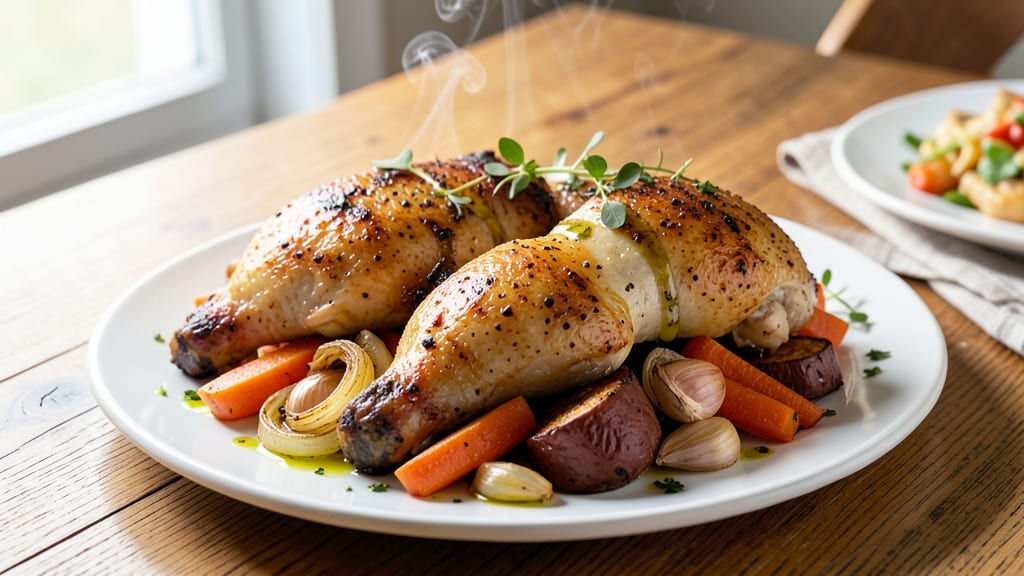
This baked chicken thighs with roasted veggies recipe delivers restaurant-quality results with a honey-mustard glaze that locks in flavor while keeping the meat juicy.
The secret lies in high-heat roasting and a simple glaze that caramelizes beautifully, creating a balance of sweet and tangy notes that pair perfectly with crisp-tender vegetables. I developed this method after years of perfecting oven techniques—no fussy marinades or last-minute prep required.
The beauty of this dish is its simplicity: juicy chicken thighs with crispy, caramelized edges and roasted vegetables that stay vibrant and flavorful. The honey-mustard glaze isn’t just a topping—it’s the star, adding depth and a sticky-sweet finish that makes every bite irresistible.
This recipe works equally well for weeknight dinners or weekend feasts, and the leftovers reheat beautifully for lunch the next day.
What sets this apart is the foolproof technique that ensures crispy skin without drying out the meat. The vegetables roast alongside the chicken, absorbing the same savory aromas while developing their own caramelized edges.
Whether you’re serving it family-style or plating it elegantly, the result is a complete, satisfying meal that feels special without the fuss.
Ready in just 45 minutes with minimal hands-on time, this dish is perfect for home cooks who want impressive results. The glaze can be adjusted to suit your taste—more honey for sweetness, more mustard for tang—and the vegetables are fully customizable. Here’s how to make it perfectly every time.
Ingredients for baked chicken thighs with roasted veggies
Restaurant-quality flavor starts with these carefully chosen ingredients that balance sweet, tangy, and savory notes.
| Ingredient | Amount | Notes |
|---|---|---|
| Boneless, Skin-On Chicken Thighs 🍗 | 1 ½ lb | Bone-in preferred for flavor |
| Yellow Onion 🧅 | 1 whole | Cut into 1-inch chunks |
| Carrots 🥕 | 4 medium | Peeled, cut into 2-inch pieces |
| Sweet Potatoes 🍠 | 2 medium | Peeled, cut into 1-inch cubes |
| Garlic Cloves 🧄 | 4 cloves | Minced for glaze |
| Extra-Virgin Olive Oil 🫒 | ¼ cup | For roasting and glaze |
| Honey 🍯 | ¼ cup | Local raw preferred |
| Dijon Mustard 🍯 | 2 tbsp | High-quality for tang |
| Apple Cider Vinegar 🍶 | 1 tbsp | For glaze acidity |
| Kosher Salt 🧂 | 1 ½ tsp | Diamond Crystal preferred |
| Freshly Ground Black Pepper 🌶️ | ½ tsp | For seasoning |
| Fresh Thyme Leaves 🌿 | ¼ cup | Chopped for garnish |
| Fresh Rosemary 🌿 | 1 sprig | For aroma |
The chicken thighs are the foundation—bone-in, skin-on for maximum flavor and juiciness. Look for thighs with good marbling at Whole Foods or your local butcher shop. The sweet potatoes and carrots should be firm with no soft spots; Trader Joe's often carries organic options at a good price. Fresh herbs like thyme and rosemary elevate the dish, so if you're using dried, reduce to one-third the amount. The honey should be local and raw for best flavor, while the Dijon mustard adds depth that regular mustard can't match.
No bone-in thighs? Substitute bone-in, skinless for slightly less richness. Running short on sweet potatoes? Butternut squash works beautifully—just adjust roasting time. The glaze can be made ahead and stored in the fridge for up to 1 week, though fresh is always better. For a spicier kick, add 1/2 teaspoon cayenne to the glaze. The vegetables can be swapped entirely—zucchini, bell peppers, or Brussels sprouts all roast beautifully alongside the chicken. If you're short on time, use pre-cut frozen vegetables, but pat them dry thoroughly before roasting for crispy edges.
This dish reheats beautifully—cover with foil and warm in a 350°F oven for 10 minutes. The glaze thickens when chilled, so reheat gently to restore its silky texture. Store leftovers in the fridge for up to 4 days or freeze for 3 months. For meal prep, portion the chicken and vegetables separately—this keeps them crispy when reheated. The glaze can be reheated separately and brushed on fresh for serving. Fresh herbs should be added just before serving to maintain their vibrant color and aroma.
Why You'll Love This Recipe
- One-Pan Magic: I swear by this for nights when I’m too tired to wash extra dishes—just toss everything on a sheet pan, drizzle with olive oil, and let the oven do the work. The onions caramelize right alongside the chicken, and the sweet potatoes get that perfect tender-crisp edge without any fuss.
- Skin-On Crunch: That crispy, golden skin on the thighs? It’s the star. Between us, it’s the only way I’ll eat chicken these days—juicy inside, shatteringly crisp out. The garlic and onions infuse the skin with so much flavor, you’ll want to eat it with a spoon.
- Weeknight Workhorse: This feeds my family of four (or becomes my lunch for three days) without me breaking a sweat. Double the recipe for leftovers, or halve it for a cozy Tuesday dinner. Honestly, it’s my go-to when I don’t want to think too hard about dinner.
- Budget-Friendly Feast: Chicken thighs are cheaper than breasts, and sweet potatoes stretch farther than you’d think. I’ll be real: this recipe saved me from takeout more times than I can count, and the veggies make it feel like a proper meal—not just scraps. Plus, the leftovers reheat like a dream.
Step-by-step instructions for baked chicken thighs with roasted veggies
Transform simple ingredients into a restaurant-quality meal with this foolproof baking method.
Prep the Chicken and Veggies for Even Cooking
Pat the 1.5 lb boneless, skin-on chicken thighs completely dry with paper towels—this ensures maximum crispiness. Season both sides generously with 1.5 tsp kosher salt and 0.5 tsp freshly ground black pepper, pressing the seasoning into the meat so it adheres. Let the chicken sit at room temperature for 15 minutes while you prepare the vegetables.
Cut the 1 whole yellow onion into 1-inch chunks, peel and cut the 4 medium carrots into 2-inch pieces, and peel and cube the 2 medium sweet potatoes into 1-inch cubes. Toss all vegetables together in a large bowl with 2 tablespoons of the extra-virgin olive oil, 0.5 tsp kosher salt, and 0.25 tsp freshly ground black pepper. This even coating guarantees caramelization without burning.
Roast the Veggies Until Tender-Crisp
Preheat your oven to 425°F with a rack positioned in the middle position. Spread the prepared vegetables evenly on a single large baking sheet, leaving space between pieces for airflow. Roast for 20-25 minutes, stirring once halfway through, until the edges are golden brown and the sweet potatoes begin to soften slightly when pierced with a fork.
Here's the thing—don't overcrowd the pan. If your baking sheet is small, roast the vegetables in batches. The goal is to achieve that perfect caramelized texture where the exteriors are crisp and the interiors remain tender. Remove the vegetables and set them aside on a separate plate to keep warm.
Create the Honey-Mustard Glaze
While the vegetables roast, combine 0.25 cup honey, 2 tbsp Dijon mustard, 1 tbsp apple cider vinegar, 4 minced garlic cloves, and the remaining 2 tablespoons extra-virgin olive oil in a small bowl. Whisk vigorously until smooth and well combined. The glaze should have a thick, syrupy consistency—this ensures it will adhere perfectly to the chicken.
Taste the glaze and adjust seasoning if needed. I usually add a pinch more salt or a splash of vinegar to balance the sweetness. This glaze isn't just flavor—it's the secret to locking in moisture while creating a sticky, caramelized crust on the chicken skin.
Bake the Chicken Until Golden and Juicy
Place the seasoned chicken thighs skin-side up on the same baking sheet you used for the vegetables (or a clean one if you prefer). Brush the tops of the thighs generously with the honey-mustard glaze, making sure to coat them evenly. Transfer the baking sheet to the oven and bake for 25-30 minutes, until the skin is deep golden brown and crispy, and the internal temperature reaches 165°F.
For the crispiest skin, avoid opening the oven door during cooking. The heat should build steadily, creating that perfect contrast between the crispy exterior and tender interior. If the glaze starts to bubble excessively, tent the pan loosely with aluminum foil to prevent burning while allowing steam to escape.
Rest and Garnish for Maximum Flavor
Remove the chicken from the oven and let it rest for 5-10 minutes before serving. This resting period allows the juices to redistribute throughout the meat, preventing them from running out onto your plate. While the chicken rests, return the roasted vegetables to the oven on broil mode for 2-3 minutes to crisp them up again.
Garnish the chicken and vegetables with the 0.25 cup chopped fresh thyme leaves and the 1 sprig fresh rosemary (remove the woody stem and finely chop the needles). The aromatic herbs will release their essential oils when heated, adding an extra layer of complexity to every bite. Serve the chicken thighs alongside the roasted vegetables, drizzling any remaining glaze over the top for an elegant finish.
Pro Tips For Making Baked Chicken Thighs With Roasted Veggies
- CRISP THE SKIN FIRST: High heat for 10 minutes—yes, even if you’re impatient like me—gets that skin golden and crackling before the thighs hit the veggies. After burning three batches, I finally figured out: don’t rush this step, or you’ll end up with sad, pale skin that sticks to the pan.
- CUT SWEET POTATO IN HALF: Thick slices? No thanks. Halved sweet potatoes roast faster and develop caramelized edges without turning to mush in the middle. I skip this when I’m lazy, but the dish is noticeably better when I don’t—especially if you’re serving kids or people who still think sweet potatoes are just "mashed orange stuff."
- SALT THE ONIONS: Toss those onion slices with salt and oil before they hit the tray—it draws out moisture and guarantees they’ll caramelize instead of steaming into limp rings. Sounds weird, but it works: my grandmother swore by this, and she was right.
- DON’T OVERCROWD THE PAN: Leave at least 1 inch between thighs and veggies, or you’ll trap steam and end up with soggy chicken and half-cooked carrots. I learned this the hard way—after one disastrous batch where I crammed everything in like a college kid’s dorm fridge. Less is more; trust the process.
Creative variations of this dish
Global Spice Twist
Transform this dish into a global feast by swapping the honey-mustard glaze for regional favorites. For Mediterranean flair, replace the glaze with lemon-garlic yogurt (mix ½ cup Greek yogurt, 2 tbsp lemon juice, 2 minced garlic cloves, and 1 tsp dried oregano)—it adds tangy brightness.
For Asian-inspired, use a ginger-soy glaze (3 tbsp soy sauce, 2 tbsp honey, 1 tbsp grated ginger, 1 tsp sesame oil), then garnish with toasted sesame seeds and sliced green onions. 🌍
Herb Swaps
Customize the herb profile to match your pantry. Swap fresh thyme and rosemary for fresh parsley and tarragon for a lighter, more delicate flavor. Need something bolder? Try fresh cilantro and lime zest for a zesty Latin twist—just add 1 tbsp lime zest to the glaze.
For a herbaceous kick, mix 1 tbsp chopped sage and 1 tbsp chopped mint into the vegetables before roasting. The herbs should complement, not overpower, the dish.
Veggie Makeovers
Swap the classic sweet potatoes and carrots for seasonal alternatives. Try butternut squash (cut into 1-inch cubes) and Brussels sprouts (halved) for a fall harvest vibe.
For spring, use asparagus (trimmed) and zucchini (sliced into ½-inch rounds). Winter calls for beets (peeled and cut into wedges) and parsnips (peeled and chopped). Roast all veggies at 425°F for 20-25 minutes, adjusting time based on density.
Protein Variations
Keep the same technique but swap the chicken for other proteins. Bone-in, skin-on chicken drumsticks work beautifully—they stay juicy and crispy. For a seafood twist, use salmon fillets (skin-on, 1-inch thick) and reduce the glaze to 2 tbsp honey and 1 tbsp mustard.
For vegetarian, replace the chicken with extra-firm tofu (pressed, cubed, and baked for 35-40 minutes) or portobello mushrooms (stemmed and brushed with glaze).
Glaze Customizations
Adjust the glaze to match your taste preferences. For extra tang, add 1 tbsp balsamic vinegar to the honey-mustard mix. For heat, stir in ½ tsp cayenne or 1 tsp sriracha. Prefer sweetness?
Swap the Dijon mustard for whole-grain mustard and add 1 tbsp maple syrup. For a nutty depth, fold in 1 tbsp tahini or peanut butter (trust me, it works!). Always taste and balance before brushing onto the chicken.
Meal Prep Adaptations
Turn this into a make-ahead meal by prepping components separately. Roast the veggies ahead of time and store them in an airtight container for up to 3 days. Keep the chicken uncooked and season it the night before, storing it in the fridge.
When ready to cook, bake the chicken fresh and reheat the veggies in a 400°F oven for 10 minutes. For freezer-friendly, assemble the glaze and freeze it in an ice cube tray—thaw and brush onto chicken straight from the freezer.
Nutrition facts
Frequently asked questions
Why do I need to pat the chicken thighs dry before baking?
Patting the chicken dry is the secret to crispy skin! The moisture evaporates quickly at 425°F, creating steam that renders the fat under the skin. This fat then breaks down, crisping the skin while keeping the meat juicy inside. Skip this step, and you'll end up with soggy skin instead of that perfect golden crust.
Can I use bone-in chicken thighs instead of boneless?
Bone-in thighs actually work even better—they stay juicier longer and develop more flavor during cooking. Just increase the baking time by 5-10 minutes to account for the bone's insulating effect. The internal temperature should still reach 165°F in the thickest part of the meat.
What if my vegetables burn before the chicken is done?
This happens when veggies are overcrowded or too small. For perfect results, spread them in a single layer with space between pieces. Roast them separately for 10-15 minutes before adding the chicken to the same pan, or use a second baking sheet. If they start browning too quickly, tent them loosely with foil.
How do I reheat leftovers without drying out the chicken?
Reheat gently to preserve moisture. Cover the chicken with foil and warm in a 350°F oven for 10 minutes—this keeps it tender. For the veggies, toss them with 1 teaspoon olive oil and reheat uncovered at 400°F for 5-7 minutes to restore crispiness. Microwaving works too, but wrap the chicken in a damp paper towel first.
What's the best way to store the honey-mustard glaze?
Store unused glaze in an airtight container in the fridge for up to 1 week. To reheat, warm it gently in a small saucepan over low heat with 1 teaspoon water to restore its silky texture. If it thickens too much, whisk in a splash of warm water. The glaze can also be frozen in ice cube trays for up to 3 months.