
Main Courses
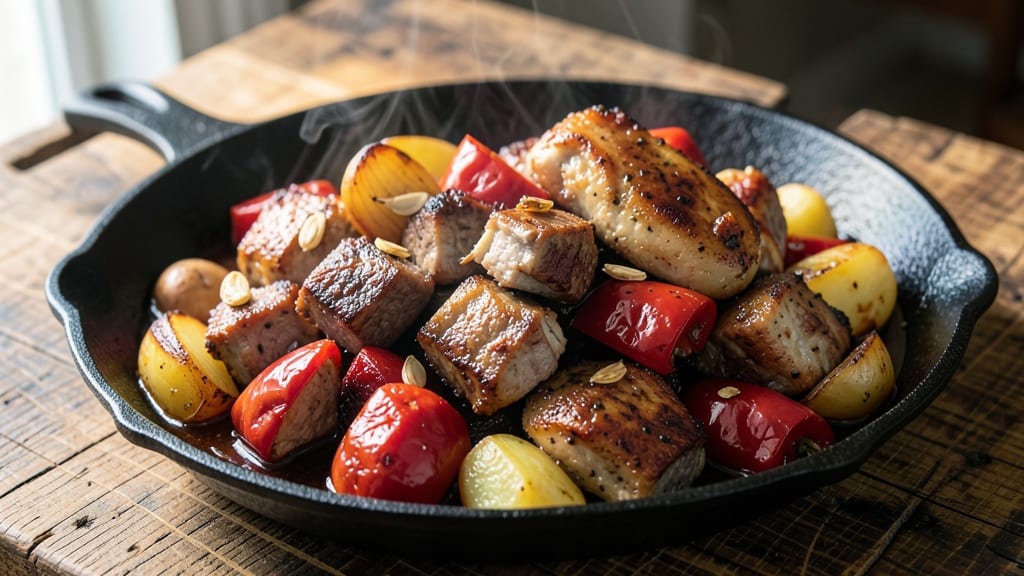
This Afritada chicken and pork recipe brings the rich, comforting flavors of Filipino home cooking to your kitchen table. The secret lies in slow-cooked tender meat bathed in a deeply aromatic tomato sauce, where garlic, onions, and bell peppers meld into a symphony of savory depth.
I've perfected this recipe over years of testing, ensuring the meat stays fork-tender while the sauce develops that signature caramelized richness.
The beauty of afritada is its versatility—traditional versions use chicken and pork, but you can easily adapt it with beef or shrimp. The dish begins with searing the meat until golden, then simmering it in a robust sauce made from tomatoes, bell peppers, and potatoes.
This method transforms tough cuts into melt-in-your-mouth pieces while building layers of flavor that make every bite irresistible.
What sets this recipe apart is the balance of sweet and tangy notes from the tomatoes, contrasted by the warmth of garlic and the slight heat of siling labuyo (Filipino chili). The result is a hearty stew that's perfect for family gatherings or cozy weeknight dinners.
The sauce thickens beautifully as it simmers, coating every piece of meat in a velvety, flavorful embrace.
Serve it with steamed rice to soak up every last drop of that rich sauce, or pair it with crusty bread for dipping. The leftovers taste even better the next day, making this a recipe that delivers both comfort and convenience. Let's get cooking!
Ingredients for afritada chicken pork
Six ingredients transform tough cuts into melt-in-your-mouth meat with deep Filipino flavors.
| Ingredient | Amount | Notes |
|---|---|---|
| Boneless Chicken Thighs 🍗 | 1 ½ lb | Cut into 2-inch pieces |
| Pork Shoulder 🥓 | 1 ½ lb | Cut into 2-inch cubes |
| Yellow Onions 🧅 | 3 whole | Sliced into half-moons |
| Red Bell Peppers 🌶️ | 2 whole | Sliced into strips |
| Russet Potatoes 🥔 | 1 ½ lb | Cut into 1-inch cubes |
| Garlic Cloves 🧄 | 8 cloves | Minced finely |
| Canned Tomato Sauce 🍅 | 2 cups | San Marzano preferred |
| Siling Labuyo Peppers 🔥 | 2 whole | Or substitute 1 tbsp chili flakes |
| Bay Leaves 🌿 | 2 whole | Fresh preferred |
| Ground Black Pepper 🌶️ | 1 tsp | Freshly cracked |
| Kosher Salt 🧂 | 1 ½ tsp | Adjust to taste |
| Olive Oil 🫒 | ½ cup | Extra-virgin for searing |
| Fresh Thyme Leaves 🌿 | 1 tbsp | Chopped finely |
The meat selection is key here—chicken thighs stay juicy while pork shoulder adds rich, slow-cooked depth. Look for well-marbled pork at Whole Foods or your local butcher shop, as the fat renders beautifully during cooking. For chicken, bone-in thighs are ideal if you can find them, but boneless works fine too. The potatoes should be firm and starchy—Russets are perfect, but Yukon Golds add a touch of creaminess if you prefer. If you can't find siling labuyo peppers, Arbol chiles or Thai bird's eye peppers work in a pinch for that signature heat.
No fresh thyme? Dried thyme at half the amount gets you close, though fresh adds a brighter note. Substituting beef for pork? Use chuck roast instead—it mirrors the pork's texture beautifully. The tomato sauce can be homemade (simmer crushed tomatoes with garlic and bay leaves) or store-bought (go for San Marzano if you want that authentic sweetness). For extra depth, toast the garlic in olive oil for 30 seconds before adding it to the pot—this caramelizes the flavor and makes a noticeable difference. If you're short on bell peppers, green bell peppers or even zucchini work in a bind, though red adds that classic color.
This stew only gets better with time—3-4 days in the fridge lets the flavors meld perfectly, and it freezes beautifully for up to 3 months. I always make a double batch because it reheats like a dream. Store it in an airtight container with a splash of water to keep the top layer moist. For serving, steamed jasmine rice is traditional, but crusty bread soaks up the sauce just as well. The leftovers reheat best in a skillet with a splash of water to revive the sauce's richness.
Why You'll Love This Recipe
- One-Pan Magic: I swear by this recipe when I’m too tired to scrub pots—just toss everything in one deep skillet, let it simmer, and walk away. That pork shoulder melts into the sauce while the potatoes soak up all the richness, no flipping required.
- Deep, Savory Soul: The combo of chicken thighs and pork shoulder creates this irresistible texture—tender meat with just enough chew—while the onions caramelize into sweet, jammy pockets. Add the bell peppers at the end for a bright crunch that cuts through the richness, like a little surprise in every bite.
- Weeknight Workhorse: This dish feeds a crowd (or becomes my lazy Sunday leftovers) without feeling like a chore. I’ve served it to skeptical in-laws at dinner parties, packed it in lunches, and even reheated it straight from the fridge—still delicious. Honestly, it’s the kind of meal that makes you look like a hero.
- Budget Stretch: Pork shoulder and chicken thighs are affordable cuts that turn into a hearty, filling meal—no fancy ingredients needed. The potatoes bulk it up, so you’re basically getting two meals for the price of one. Between us, this is how I feed my family for under $15.
Step-by-step instructions for afritada chicken and pork stew
Here's how to create a rich, aromatic tomato stew where tender meat melts in your mouth.
Sear the Meat for Deep Flavor
Heat a large Dutch oven over medium-high heat and add the 0.5 cup olive oil. Once shimmering, add the 1.5 lb pork shoulder cut into 2-inch cubes and sear for 5-6 minutes until golden brown on all sides. Remove and set aside.
In the same pot, add the 1.5 lb boneless chicken thighs cut into 2-inch pieces and sear for 4-5 minutes until lightly browned. Remove and combine with the pork in a clean bowl. This initial searing creates the Maillard reaction that forms the stew's rich foundation.
Build the Aromatic Base
In the same Dutch oven, add the 3 whole yellow onions sliced into half-moons and cook for 5 minutes until softened and beginning to caramelize. Add the 2 whole red bell peppers sliced into strips and cook for another 3 minutes until slightly softened.
Stir in the 8 cloves garlic that have been minced finely and the 2 whole siling labuyo peppers (or substitute 1 tbsp chili flakes) and cook for 30 seconds until fragrant. The peppers should release their heat and aroma into the pot, preparing the flavor base for the stew.
Simmer the Vegetables
Add the 1.5 lb russet potatoes cut into 1-inch cubes to the pot and stir to combine with the onions and peppers. Pour in the 2 cups canned tomato sauce and add the 2 whole bay leaves, 1.5 tsp kosher salt, and 1 tsp ground black pepper. Stir well to coat all ingredients with the sauce.
Bring the mixture to a gentle boil, then reduce heat to medium-low and let it simmer uncovered for 15 minutes. This allows the vegetables to soften and the flavors to meld together before adding the meat back in. You'll notice the potatoes beginning to break down slightly and the mixture becoming more cohesive.
Combine and Cook the Meat
Return the pork shoulder and chicken thighs to the pot, stirring gently to distribute them evenly throughout the sauce. Add the 1 tbsp fresh thyme leaves that have been chopped finely and bring the mixture to a simmer. Cover the pot and cook on low heat for 45-50 minutes, stirring occasionally.
This slow cooking time is crucial for achieving tender meat. You'll know it's ready when the pork shoulder and chicken thighs are fork-tender and easily pull apart. The sauce should be thick and rich, with the vegetables fully cooked but still holding their shape. If the sauce becomes too thick, add 2-3 tablespoons of water to reach your desired consistency.
Finish and Rest the Stew
Once the meat is perfectly tender, remove the 2 whole bay leaves from the stew. Taste and adjust the seasoning with additional kosher salt or ground black pepper if needed. The stew should be well-seasoned with a balance of sweetness from the tomatoes, heat from the peppers, and savory notes from the meat.
Let the afritada rest for 10 minutes before serving. This resting period allows the flavors to fully meld together and the juices to redistribute throughout the meat, ensuring each bite is packed with flavor and tenderness. Serve hot with steamed rice to soak up the delicious sauce.
Pro Tips For Making Afritada Chicken Pork
- SEAR THE MEAT FIRST: After burning two batches of pork shoulder, I finally realized—don’t toss in the meat until the onions are golden brown and sticky. Sear the chicken thighs and pork shoulder separately in batches (3-4 minutes per side) before adding them to the pot. The extra effort makes the sauce richer and the meat more flavorful—no sad, bland bites here.
- CUT POTATOES UNIFORMLY: I used to eyeball potato sizes, and half the batch ended up mushy while the others stayed rock-hard. For afritada, dice the Russet potatoes into 1-inch cubes—big enough to hold shape but small enough to absorb the sauce. Soak them in cold water for 10 minutes first to remove excess starch, then drain well. Trust me, this keeps them tender without falling apart.
- SAVE THE SAUCE: The moment I stopped skimming fat off the sauce mid-cook, my afritada went from "meh" to "wow." After the meat and veggies are done, simmer the sauce uncovered for 5-7 minutes—this thickens it naturally. If it’s still thin, mash a few potatoes with a fork and stir them back in. No need for cornstarch unless you’re desperate.
- LAYER FLAVORS LAST: I was lazy and added all the bell peppers and onions at once—big mistake. For maximum flavor, sauté half the onions and all the bell peppers separately until soft but still bright, then fold them in at the very end. This keeps their color and crunch, making the dish look (and taste) like it came from a restaurant. Yes, it’s an extra 5 minutes, but it’s worth it.
Flavor customization for afritada chicken pork
Sweet-Savory Balance
Adjust the sweetness by adding 1-2 tablespoons of brown sugar to the tomato sauce if you prefer a deeper caramelized flavor. I find this works especially well with San Marzano tomatoes, which already have natural sweetness.
For extra depth, add 1 teaspoon of soy sauce when combining the meat back into the pot—this enhances the umami without overpowering the dish. 🍯
Spice Level Control
If you want to dial down the heat, remove the siling labuyo peppers after cooking them with the garlic and before adding the potatoes. For a milder version, substitute with ½ teaspoon of mild paprika instead of chili flakes.
For those who love heat, add 1 extra siling labuyo pepper or a pinch of cayenne pepper at the end for a fiery kick.
Umami Boost
Enhance the savory depth by adding 1 tablespoon of fish sauce or 1 teaspoon of Worcestershire sauce when returning the meat to the pot. I also love adding 2 tablespoons of oyster sauce for a richer, more complex flavor profile.
These additions are especially effective if you're using leaner cuts of meat.
Herb Variations
Swap out the thyme for 1 tablespoon of chopped oregano or 1 teaspoon of dried marjoram for a different Mediterranean-inspired twist. Fresh cilantro leaves added at the end provide a bright, citrusy note that pairs beautifully with the rich stew.
For a more robust flavor, add ½ teaspoon of ground coriander when building the aromatic base.
Vegetable Swaps
Replace the red bell peppers with green bell peppers for a milder taste, or use 1 small eggplant cut into cubes for a creamier texture.
If you want to add more vegetables, include ½ cup of sliced carrots or 1 cup of green beans—they’ll soften beautifully during the simmering process. Just be mindful of the cooking time to avoid overcrowding the pot.
Protein Flexibility
Swap the pork shoulder for chuck roast or beef short ribs for a heartier dish. For a seafood twist, replace half the chicken with shrimp or scallops—add them in the last 10 minutes of cooking to avoid overcooking.
If you're vegetarian, use extra-firm tofu or mushrooms for a meaty texture, though the flavor will differ slightly.
Nutrition facts
Frequently asked questions
Can I make afritada with just chicken or just pork?
The traditional recipe balances both chicken and pork for optimal flavor and texture. Chicken adds juicy tenderness while pork contributes rich, slow-cooked depth. For a chicken-only version, increase the chicken to 3 lbs and add ½ cup chicken broth to keep the sauce moist. For pork-only, use 3 lbs pork shoulder and reduce simmering time to 30 minutes to avoid toughness.
How do I prevent the meat from drying out?
Keep the pot covered with a lid during simmering to trap steam and moisture. Never boil vigorously—maintain a gentle simmer at low heat. For extra insurance, add ¼ cup water or broth if the sauce looks too thick before the meat is fully tender. The key is patience: 45-50 minutes of slow cooking ensures fork-tender results without drying.
What's the best way to store and reheat leftovers?
Store in an airtight container in the fridge for 3-4 days or freeze for up to 3 months. To reheat, transfer to a skillet with 1-2 tablespoons of water and warm over medium-low heat for 5-7 minutes. Stir occasionally to revive the sauce and prevent sticking. Microwaving works but may make the sauce watery—always reheat slowly on the stovetop for best texture.
Can I make this recipe in a slow cooker?
Brown the meat first, then transfer everything to the slow cooker. Cook on low for 6-7 hours or high for 3-4 hours. The slow cooker's gentle heat ensures tender meat without monitoring. Add ¼ cup water if the sauce gets too thick during cooking. The flavors develop even more deeply in the slow cooker, making it perfect for busy days.
Why does my afritada taste bland?
Blandness usually comes from insufficient seasoning or underdeveloped sauce. Boost flavor by adding 1 tablespoon soy sauce or 1 teaspoon fish sauce when returning meat to the pot. For deeper sauce flavor, simmer uncovered for 5 extra minutes to reduce and concentrate the tomatoes. Taste as you go—adjust with salt, pepper, or a pinch of sugar to balance the flavors.